The Heavy Burden of Being Stuck in the "Fair Credit" Middle Ground
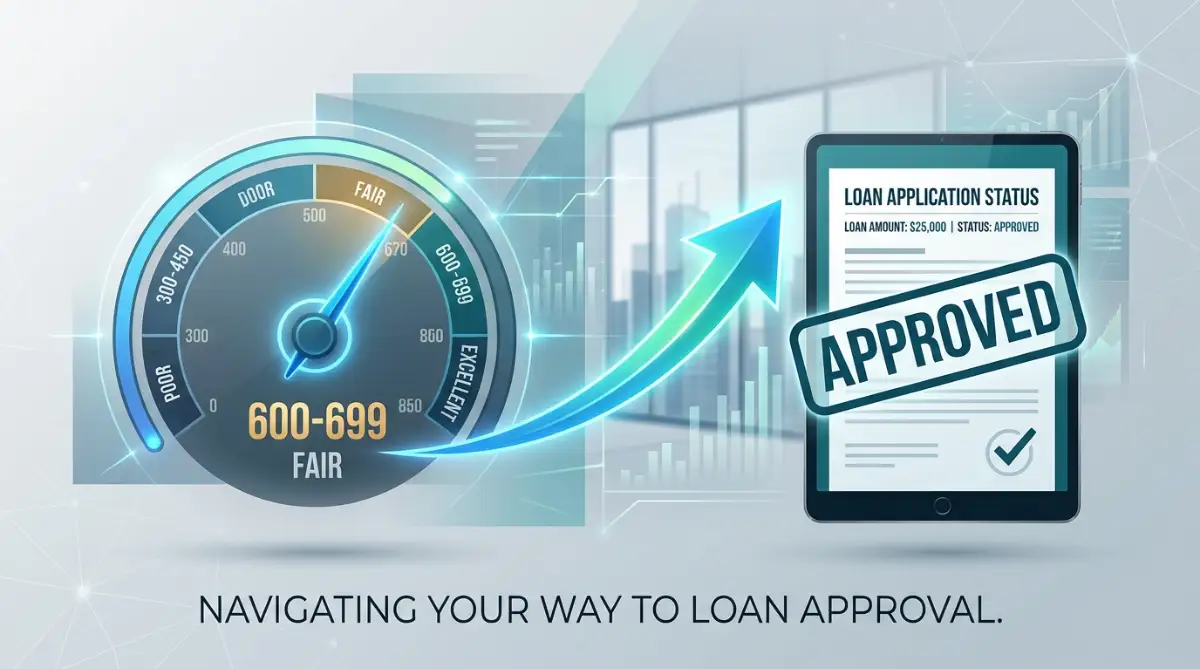
Let's be honest—having a "fair" credit score (usually sitting somewhere between 580 and 669) feels like being stuck in financial traffic. You are not totally broke, but banks still treat you like a massive risk. I know how annoying it is when a sudden car repair or medical bill pops up, and you hesitate to apply for a loan because you expect an instant rejection. But here is the good news: getting funding with an average score is not impossible, you just need to stop playing by the big banks' rules and try a different approach.
I needed cash fast, but my credit score was hovering right in that awkward "fair" zone. Every time I thought about applying for a loan, I felt a heavy knot of anxiety in my stomach.
I worried the bank would just laugh at my application and reject me instantly. Figuring out how to get a personal loan with fair credit felt like trying to climb a steep mountain in the dark, and I felt completely judged by a simple three-digit number.
It is incredibly frustrating when you are doing your absolute best to pay bills on time, yet you still fall short of that "excellent" credit tier. You might be dealing with unexpected medical bills or sudden home repairs that just cannot wait.
What You Need to Know Right Now (Key Takeaways):
- Focus on your DTI: Paying down a tiny bit of existing credit card debt helps your approval odds way more than a small credit score bump.
- Skip the big banks: Local credit unions and peer-to-peer networks are far more likely to approve you if your score is between 580 and 669.
- Soft pulls only: Never submit a formal application unless you use a "pre-qualification" tool first to protect your score from dropping.
Smart Strategies to Secure Funding When Your Credit Isn't Perfect
Getting approved for a loan when your credit is just average might seem impossible, but it is highly achievable when you know exactly where to look. Banks and lenders have very specific criteria, and understanding these rules puts the power back in your hands.
Instead of randomly applying and hoping for the best, you need a solid game plan. We are going to walk through some incredibly practical, realistic steps you can take today to get the money you need.
Understanding How Lenders View Your Application
Before you even fill out an application, you have to understand what happens behind the scenes. Lenders do not just look at your credit score in isolation.
They look at your entire financial picture to determine if you are a safe bet. If your score is sitting in the fair range (usually between 580 and 669), lenders will heavily scrutinize your current income and employment history.
They want to see stability above everything else. If you have been working at the same job for several years and have a steady paycheck, this makes a massive difference in your approval odds.
Income stability acts as a safety net for lenders. It tells them that even though your credit history has a few bumps, your current cash flow is strong enough to handle new monthly payments.
The Hidden Power of Your Debt-to-Income Ratio (DTI)
Many people obsess over their credit score while completely ignoring their Debt-to-Income (DTI) ratio. Your DTI is simply the percentage of your monthly income that goes toward paying off existing debts.
For example, if you earn $4,000 a month and spend $1,000 on rent, credit cards, and car payments, your DTI is 25%. Most lenders want to see this number below 36% before they hand over any cash.
I learned this the hard way when I originally applied for a loan while carrying a high credit card balance. I quickly realized that paying off just a tiny bit of my revolving debt before applying gave my approval odds a massive boost. My debt-to-income ratio was actually holding me back much more than my actual credit score ever did.
Quick DTI Math (How Lenders See You):
Let's say you take home $3,000 a month.
- Your Rent: $1,000
- Car Payment: $300
- Credit Card Minimums: $200
- Total Debt:
1,500YourDTIisexactly50
1,500YourDTIisexactly50
- 1,500 ÷ $3,000). Since most lenders cut you off at 36%, you would need to clear out some of those credit card balances or boost your income before applying. Even a fair credit score won't save a DTI of 50%.
If your DTI is currently too high, you might face automatic rejections regardless of your credit score. Try to aggressively pay down small credit card balances before submitting your new loan application.
Where to Actually Apply (Not All Lenders Are Equal)
When you have fair credit, walking into a massive national bank might result in a quick denial. Big banks have extremely strict automated systems that filter out anyone below a certain credit threshold.
Instead of setting yourself up for failure, you should target lenders who specifically work with everyday people. You have three main options that are much more forgiving.
1. Local Credit Unions
Credit unions are non-profit organizations that truly value their community members. They often look past your credit score and focus heavily on your personal relationship with them as a customer.
If you have kept your checking account in good standing with a local credit union, they are far more likely to approve you. They also tend to offer much lower interest rates than commercial banks.

2. Online Lenders
The internet is full of online lenders who specialize in helping people with average financial histories. These companies use advanced algorithms that consider your education, job history, and banking habits alongside your credit score.
Because they do not have the overhead costs of physical bank branches, they can afford to take slightly more risk. However, you must read the fine print carefully, as their interest rates can sometimes be on the higher side.
3. Peer-to-Peer Lending Networks
Peer-to-peer (P2P) platforms connect you directly with individual investors who want to fund your loan. These investors are often willing to fund borrowers with fair credit because they are looking for a return on their investment.
P2P lending is a fantastic alternative if traditional institutions keep turning you down. The application process is entirely online and usually quite fast.
Here is a quick breakdown to help you visualize your best options:
The Magic of Pre-Qualification
One of the biggest mistakes you can make is applying for multiple loans blindly. Every time you submit a formal application, the lender performs a "hard pull" on your credit report.
Too many hard pulls in a short amount of time will actually drop your credit score even further. This creates a terrible cycle where applying for help actively hurts your chances of getting it.
Instead, you should only look for lenders that offer a "pre-qualification" process. Pre-qualification uses a "soft pull," which gives the lender a quick peek at your credit without damaging your score at all.
If you are feeling overwhelmed by all the different loan options out there, taking a few minutes to watch an expert breakdown can save you a ton of stress. This quick video explains exactly how to spot the best personal loan offers without hurting your credit score.
By using pre-qualification tools, you can easily compare interest rates and estimated monthly payments across several lenders. You will know exactly what you qualify for before making any official commitments.
Bringing a Co-Signer on Board
If your income is a little low or your credit history is just too thin, you might need some backup. Applying with a co-signer is one of the most effective ways to secure funding when your own profile is not quite strong enough.
A co-signer is a trusted friend or family member with excellent credit who promises to pay the loan if you default. Their strong financial background essentially acts as a shield for your application.
However, you must treat this option with extreme respect and caution. If you miss a payment, both your credit score and your co-signer's credit score will take a massive hit.
You also risk ruining a valuable personal relationship if you fail to hold up your end of the bargain. Only use a co-signer if you have a rock-solid plan to make every single payment on time.
Secured vs. Unsecured Personal Loans
Most personal loans are "unsecured," meaning you do not have to put up any collateral to get the money. Lenders take on all the risk, which is exactly why they rely so heavily on your credit score.
If you are struggling to get an unsecured loan, you might want to consider a secured option instead. A secured loan requires you to pledge an asset, like your car or a savings account, to back up the loan.
Because the lender can take your asset if you stop paying, they face significantly less risk. This makes them far more willing to approve applicants with fair credit histories.
Secured loans often come with much lower interest rates, saving you a considerable amount of money over time. Just remember that your personal property is literally on the line if you fall behind on your monthly bills.
Myth vs. Reality: The Truth About Fair Credit Borrowing
When you are stressed about money, it is easy to believe everything you read online. Let's clear up some common misunderstandings that might be holding you back from finding a great financial solution.
The Myth: Having fair credit means you are guaranteed to pay terrible, predatory interest rates.
The Reality: While you will not get the absolute lowest promotional rates, shopping around aggressively can easily land you a highly competitive deal. Many local credit unions offer fair-credit borrowers rates that are surprisingly affordable.
The Myth: Applying for a loan will instantly ruin your credit score forever.
The Reality: A single hard inquiry might drop your score by a few points temporarily, but it bounces back quickly. Furthermore, making your new loan payments on time every month will actually help you build a much stronger credit history over time.
Beware of Predatory Lending Scams
When you are desperate for cash, you become a prime target for scammers and predatory lenders. You have to stay incredibly vigilant to protect your identity and your bank account.
If a lender ever contacts you and guarantees instant approval without checking your credit at all, run the other way. Legitimate lenders will always verify your identity and your ability to repay the money.
You should also watch out for payday loans and title loans dressed up as regular personal loans. These predatory products often carry interest rates of 300% or more, trapping you in an endless cycle of debt.

Never pay an "upfront fee" or "application fee" to secure a loan. Real lenders simply deduct any necessary origination fees from the final loan amount they send to your bank account.
Red Flag Checklist: Walk away immediately if a lender does any of these:
- Asks you to pay an upfront fee using gift cards or crypto.
- Promises "100% Guaranteed Approval" without asking for your name or income details.
- Pressures you to sign a contract today before you can even read the fine print.
Organizing Your Documentation for Success
Lenders love borrowers who are highly organized and prepared. When you finally decide to apply, having all your documents ready can speed up the approval process significantly.
You will need to prove your identity using a driver's license or passport. You will also need to prove your home address with a recent utility bill or a copy of your lease agreement.
Most importantly, you must provide rock-solid proof of your income. Gather your last three pay stubs, your most recent tax returns, and a few months of continuous bank statements.
If you are self-employed or work as a freelancer, providing accurate bank statements is absolutely essential. The easier you make it for the underwriter to verify your financial life, the faster you will see that money hit your account.
Next-Level Strategies to Guarantee Your Funding
Once you understand the basic rules of borrowing, it is time to use some insider tactics. Most people just fill out an application and cross their fingers, hoping for the best.
Instead of leaving your financial future to chance, you can actively manipulate your profile to look incredibly attractive to lenders. I want to share a few advanced secrets that completely changed how I approach borrowing money.
One of the smartest moves you can make is to sanitize your credit report before anyone else sees it. Many people are totally unaware that their credit profile contains silly, outdated errors holding their score down.
According to research from the Consumer Financial Protection Bureau (CFPB) on credit reporting accuracy, a massive number of consumers have negative errors on their files. You could have a missed payment from a cable company you closed years ago dragging you down.
You should pull your credit file and dispute any small inaccuracies immediately. Getting a single late payment removed can bump your score up instantly, pushing you closer to that "good" credit tier.
If you are trying to figure out how to improve personal loan approval odds even with bad credit, you need to look at your credit utilization ratio. This is a secret weapon that works almost overnight.
Your credit utilization is simply how much of your available credit card limit you are actually using. If you have a $1,000 limit and owe $800, you look extremely risky to banking software.
The "Authorized User" Strategy
If you need a quick boost, consider asking a family member to add you as an authorized user on their oldest credit card. I used this trick a few years ago with my mother's oldest account.
I did not even ask for the physical card to spend any money. I simply piggybacked on her perfect payment history, which instantly made my own financial profile look much thicker and more reliable.
Just make sure the person you ask actually pays their bill on time every single month. If they miss a payment while you are an authorized user, it will negatively impact your score instead.
Leveraging Relationship Banking
Do not underestimate the power of human connection in the banking world. Automated online systems are ruthless, but a local branch manager has the power to override computer decisions.
If you have held a checking account at the same bank for five years, you have built significant trust. Go into the branch, sit down with a loan officer, and explain exactly why you need the money.
When they see that your direct deposits have been hitting your account steadily for years, they often bend the rules. They can manually push your application through, even if your credit score is just average.
This human element is exactly how to get approved for a personal loan quickly when algorithms keep automatically rejecting you online. Never be afraid to state your case in person.
Using Alternative Data for Approval
Traditional credit scoring models only look at your history with debt. They completely ignore the fact that you might have paid your rent and utility bills perfectly on time for a decade.
Thankfully, the banking industry is finally waking up to this unfairness. You can now use third-party services that report your monthly rent and phone bills directly to the major bureaus.
The Federal Deposit Insurance Corporation (FDIC) highlights economic inclusion by encouraging banks to look at this alternative data. By adding these positive payment histories to your file, your fair credit score suddenly looks much stronger to automated underwriting systems.

Financial Traps That Will Destroy Your Approval Odds
Trying to borrow money when you are stressed out can lead to some massive mistakes. I have seen so many hardworking people accidentally dig themselves into a deeper financial hole simply because they were in a rush.
When you have a fair credit score, predatory lenders actively hunt for you. You have to recognize these traps before you accidentally sign your life away on a bad contract.
The "Shotgun" Application Mistake
When people get rejected by one bank, they often panic. Their immediate reaction is to open their laptop and apply for ten different loans in a single afternoon.
They think that applying everywhere increases their chances of getting a single "yes." This is actually the absolute worst thing you can possibly do for your financial health.
Every single formal application triggers a hard inquiry on your profile. If an underwriter sees six hard inquiries in one week, they assume you are desperate for cash and will likely default.
This panic-applying behavior will drop your score from "fair" straight down to "poor." Always use pre-qualification tools that rely on soft pulls instead.
Ignoring the True Cost of the Loan
When you finally get an approval email, the relief is so overwhelming that you might just click "accept" immediately. You completely ignore the massive blocks of tiny text at the bottom of the agreement.
Many subprime lenders pack their contracts with ridiculous origination fees that eat right into your cash. You might ask for $5,000, but they deduct a $500 fee, leaving you short on the actual money you needed.
You must aggressively hunt for hidden personal loan fees that can cost you more than expected. If a lender wants to charge you a fee just to process your application, simply walk away and find a better company.
The Nightmare of Payday Alternatives
Some companies disguise their short-term payday products to look exactly like standard installment loans. They promise you instant cash in your checking account with absolutely no credit checks required.
These products are incredibly dangerous financial quicksand. The Office of the Comptroller of the Currency (OCC) heavily monitors these short-term liquidity traps because they can carry equivalent interest rates of 400% or more.
If you miss a single payment on one of these predatory products, the late fees compound aggressively. Before you know it, you are paying back triple the amount you originally borrowed.
Borrowing More Than You Actually Need
Lenders sometimes try to upsell you. You might only need $3,000 to fix your transmission, but they offer you an impressive $10,000 line of credit because your income supports it.
It is incredibly tempting to take the extra cash for a vacation or some new gadgets. However, every extra dollar you borrow comes with heavy interest charges attached.
You should strictly calculate the exact amount you need for your emergency and refuse anything extra. A smart borrower always focuses on taking the minimum possible debt to solve their immediate problem.
Exaggerating Your Personal Income
When you are sitting in the fair credit zone, you might feel tempted to inflate your income on the application. You might round up your salary or include future bonuses you have not actually earned yet.
This is a terrible idea that will backfire heavily. Underwriting departments always ask for recent tax returns or bank statements to verify your exact cash flow.
If they catch you exaggerating your income, they will permanently blacklist you from their institution for fraud. Always be completely honest about your finances, and consider looking for best banks for large unsecured personal loans that specialize in working with your specific income bracket.
Your Immediate Action Plan for Success
Getting approved with an average credit history is not about luck. It is about presenting yourself as a highly responsible, organized person who simply had a few bumps in the road.
You now have a complete understanding of how underwriting software works and what loan officers actually look for. You know how to avoid the dangerous traps that keep so many people locked in endless debt cycles.
Instead of feeling hopeless, you should feel entirely empowered. You can absolutely secure the money you need without getting taken advantage of by greedy lenders.
Your Strategy Checklist for Tomorrow
Do not let this information just sit in your head. You need to take concrete steps right now to prepare your financial profile for a successful application.
Here is exactly what you should do:
- Download your free credit reports and scan them for silly errors holding your score down.
- Calculate your exact monthly income versus your monthly debt payments.
- Pay down a small credit card balance to improve your debt-to-income ratio instantly.
- Do a smart personal loan comparison using soft-pull pre-qualification websites.
- Gather your last three pay stubs and save them in a folder on your computer.
If you are still struggling to get approved on your own, you might need to think outside the box. Taking the time to learn how to stop getting rejected and get your personal loan without a cosigner can give you incredible financial independence.
Every small positive step you take today builds a stronger financial foundation for your future. Do not let a temporary credit dip convince you that you are out of options.
I know exactly how stressful it feels to stare at a mounting pile of bills with seemingly no way out. My biggest piece of advice is to stay incredibly patient, trust the organized process we just covered, and never settle for a predatory offer just out of panic.
Everyday Questions About Fair Credit Borrowing
What is the actual minimum credit score required for a personal loan?
Most traditional lenders prefer to see a score of at least 600 before they consider your application. However, there are many specialized online lenders and credit unions that will confidently approve scores as low as 580 if you have a strong, stable job.
Will getting a personal loan improve my credit rating?
Yes, it absolutely can help your score over time. When you make your new loan payments on time every single month, it adds positive payment history to your file and shows future lenders you are highly responsible.
Can I get an unsecured personal loan with an average credit profile?
You definitely can get an unsecured loan, meaning you will not have to put your car or house up as collateral. Just keep in mind that the interest rate might be slightly higher than it would be for someone with a perfect financial background.
How long does the entire funding process actually take?
If you apply with an online lender and provide all your income documents immediately, you can often get the money deposited the very next business day. Traditional banks usually take a little longer, sometimes requiring up to a week to finalize the paperwork.
Do I always have to provide proof of income to get approved?
Almost every legitimate lender will require some form of income verification to ensure you can afford the monthly payments. You can usually prove your income by uploading recent pay stubs, bank statements, or your latest tax return directly through their secure portal.
Disclaimer: The information provided in this article is for educational and informational purposes only and does not constitute professional financial advice. Always consult with a certified financial advisor or credit counselor before making any major borrowing decisions. Loan approval odds, interest rates, and terms vary heavily based on individual financial circumstances and lender policies.