Why Getting a Massive Unsecured Loan Feels Like Hitting a Brick Wall
Ever walked into a bank feeling totally confident, only to get slapped with a cold, automated loan rejection letter? It hurts, and honestly, it is highly embarrassing. You probably thought your decent credit score was a golden ticket. But the truth is, banks play by a completely different set of rules when you ask them for a massive pile of cash without handing over your house or car as a backup. I am going to show you exactly how their secret grading system works behind closed doors, and how you can easily flip the script to get a fast "yes."
Instead, I got a cold, automated rejection letter that felt like a punch to the gut. The frustration was totally overwhelming. I felt completely stuck and wondered what I had done wrong. My mind kept racing, and I started losing sleep over how I was going to pay the contractors.
When you need a large amount of money without putting up your house or car as collateral, the banking system suddenly becomes very intimidating. Everyday people like you and me face this invisible wall all the time. You might have a great job and pay your bills on time every single month. Yet, when you ask for a high-limit loan, banks treat you like a massive risk.
I want you to know that you are not alone in this messy situation. Millions of hardworking people get turned down for major funding simply because they do not understand the hidden rules of lending. We are going to change that for you right now.
What You Will Learn Today (The Short Version):
- Why your credit score is just a simple ticket to play, but your Debt-to-Income (DTI) ratio is what actually wins the money.
- The exact reason you must crush your credit card balances below 10% before you fill out any bank forms.
- How to smartly use "soft pulls" to shop for rates so you do not accidentally damage your credit report.
- A clever trick to build a strong "relationship score" with any bank so they trust you much faster.
The Hidden Math Behind High-Limit Approvals
When you walk into a branch or apply online for a massive amount of money, banks look at a very specific set of numbers. They do not care about your personal story or how much you need the funds. Their entire decision is based on a strict mathematical formula.
The biggest factor they calculate is your Debt-to-Income ratio, commonly known as DTI. Think of your monthly income as a large bucket catching water. If that bucket is already full of water from your credit cards, car payments, and mortgage, the bank will not add another drop. They want to see plenty of empty space in your bucket.

Most major financial institutions want your total monthly debt payments to be below 36 percent of your gross monthly income. If you are asking for a massive unsecured loan, you need to prove that you can easily handle the new monthly payment. If your current debts are eating up half of your paycheck, your application will be instantly denied.
To fix this, you have to play the game smartly before you even submit your application. Pay down smaller credit card balances to lower your overall monthly obligations. This simple move instantly creates more room in your DTI bucket and makes you look incredibly safe to lenders.
Quick DTI Reality Check (Where Do You Actually Stand?):
- Under 20%: You are the bank's absolute dream customer. They will likely throw the best interest rates at you.
- 21% to 35%: The sweet spot. You have a very solid chance of getting approved without much hassle.
- 36% to 45%: The danger zone. You might get a yes, but expect terrible rates and annoying extra fees.
- Over 45%: Stop right there. Do not even apply right now. Focus entirely on killing your current debt first to avoid an automatic rejection.
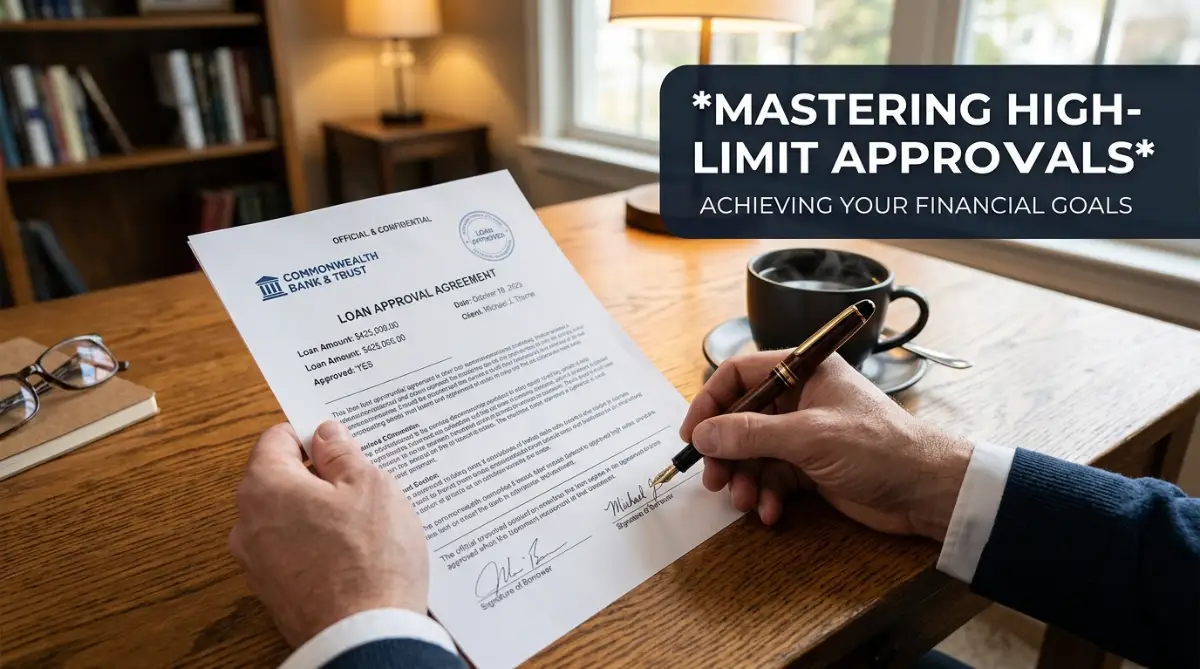
My Personal Wake-Up Call (Pro Tip)
I learned the hard way that keeping high balances on multiple credit cards destroys your chances of a major loan approval. I completely ignored my credit utilization rate, thinking it didn't matter as long as I paid the minimums. My advice to you is to aggressively pay down your revolving credit card debt to under 10 percent before you ever apply for a high-limit bank loan. It instantly boosts your credit profile and makes lenders fight for your business.
Why Your Credit Score Is Just the Starting Point
Many people assume that having a credit score over 750 guarantees an automatic approval for any loan amount. This is one of the biggest misconceptions in personal finance today. Your credit score simply gets your foot in the door so the bank will actually read your application.
Once they look past the score, underwriters dig deep into your credit history. They want to see a long, established track record of handling different types of credit responsibly. If your high score is only based on one small credit card you have had for a few months, they will not trust you with a massive sum of cash.
Banks love to see a mix of installment loans and revolving credit. Having a previous auto loan or a fully paid-off smaller personal loan shows them you know how to manage structured debt. If you lack this history, you might need to start with a smaller loan to build trust.
Additionally, recent hard inquiries can completely kill your chances of getting approved. If banks see that you have applied for five different credit cards in the last two months, they will assume you are desperate for cash. Keep your credit report clean and quiet for at least six months before hunting for large unsecured funds.
Myth vs Reality: Income Requirements for Major Borrowing
Let's clear up a massive misunderstanding about how much money you actually need to make.
- The Myth: You need to be extremely wealthy and make a massive six-figure salary to get approved for maximum loan limits.
- The Reality: Banks care much more about the stability and consistency of your income rather than just the size of your paycheck.
You could earn a modest salary, but if you have zero debt and have worked at the same company for ten years, you are an excellent candidate. On the other hand, someone making a fortune with a brand-new business might get denied due to income unpredictability.
Always be prepared to show solid proof of your earnings through tax returns and recent pay stubs. If you have side hustles or freelance income, make sure it is legally documented and easily verifiable by the banking underwriter. Unverifiable cash income basically does not exist in the eyes of traditional lenders.
Top Financial Institutions Offering High-Balance Funds
You need to know exactly where to look when you want a substantial amount of money without collateral. Not all banks are created equal when it comes to personal lending.
Traditional national banks are often the first place people go. These massive institutions offer high maximum limits and highly competitive interest rates for their existing customers. If you already have a checking account and a great relationship with a major national bank, you should definitely start there. They reward loyalty and often give relationship discounts on interest rates.
My Insider Secret: Do you want to trick the system legally? Before you apply for that massive loan, move a good chunk of your savings into a standard checking account with your target bank. Let it sit there for about two months. Banks use hidden "relationship scores." When their automated software sees healthy, daily cash sitting in their own system, they trust you way more than a random person walking in off the street.
However, traditional banks also have the strictest approval requirements and the longest processing times. This brings us to online-only lenders, which have completely changed the borrowing game. Online banks have lower overhead costs, meaning they can often approve larger unsecured amounts much faster than a local branch.

Many online lenders specialize specifically in high-limit debt consolidation and major home improvement loans. They use advanced algorithms to look beyond just your basic credit score. If you need an answer quickly, an online lender is usually your best option for massive funding.
Credit unions are another fantastic hidden gem in the financial world. Because they are not-for-profit organizations, their main goal is to serve their members rather than make huge profits. Credit unions often offer the lowest interest rates and are much more forgiving if your credit history has a few minor bumps. The only catch is that you must meet their specific membership requirements to apply.
The Step-by-Step Application Preparation Strategy
Jumping straight into an application without a solid plan is a recipe for instant failure. You need to treat this process like you are preparing for a major job interview.
First, pull your detailed credit reports from all three major bureaus and check them for errors. You would be shocked at how many people have incorrect late payments listed on their profiles. Dispute any mistakes you find immediately, as a clean report is your strongest asset.
Next, gather every single financial document the bank might ask for. Have your last two months of pay stubs, your most recent tax returns, and your bank statements ready to go in a digital folder. When the underwriter asks for proof of income, you want to send it over within minutes, not days.
If you look highly organized and prepared, the bank will naturally view you as a highly responsible borrower.
An Introduction to Smart Loan Comparisons
Before you sign any paperwork, you must understand how to compare different offers effectively.
Here is a highly recommended video guide on how to safely compare loan terms without hurting your credit score. This simple strategy can literally save you thousands of dollars in hidden fees.
Red Flags That Guarantee Immediate Rejection
Banks use automated systems to scan your application for warning signs before a human even looks at it. If you trigger these red flags, your request for unsecured funds will be instantly denied.
The most common mistake is requesting a loan amount that makes absolutely no sense for your income level. If you make an average salary and ask for a massive maximum limit without a clear purpose, the bank will panic. You must have a logical reason for the exact amount you are requesting.
Another huge red flag is hiding your true employment status. Never exaggerate your income or lie about how long you have worked at your current job. Lenders verify everything, and getting caught in a lie will get you blacklisted instantly.
Finally, having a history of bouncing checks or overdrawing your checking account will destroy your credibility. Even if your credit score is perfect, terrible banking habits show that you struggle with basic money management. Keep your daily checking account in perfect standing for at least six months before applying.
What to Do If Your Bank Says No
Rejection hurts, but it is never the end of the road. If your bank turns down your request for a high-limit loan, do not panic and do not immediately apply somewhere else.
Take a deep breath and carefully read the adverse action letter they send you. By law, lenders must tell you the exact reasons why your application was denied. This letter is basically a free roadmap showing you exactly what you need to fix.
If your DTI was too high, focus on paying off small debts for a few months. If your credit history was too short, you might need to find a willing co-signer with excellent credit to vouch for you. Adding a strong co-signer to your application dramatically reduces the risk for the bank and can easily turn a rejection into a massive approval.
Sometimes, the best move is simply to scale down your expectations. If you cannot get approved for the absolute maximum amount, ask the bank for a slightly smaller limit. You can always use that smaller amount to pay off expensive debts, which will boost your profile for a larger request later.
Borrowing major funds without collateral is a serious financial move that requires patience and smart planning. By understanding how underwriters think and organizing your financial life properly, you can break through that invisible wall.
You have the power to take control of your financial situation right now. It just takes a little bit of inside knowledge and the discipline to prepare your profile perfectly. When you finally get that massive approval email, all the hard work and preparation will feel completely worth it.
Pro-Level Strategies to Secure and Manage Your Massive Approval
Getting approved for a massive amount of money without collateral is only half the battle. Once you understand the basic rules, you need to know how to play the advanced game. This is where you separate yourself from average borrowers and become a highly attractive client to major banks.
Think of your relationship with a bank exactly like building a new friendship. You would not ask a brand-new friend to borrow a huge sum of money on the very first day you meet. Banks operate on the exact same logic when dealing with large unsecured limits.
The smartest move you can make is to open a checking or savings account with your target bank months before you actually need the money. Start depositing your paycheck directly into that account to show them your consistent cash flow. When a bank sees your money coming in regularly, their internal algorithms automatically label you as a low-risk customer.
If you want to speed up this trust-building process, you should consider sitting down with a real human being. Walk into a local branch, shake hands with a relationship manager, and explain your financial goals. Sometimes, a branch manager can manually push an application through the system if they personally trust you.
The Power of Predictable Income
We talked earlier about how banks calculate your debt-to-income ratio. Most people focus entirely on cutting their debts, which is a great start. However, the most aggressive way to fix your ratio is simply to increase your monthly earnings.
If you can show a slightly higher income on your application, your borrowing power multiplies instantly. You might want to explore building multiple income streams before you submit your final paperwork. Even a small side business that brings in consistent, documented cash can easily tip the scales in your favor.
When you sit down to apply, make sure every single dollar you earn is backed up by solid paper trails. Handing over messy, unorganized tax documents will make the underwriter extremely nervous. You want your financial profile to look incredibly boring and predictable.
Mastering the Interest Rate Game
Securing the money is great, but protecting yourself from wild interest charges is even better. You always want to lock in a rate that will not change halfway through your repayment period. This is why experts constantly recommend looking into fixed-rate personal loans when dealing with massive balances.
With a fixed rate, your monthly payment stays exactly the same for the entire life of the agreement. This makes budgeting so much easier and completely removes the stress of unexpected payment spikes. If the economy changes and national rates go up, you will be perfectly safe.
Before you sign anything, always check your credit report for hidden errors that might artificially inflate your interest rate. You can easily access official guidelines on free credit reports through the Federal Trade Commission to see exactly what lenders are looking at. Fixing one tiny mistake on your report could literally save you thousands of dollars in interest over five years.
Alternative Paths to Big Money
Sometimes, traditional banks are just too stubborn, no matter how perfect your profile looks. If you hit a dead end, you need to pivot your strategy quickly without panicking. There are plenty of modern financial platforms that operate completely differently than old-school branch banks.
Many online peer-to-peer lending networks specialize in securing personal loans without using your assets. These platforms connect you with private investors who are willing to fund your request based on your personal story and steady job. Because they use alternative data to approve applications, they often say yes when traditional banks say no.
You can also leverage your existing credit cards if you know how to ask properly. Instead of applying for a brand-new massive loan, call your oldest credit card provider and ask for a major credit limit increase. If you have been a perfect customer for years, they might instantly grant you access to a huge line of unsecured credit.

The Dangerous Traps That Destroy Financial Dreams
One of the most heartbreaking situations is watching someone borrow the absolute maximum amount they qualify for, even if they do not need it. Banks will often approve you for more money than you originally requested just to earn more interest. If you need twenty thousand dollars, never take fifty thousand just because the bank offered it.
When you borrow more than you need, your monthly payments become painfully high. Suddenly, you are struggling to buy groceries because your new massive payment eats up your entire paycheck. This creates a terrible cycle of stress, anxiety, and sleepless nights that ruins your overall quality of life.
The Hidden Fee Nightmare
Another massive mistake is ignoring the fine print attached to your approval documents. Banks are very clever at hiding expensive surprises deep inside their lengthy contracts. If you skip reading the terms, you might get hit with ridiculous charges that eat away at your actual funds.
Many lenders charge an origination fee, which they instantly deduct from your balance before they even send you the money. You need to read up on these hidden personal loan fees so you are not shocked when your bank deposit is shorter than expected. Always ask the loan officer directly to point out every single fee before you grab a pen to sign.
You should also watch out for brutal prepayment penalties. Imagine you get a nice bonus at work and want to pay off your debt three years early to save on interest. Some banks will actually charge you a massive penalty fee just for paying them back too fast. Always demand an agreement that allows you to pay off the balance early without any extra punishment.
To protect yourself, you should always review the guidance on personal lending limits provided by the Consumer Financial Protection Bureau. Knowing your legal rights prevents predatory lenders from taking advantage of your urgent need for cash.
The Hard Inquiry Avalanche
Desperation is the biggest enemy of a healthy credit score. When people get rejected by their first choice, they often panic and apply to ten different places in a single weekend. This is an absolute disaster for your financial reputation.
Every single time you submit a formal application, the bank triggers a hard pull on your credit report. If other lenders see a massive avalanche of hard inquiries on your file, they will assume you are in serious financial trouble. They will view you as a sinking ship and instantly deny your request to protect themselves.
Instead of panic-applying, you need to learn the art of smart personal loan comparison. Always look for lenders who offer a "soft pull" pre-qualification process before you submit the real application. A soft pull lets you see your exact interest rate and approval odds without leaving a permanent scratch on your credit score.
What Happens When You Fall Behind
We have to talk about the scary reality of what happens if you cannot make your payments. Life is incredibly unpredictable, and losing your job or getting sick can destroy your careful budgeting. Because these loans are completely unsecured, the bank cannot just come and take your car or house away to settle the debt.
Instead, they will relentlessly attack your credit score and send aggressive collection agencies after you. Your phone will ring constantly with demands for payment, creating a highly toxic environment in your home. Eventually, they might even take you to court to legally garnish your hard-earned wages directly from your employer.
If you ever feel like you are drowning and cannot make the upcoming payment, do not just hide and ignore their calls. Contact your lender immediately and explain your temporary hardship. They would much rather work out a reduced payment plan with you than spend money suing you in court.
If things get completely out of control, do not hesitate to seek help from non-profit credit counseling resources to negotiate with your bank. You also have strong rights protecting you from harassment, which you can learn about through resources provided by the understanding banking consumer rights division of the FDIC. There is always a way out if you communicate openly and ask for professional help early on.
Your Action Plan for Financial Freedom
You now have a massive advantage over the average person walking into a bank branch today. You understand exactly how underwriters think, what numbers they look at, and how to avoid the deadly traps hidden in the fine print. The invisible wall that stops so many hardworking people from getting major funding is finally broken down for you.
Tomorrow morning, I want you to grab a cup of coffee and pull your free credit reports from all three bureaus. Highlight any small debts you can quickly eliminate to improve your debt-to-income ratio immediately. Start organizing your pay stubs and tax returns into a neat digital folder so you are completely ready when the bank asks for proof.
Do not rush this process out of panic or excitement. Take your time to build a strong relationship with a trustworthy bank, and compare multiple offers using soft credit pulls. When you approach this smartly and calmly, you will secure the exact funds you need without destroying your peace of mind.
My biggest piece of advice is to treat your credit profile like a highly sensitive garden that needs constant care. I personally ruined my chances for a major approval years ago by ignoring simple things like high credit card balances. Once I took control and organized my finances, the banks started treating me with massive respect, and I know they will do the exact same for you.
Expert Answers to Your Biggest Borrowing Questions
What is the highest unsecured amount I can realistically get?
Most top-tier traditional banks and online lenders cap their unsecured limits around fifty thousand to one hundred thousand dollars. However, getting approved for those absolute maximums requires near-perfect credit and a very high, verifiable income. If your profile is average, you should realistically expect approvals in the twenty thousand to forty thousand dollar range.
How fast do online banks deposit the money?
Online lenders are incredibly fast and heavily rely on automated underwriting technology. If you apply on a Tuesday morning and provide all your documents instantly, you can often get a decision within minutes. Once approved, many platforms will deposit the full amount directly into your checking account by the very next business day.
Will a high-limit loan hurt my credit score?
Initially, your score will drop a few points because of the hard inquiry and the sudden massive amount of new debt on your profile. However, this drop is entirely temporary and nothing to panic about. As you make your full monthly payments exactly on time, your score will quickly bounce back and likely climb even higher than before.
Can I use the borrowed money for absolutely anything?
For the most part, banks do not heavily police how you spend a general personal loan once the money hits your account. You can use it to consolidate high-interest credit cards, renovate your outdated kitchen, or pay for a massive medical procedure. Just remember that you cannot legally use these funds for illegal activities or to gamble in the stock market.
What happens if I lose my job right after getting approved?
Losing your income is terrifying, but you must contact your lender before you miss your first payment. Many major banks have hardship programs that can temporarily pause your payments or reduce your interest rate while you hunt for a new job. Ignoring the problem will instantly ruin your credit, so proactive communication is your best weapon.
Disclaimer: The information provided in this article is strictly for educational and informational purposes only and does not constitute professional financial, legal, or tax advice. Lending terms, interest rates, and approval requirements vary heavily depending on your individual credit profile and the specific financial institution. Always consult with a certified financial advisor or a licensed banking professional before making major financial decisions or signing legally binding loan agreements.