
The Breaking Point: Why Relying on One Paycheck Almost Ruined My Health
I remember sitting on the edge of my bed at 2 AM, staring at my mobile banking app with a heavy, sinking chest. My main salary was barely covering my monthly bills, and the thought of a sudden medical emergency terrified me.
Like most ordinary people, I decided I needed to make more money on the side to protect myself. So, I tried doing everything at the exact same time.
I started a blog, watched endless day-trading videos, applied for random freelance writing gigs, and even tried to set up an e-commerce store.
Within two short weeks, I was completely exhausted, highly anxious, and exactly zero dollars richer.
I felt like a massive failure, wondering how everyone else on the internet was effortlessly managing five different businesses while I could not even manage my own sleep schedule.
The reality of living paycheck to paycheck is quietly destroying the mental peace of millions of people right now. You go to work, give it your absolute best energy, and still come home worrying about how to pay for groceries next week.
This constant financial stress changes your personality. You snap at your loved ones, you lose your patience quickly, and your mind is always racing with what-if scenarios.
When you hear people talk about creating extra money sources, it sounds amazing in theory. But the actual process often brings a massive wave of anxiety.
You do not have 10 extra hours in a day, and you certainly do not have a massive budget to risk on new ideas. The truth is, the internet makes side hustles look like magic tricks.
They show you the sports cars and the big bank numbers, but they hide the silent panic attacks and the lonely weekend hours. If you are feeling stuck, tired, and scared to start because you might burn out, I completely understand exactly how you feel.
You do not need a complicated business empire right now. You just need a simple, human-friendly approach to bringing in a little extra cash without sacrificing your sanity.
The Strategy: How to Actually Diversify Your Cash Flow Safely
When we talk about growing your money, the biggest mistake is trying to sprint before you even know how to walk. If you want to build wealth sustainably, you have to treat it like planting a small garden, not building a skyscraper.
You cannot plant ten different types of seeds on the same day and expect them all to grow perfectly overnight. Some plants need daily watering, while others just need good soil and time.
The same exact logic applies to your money. Let us break down a highly practical, science-backed approach to stacking your cash flow safely.
By managing your energy properly, you protect your brain from dopamine crashes and decision fatigue. This ensures you actually stick to your goals long enough to see real profits.
Phase 1: Mastering Your Core Anchor Income
Before you look for exciting new ways to make money online, you must secure your primary source of cash. Think of your main job or your biggest client as the anchor of a large ship.
If the anchor is loose, the ship will drift away during a storm. Your primary job is what pays for your rent, your food, and your internet bill.
Many beginners make the dangerous mistake of ignoring their day job the moment they discover the concept of side hustles. Do not let your main performance drop.
Instead, put your daily tasks on autopilot. Organize your workflow so you spend less mental energy at your 9-to-5 job.
When your primary income is stable and stress-free, your brain naturally unlocks creative energy for new projects.
Phase 2: The "Low-Hanging Fruit" Concept
The easiest way to make your first extra dollar is by using the skills you already possess. You do not need to learn a completely new programming language or understand complex stock charts today.
Take a simple piece of paper and write down the things people naturally ask you for help with. Are you really good at organizing spreadsheets?
Do you know how to design nice presentation slides, or maybe you are great at editing short videos on your phone? These are your low-hanging fruits.
You can instantly offer these specific skills on freelance platforms or directly to small local businesses.
Here is exactly why I recommend this approach: Selling a skill you already know takes almost zero mental effort. You are simply renting out your existing knowledge for a few extra hours a week.
My Personal Reality Check on Chasing Too Many Ideas
I used to suffer terribly from "shiny object syndrome" whenever a new online business trend popped up. If I saw a video about drop-shipping on a Monday, I would abandon my current projects and spend my whole week researching suppliers.
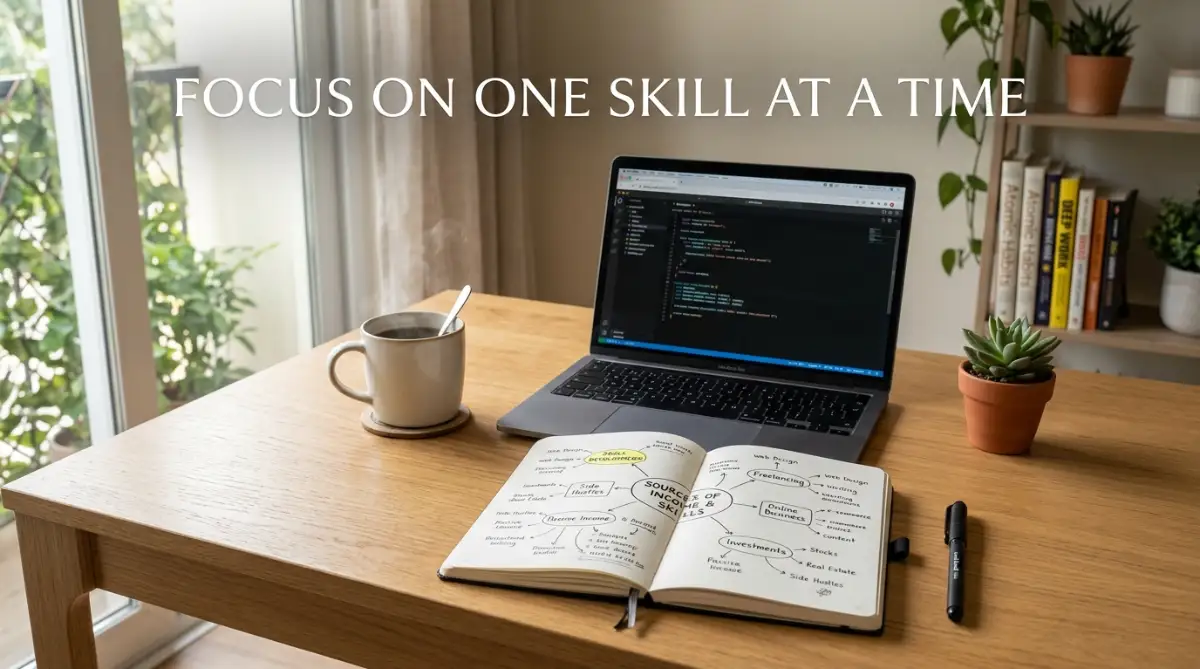
By Friday, I would feel entirely overwhelmed and end up doing absolutely nothing. My personal realization was hard but necessary: I had to force myself to put blinders on and ignore every new trend until my first side hustle made its first $100. Sticking to just one boring, reliable idea actually made me my first real money online.
Phase 3: Transitioning from Active to Passive Streams
Once you have your main job and one simple freelance gig, you are officially making money from multiple places. Congratulations, you have done what most people only dream of!
But now, your time is probably stretched very thin. This is the exact moment you need to start thinking about scalable, passive assets.
Passive income does not mean free money without any work. It simply means doing the heavy lifting once and getting paid for it repeatedly over time.
Before you watch this quick breakdown on time management, remember this: The goal is to slowly replace the hours you trade for dollars with products that sell while you sleep.
Watch this incredibly helpful breakdown on managing your time while building a side business without losing sleep:
Real-Life Scenario: The Digital Asset Snowball
Let us look at a practical example to make this crystal clear. Imagine a woman named Sarah who works as a high school math teacher.
Her anchor income is her teaching salary, which covers her basic living expenses perfectly. To create a second stream, she starts tutoring two kids online every Saturday morning.
This is her active side hustle, bringing in an extra few hundred dollars a month. Now, to add a third stream without losing more weekend hours, Sarah creates a bundle of printable math worksheets.
She lists these exact worksheets on an educational marketplace. It takes her one full weekend to design them, but now they sit on the internet forever.
Every time another teacher buys her bundle, Sarah earns money without doing any extra work. She now has three streams of cash flow without feeling overworked.
The Truth About Active vs. Passive Money
To keep your mind organized, you need to clearly understand the difference between the two types of cash flow. Mixing them up in your head is what causes the most stress.
By looking at this simple comparison, you can easily plan your week. You might spend Monday through Thursday on your active tasks to get fast cash.
Then, you can spend two hours on Saturday morning building your passive assets for the future.
Phase 4: The "One Extra Hour" Rule for Protecting Mental Energy
Burnout sneaks up on you quietly. One day you feel incredibly motivated, and the next day you cannot even look at your computer screen.
To completely prevent this sudden crash, you need to adopt the "One Extra Hour" rule. Instead of trying to hustle for five hours after a long day at work, commit to exactly one focused hour.
During this specific hour, turn off your phone notifications and close all unnecessary browser tabs. You will be absolutely shocked at how much you can accomplish in 60 minutes of pure, uninterrupted focus.
Once the hour is up, you must stop working. Go spend time with your family, read a book, or simply rest your mind.
This strict boundary trains your brain to be highly efficient without draining your long-term energy reserves.
Myth vs Reality: The Truth About Overnight Success
The internet is full of illusions that can severely damage your expectations and your confidence. Let us clear up some of the biggest misconceptions right now.
Myth: You need to have at least seven streams of income to be wealthy.
Reality: Most self-made millionaires built their wealth through one primary business or career first. They only diversified into seven streams after their first one was highly successful and stable.
Myth: Setting up an online business is totally free and takes zero effort.
Reality: Everything costs either your time or your money. If you have no money to invest, you will have to invest a lot of your free time into learning and building.
Myth: You will start seeing massive profits in your first thirty days.
Reality: Building a reliable income stream usually takes anywhere from three to six months of consistent effort before it becomes predictable.
Understanding these realities protects your mental health. When you know it takes time, you stop panicking when you do not see immediate results on day three.
Structuring Your Bank Accounts for Clarity
When extra money starts trickling in, things can get messy very quickly. If you keep all your side hustle money in your main checking account, you will easily lose track of your progress.
Open a completely separate, free bank account specifically for your new business ventures. Every single dollar you make from your freelance work or digital products should go directly into this new account.
Seeing that specific balance grow, even by just ten dollars a week, is a massive psychological boost. It gives your brain the visual proof it needs to stay motivated.
Plus, when tax season arrives, you will not have to dig through your grocery receipts to find your business expenses. Everything will be neatly organized in one specific place, saving you a massive headache.
Leveraging Free Tools to Automate Your Work
One of the greatest secrets to avoiding overwhelm is making technology do the heavy lifting for you. You do not need to hire a virtual assistant when you are just starting out.
There are completely free tools available right now that can save you dozens of hours every single month. If you are scheduling social media posts for your new brand, use free auto-schedulers instead of posting manually every day.
If you are sending emails to potential freelance clients, save a set of strong templates in your notes app. You only have to write a brilliant pitch one time.
After that, you just copy, paste, change the client's name, and hit send. Small optimizations like this protect your daily energy.
Every minute you save on a boring, repetitive task is a minute you can spend resting or brainstorming bigger ideas.
The Psychology of Small Wins
We are biologically wired to crave immediate rewards. When you start building a new asset, the lack of immediate money can make you want to quit quickly.
To trick your brain into staying consistent, you need to celebrate the tiny, non-financial victories. Did you finally buy your domain name today? That is a massive win.
Did you publish your first gig on a platform, even if nobody bought it yet? That takes huge courage, and you should be proud of it.
Do not wait until you hit your first thousand dollars to feel good about yourself. Acknowledge every single step you take toward your financial independence.
When you attach positive emotions to the actual process of working, the money simply becomes a happy byproduct of your new habits. You learn to enjoy the quiet mornings with your coffee and your laptop, instead of stressing over the final outcome.
Pro-Level Strategies for Long-Term Financial and Digital Safety
Now that we have covered the basics, it is time to move forward. Knowing the rules of the game is just the beginning. The real magic happens when you turn those rules into daily habits that protect your money and your data over the long run.
Most people start strong but lose their focus after a few weeks. We are not going to let that happen to you. Let’s look at exactly how the experts maintain their peace of mind without stressing out every single day.
You can think of this process like taking care of a beautiful garden. You cannot just plant seeds once and expect a perfect harvest. You have to water the soil, build a strong fence to keep out wild animals, and regularly pull out the weeds.
In this case, the soil is your savings, the fence is your online security, and the weeds are those sneaky bad habits that drain your wallet.
Setting Up Your Defensive Wall
To keep your assets safe, you need a system that works on autopilot. You do not want to wake up every morning wondering if your money or your personal files are secure. The best defense is a quiet one that runs smoothly in the background.
First, let's talk about managing your borrowed money. Borrowing money is not naturally bad, but the way you manage it makes all the difference. When you are looking at your debts, always prioritize predictability.
For example, locking in a secure and low-interest borrowing option gives you a clear roadmap for the future. You will know exactly what you owe every month. This simple step removes a huge amount of mental weight from your shoulders.
To back this up, you should always check reliable federal advice on managing consumer debt to understand your basic rights. The Consumer Financial Protection Bureau provides amazing free resources to help everyday people stay out of trouble. Knowledge truly is your best weapon against unfair lending practices.
The "Sleep Well at Night" Approach to Digital Money
If you have dipped your toes into modern digital assets, you already know how wild the market can get. The prices go up and down so fast it can make your head spin. Checking your phone at 2 AM to see if your portfolio is crashing is a terrible way to live.
The secret to long-term success here is emotional control. You need a system for handling market swings without losing your mind. Instead of reacting to every little news story, set clear boundaries for yourself.
Decide on a specific day of the week to check your accounts, and ignore them the rest of the time. If you want to grow your wealth steadily, look into realistic ways to earn from your digital assets. Slow and steady strategies always beat the risky, get-rich-quick schemes.
You should also read up on government guidelines on recognizing investment scams. The SEC regularly updates their advice on how to spot offers that are simply too good to be true. If a random person on the internet promises you guaranteed daily profits, run the other way.
Locking Down Your Daily Digital Habits
Your money is only as safe as the devices you use to access it. If your computer or phone is an open door, hackers will eventually walk right in. You would never leave your car keys in the ignition with the doors unlocked, right?
Treat your computer exactly the same way. Start by setting up a solid defense against online threats. A good software shield catches the tiny mistakes we all make, like clicking a bad link in an email.
We also have to talk about passwords. Using your pet's name followed by "123" is basically inviting criminals into your bank account. According to industry-standard password guidelines from the National Institute of Standards and Technology, using long, unique phrases is the best way to stay protected.
Make your passwords long, make them weird, and never use the same one twice. A simple password manager can remember all of them for you, so you only have to memorize one master key.

The Hidden Traps That Can Drain Your Savings Overnight
We all make mistakes, but some errors in judgment can cost you dearly. When it comes to your finances and online safety, a small oversight can quickly turn into a massive nightmare. Let’s talk about the dark side of bad habits so you can steer clear of the danger zone.
Imagine waking up one morning to find your computer completely locked down. A scary message flashes on your screen, demanding a huge payment just to get your family photos and tax documents back. This is not a movie plot; it happens to thousands of normal people every single day.
If you do not take steps toward protecting your valuable data from malicious attacks, you are playing Russian roulette with your digital life. The emotional toll of losing years of memories or important business files is completely devastating. You feel violated, angry, and completely helpless.
The Slow Poison of Hidden Costs
The same level of danger exists in the financial world, but it usually moves a bit slower. The biggest trap people fall into is trusting the big, bold print on loan documents while ignoring the tiny letters at the bottom. Lenders love to reel you in with a low monthly payment, but that is rarely the whole story.
When you rush into a financial agreement because you need cash quickly, you almost always end up paying the price later. Failing to spot unexpected charges when borrowing money can drain thousands of dollars from your savings over time. It is like trying to fill a bucket that has a giant hole in the bottom.
You work hard for your paycheck, and seeing it disappear into mysterious "processing fees" or "early payoff penalties" is deeply frustrating. This kind of financial stress ruins relationships, causes sleepless nights, and takes away your peace of mind.
Scenario: The Shiny Object Syndrome
Another massive pitfall is the urge to chase the next big thing. Let's say your neighbor tells you about a secret new app that doubles your money in a week. Your brain instantly lights up with excitement.
You think about all the bills you could pay off and the vacations you could take. This emotional rush causes you to throw caution to the wind and hand over your hard-earned cash without doing any real research. By the time you realize it was a setup, the money is gone forever, and the "helpful neighbor" suddenly stops returning your calls.
To avoid this, you must build an emotional shield. Whenever you feel that sudden burst of greed or fear, force yourself to wait twenty-four hours before making a move. That small window of time is usually enough to let your logical brain take over and stop you from making a huge mistake.
Always remember to double-check these situations against national standards for basic online hygiene. The Cybersecurity and Infrastructure Security Agency constantly warns the public about these exact emotional manipulation tactics used by scammers.
Your Roadmap to Everyday Peace of Mind
We have covered a massive amount of ground today. You now understand the deep connection between how you manage your money and how you protect your personal data. It is not just about numbers on a screen; it is about building a secure, stress-free life for yourself and your family.
You do not need to be a Wall Street banker or a computer hacker to get this right. The most successful people are simply the ones who stick to the boring, basic routines day in and day out. They read the fine print, they use strong passwords, and they do not let their emotions control their wallets.
An Action Plan for Tomorrow
Instead of just reading this and moving on, I want you to take real action. Pick just one thing from this guide and do it right now. Small wins build momentum, and momentum creates lasting change.
Here is a simple checklist you can start working on today:
- Audit Your Passwords: Take ten minutes to change the password on your main email account. Make it a long phrase that only you would know.
- Check Your Statements: Look at your most recent credit card or loan statement. Look for any fees you do not understand and call the company to ask about them.
- Set a Schedule: Pick one day a month to review your financial and digital security. Put it in your calendar right now so you do not forget.
If you follow these simple steps, you will be so far ahead of the average person. You are taking control of your future, and that is something to be incredibly proud of. Keep learning, keep asking questions, and never let anyone rush you into a bad decision.
Answers to Your Most Common Questions
How often should I realistically check my investment portfolios?
Unless you are actively trading for a living, checking your accounts once a week or even once a month is plenty. Staring at the daily price changes will only cause you unnecessary stress and lead to emotional decisions. Set a long-term plan, invest your money, and let time do the heavy lifting for you.
What is the simplest way to remember all my secure passwords?
You should definitely use a trusted password manager app. These tools generate super strong passwords for all your accounts and store them in an encrypted vault. You only need to memorize one strong master password to unlock everything, making your life much easier and safer.
Why do some loans seem incredibly cheap at first glance?
Many lenders offer "teaser rates" to get your attention and make you sign the paperwork quickly. However, they hide extra costs like origination fees, service charges, or penalties deep in the contract. Always read the fine print and ask for the total cost of the loan before you agree to anything.
Can I actually get my files back if I get hit by a ransomware attack?
Sometimes paying the ransom works, but security experts strongly advise against it because there are no guarantees. The absolute best protection is keeping a secure, offline backup of your important files on an external hard drive. If you get attacked, you can simply wipe your computer and restore everything from your backup for free.
Is it too late to start learning about digital security if I am older?
It is absolutely never too late to start protecting yourself online. The basic steps, like using two-factor authentication and avoiding suspicious emails, are easy to learn at any age. There are plenty of free, simple guides available that walk you through the process step by step.
I truly believe that anyone can master these skills with just a little bit of patience and consistency. My hope is that you walk away from this article feeling confident, empowered, and ready to take full control of your digital and financial life. Start small today, stay committed to your routines, and watch how quickly your peace of mind grows!
Disclaimer: The information provided in this article is for educational and informational purposes only. It does not constitute financial, legal, or professional cybersecurity advice. Always consult with a certified financial planner or IT professional before making significant decisions regarding your money, investments, or data security.
