The Cold Reality of Being Told "No" by the Bank
Let's skip the sad stories about getting rejected at the bank. If you are reading this, you already know how frustrating it is when a loan officer tells you to come back with a cosigner. You need money for a car, a house, or a business, and you need it right now. I am going to show you exactly how to bypass the gatekeepers, clean up your financial profile, and get approved on your own terms. No begging, no cosigners—just a clear, step-by-step game plan that actually works.
I felt so small. I didn't have anyone to ask. My parents were retired, and my friends were struggling just like me. It felt like the world was telling me I wasn't good enough. I felt stuck. I needed that money to move forward, but the gatekeepers wouldn't let me in. Maybe you feel that way right now. You are tired of being told you are a "risk." You are tired of needing someone else’s signature to start your life. It is more than just money. It is about your pride. It is about your independence.
When you can't get a loan on your own, it feels like you are not a real adult. You stay awake at night wondering how you will pay for that car or fix that house. The stress is heavy. It sits on your chest every morning. You see others getting ahead, while you are stuck behind a wall of "No."
But I want you to know something. I found a way out. I learned how the system works. I stopped asking for permission and started building my own path. You can do the same. You don't need a shadow to follow you into the bank.
You just need a plan. You need to know what the bank is actually looking for when they look at you. It isn't just a number on a screen. It is a story of trust. I am going to show you how to tell that story so the bank says "Yes."
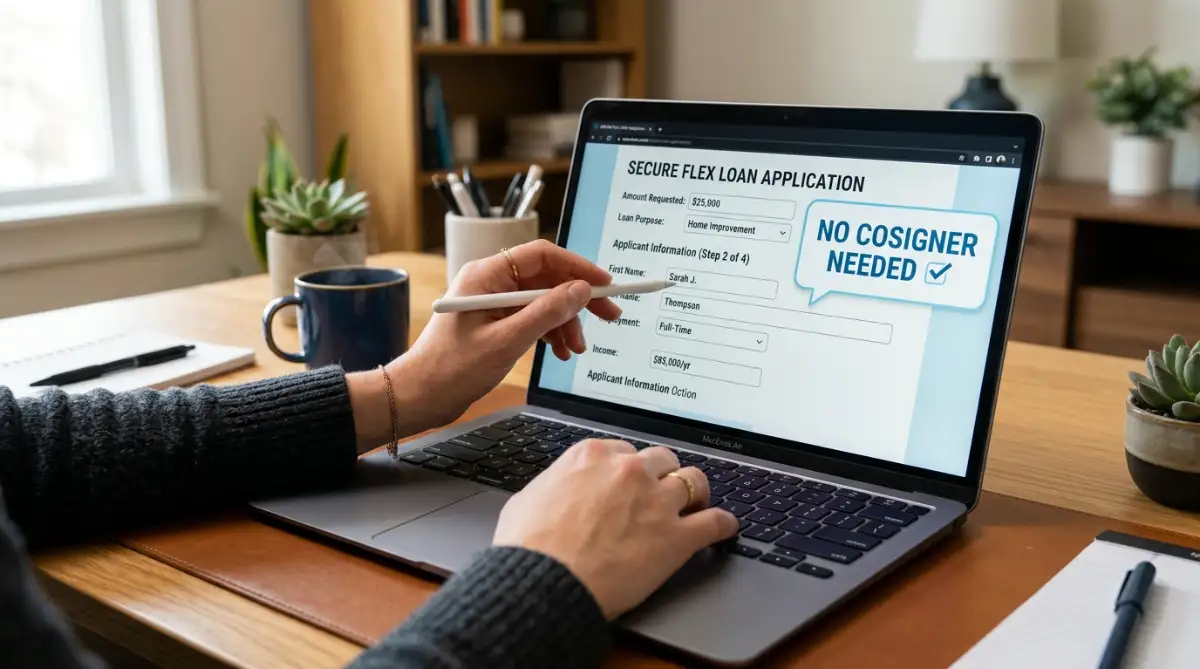
📋 Your Solo Loan Action Plan:
- Check for Errors: Fix hidden mistakes on your credit report that are dragging your score down.
- Lower Your DTI: Pay off tiny debts first to make your monthly income look much stronger.
- Pick the Right Door: Learn why local credit unions are 10x more likely to say "yes" than big national banks.
- Start Small: Use a secured card or a micro-loan to force the bank to trust your payment habits.
Building Your Fortress of Financial Trust
The first thing you have to understand is why the bank is scared. They aren't mean people. They are just careful with their money. They want to know if you will pay them back. Without a cosigner, you are the only one on the hook.
So, we have to make you look like the safest bet they have ever seen. This starts with your credit history. Most people think credit is a mystery. It isn't. It is just a record of your past behavior.
If you have no credit, you are a ghost. If you have bad credit, you are a red flag. You need to become a green light. Start by checking your report. I was shocked when I found a mistake on mine from five years ago.
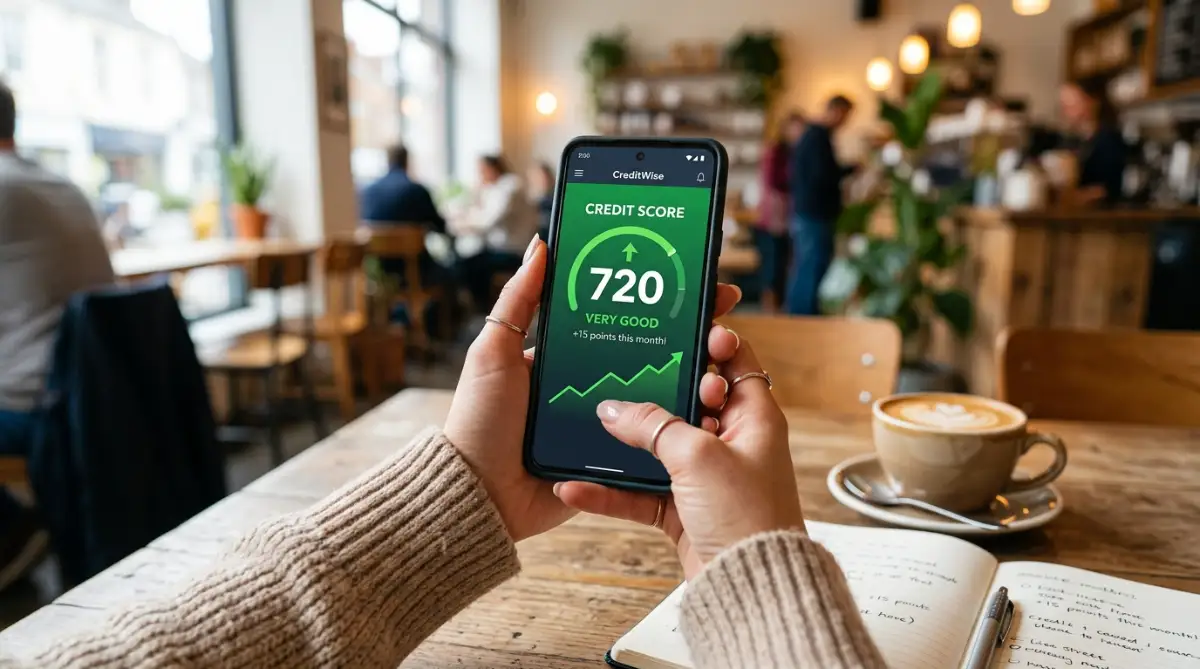
That tiny mistake was killing my chances. I fixed it, and my score jumped. You should do this today. Look for old bills you forgot about. Look for names that aren't yours. Small errors happen more than you think.
Once your report is clean, you need to show activity. You can't show you are good with money if you never use it. Get a "secured" credit card if you have to. This is where you give the bank some money, and they let you use a card. It sounds silly to give money to get money. But it works. It proves you can follow the rules.
I once thought that avoiding all debt was the smart thing to do. I never had a credit card because I was afraid of debt. But when I went to buy a car, the bank told me I didn't exist in their system. I realized that to get a loan, I had to prove I could handle small amounts of debt first.
Proving You Are a Money-Making Machine
Banks love one thing more than a good credit score They love a steady income.
They want to see that money is coming into your pocket every single month. It doesn't just have to be a high salary. It needs to be consistent. If you are a freelancer or have a side job, keep every single receipt.
Show them your bank statements. Show them that even if you don't make millions, you never run out of cash. The bank looks at something called "Debt-to-Income" ratio. This is a fancy way of asking how much you owe versus how much you earn. If you already owe a lot of money, they won't give you more. Try to pay off small debts before you apply for the big loan.
You might get approved, but with higher interest. |
| $4,000 | $2,000 | 50% | Red Flag. You need to pay off this directly into your editor:
It makes your profile look "clean." It shows you have room in your budget to pay them back. Think of it like a bucket. If your bucket is already full of water, you can't add more. You have to pour some out first. When you talk to the loan officer, be prepared. Bring your pay stubs. Bring your tax papers. Don't wait for them to ask. Show them you are organized. An organized person looks like a responsible person.
Watch this video to understand how lenders view your income and what you can do to look better on paper.
Choosing the Right Door to Knock On
Not all banks are the same. This was a huge lesson for me. Big national banks are like giant machines. They follow strict rules. If you don't fit their box, they toss you out. But local credit unions are different. They are often smaller and more "human." They might actually listen to your story. They might look at your job history instead of just your score.

I found that my local credit union was much more helpful. They sat down with me. They explained what I was missing. Sometimes, you don't need a different credit score. You just need a different bank. Research online lenders too. Many new companies specialize in people who don't have cosigners.
They use different ways to check your "trustworthiness." They might look at your education or your career path. But be careful. Always check if they are real. Look for reviews. Don't fall for "easy money" traps with huge interest rates. You want a partner, not a predator. A good loan should help you, not hurt you. Take your time to compare. Don't just take the first offer. Even a 1% difference in interest can save you thousands of dollars later.
The Power of a Down Payment or Collateral
If you still find it hard to get a "Yes," you might need to put some skin in the game. This means offering a down payment. If you want a $10,000 loan, and you have $2,000 saved up, tell them. It shows you are serious. It lowers the risk for the bank. They feel safer because you are sharing the risk with them.
Another option is a "secured loan." This is where you use something you own as a guarantee. It could be a car title or a savings account. If you don't pay, the bank takes the item. It is scary, I know. But it is a very fast way to get approved without a cosigner.
It builds a bridge of trust. Once you pay back a secured loan, the bank will trust you for an unsecured one later. Think of it as a test. You are proving yourself one step at a time. Most people want the big loan right away. But sometimes you have to start small. Take a tiny loan. Pay it back early. Then ask for a bigger one. This is how you win the long game.
Myth vs. Fact: The Loan Amount Trap
- The Myth: If I apply for a bigger loan, the bank will at least give me half of what I asked for.
- The Fact: Banks do not bargain like that. If you ask for $20,000 and only qualify for $5,000, they will just reject the whole application. Always ask for the exact minimum you need.
Understanding the "Why" Behind the "No"
If a bank says no, don't just walk away. Ask them why. They are legally required to tell you. Is it your income? Is it a specific mark on your credit? Is it the amount you asked for? Once you know the "Why," you can fix it. It is like a map. They are giving you the directions to a "Yes."
I once got rejected because I hadn't lived in my apartment long enough. The bank wanted to see "stability." So I waited six months and applied again. I got approved. Nothing else changed but the time. Patience is a tool. Don't rush into a bad loan because you are in a hurry.
Fixing your financial profile takes time, but it lasts a lifetime. Once you have good credit and a strong name, you will never need a cosigner again. You will have the keys to your own future. You will be able to buy what you need when you need it. That feeling of walking into a bank and knowing you are the boss? That is worth the work.
Small Steps for Big Results
Don't try to fix everything in one day. You will get overwhelmed. Pick one thing this week. Maybe it is just downloading your credit report. Next week, maybe you call a credit union to ask about their requirements.
The week after, you might start a small savings goal for a down payment. These small wins add up. Before you know it, you are standing in that bank again.
But this time, your head is high. You have the papers. You have the proof. And when the officer looks at you, they don't see a risk. They see a professional. They see a responsible adult.
They see a person who doesn't need a cosigner because they are strong enough on their own. I have been where you are. I know the frustration. But I also know the victory. Keep pushing. Keep learning. Your "Yes" is coming.
Navigating the World of Alternative Lenders
Sometimes, the traditional bank path is just too slow. Or maybe their rules are too old-fashioned for your modern life. In these cases, you can look at Peer-to-Peer (P2P) lending platforms. These are websites where regular people lend money to other people.
The rules are often a bit more flexible. They look at you as a person, not just a number. I have seen people with average credit get great loans here because they had a good reason for the money.
Explain your situation clearly. Tell them how the loan will help you grow. Whether it is for a new business or a car to get to a better job, the "purpose" matters here. However, always read the fine print. Some of these platforms have hidden fees. You must be your own protector. No one cares about your money as much as you do.
Check the interest rates. Check the late fees. Make sure the monthly payment fits your life. If the payment is too high, you are just trading one problem for a bigger one. Always aim for a payment that feels "easy" to make. This keeps your stress low and your credit high.
Why Your Employment History Is Your Secret Weapon
Banks love "time." They love to see that you have been at the same job for a while. If you are thinking about quitting your job, wait until after you get the loan. Changing jobs right before you apply can be a red flag. Even if the new job pays more, the bank sees "change" as "risk."
They want to know that your paycheck is going to keep coming. Two years at the same company is often the magic number. If you have been there a long time, use it as a talking point. Tell the loan officer, "I have been with my employer for four years."
It shows you are reliable. It shows you don't run away when things get tough. Reliability is the brother of trust. And trust is the father of a loan approval. If you are self-employed, this is harder but not impossible. You just need more proof.
Keep two years of tax returns ready. Keep a list of your clients. Show that your business is healthy. The more data you provide, the less the bank has to guess. And banks hate guessing.
The Importance of the "Right" Loan Amount
Sometimes we ask for too much money. We think, "If I'm getting a loan, I might as well get a big one." This is a mistake when you don't have a cosigner. The more money you ask for, the more the bank worries.
Try asking for the absolute minimum you need. If you need $5,000 for a car, don't ask for $7,000 "just in case. "A smaller loan is much easier to approve solo. It shows you are being careful and realistic.
Once you prove you can pay back a small amount, the bank will be happy to give you more later. It's like a friendship. You wouldn't lend $100 to a stranger, but you might lend them $5. Let the bank get to know you through a small transaction first. It builds the foundation for your entire financial future.
Final Thoughts on Your Solo Journey
Getting a loan without a cosigner is a marathon, not a sprint. It takes effort. It takes looking at your finances in a way you never have before. It might mean saying "no" to some things now so you can say "yes" to a loan later.
But the freedom you feel when you sign that paper alone? It is incredible. You won't owe anyone a favor. You won't have to worry about hurting someone else's credit. It is just you and your success. You are capable of this. You have the tools.
Start today. Check that score. Talk to that credit union. Take that first step. Your future self will thank you for the work you are doing right now. You are building a life of independence, one step at a time.
Insider Strategies for Solo Loan Approval
Now that you understand the basics of credit and income, we need to look at the "pro" moves. These are the small things that separate people who get approved from those who keep getting rejected.
One of the best secrets I ever learned was about your Debt-to-Income (DTI) ratio. This is a number banks use to see if you can handle more debt. If you pay off even one small credit card entirely, your DTI looks much better.
I used to have three small cards with tiny balances. I thought keeping them open was good. But the bank saw three monthly payments. I paid two of them off completely, and my "risk level" dropped instantly.
You should also look at fixed-rate personal loans because they offer more stability. Banks love stability. When they see a set payment that never changes, they feel safer giving you money.
Another secret is to ask for a lower amount first. If you need a big sum, try to get a smaller "bridge loan" first. Once you show you can pay that back for six months, the bank will often let you "top up" the loan.
This builds a paper trail of success. You are training the bank to trust you. It is like meeting someone new. You wouldn't lend them a car on day one, but you might lend them a book.
Think about the timing of your application. Most banks have monthly or quarterly targets. If you apply at the end of a month when they need to hit their goals, they might be more flexible.
I always tell my friends to check their credit reports at least three months before applying. You can get free reports from official sources like the Consumer Financial Protection Bureau. This gives you time to fix any weird mistakes.
If you find a mistake, don't just ignore it. A $50 medical bill you didn't know about can lower your score by 50 points. That 50 points could be the difference between a "Yes" and a "No" without a cosigner.
You should also consider securing personal loans without using your assets if you have a decent job history. This is called an "unsecured loan," and it is the ultimate goal for someone working solo.
To make this work, you need to show "long-term potential." If you have been in the same industry for years, even if you changed companies, highlight that. It shows you have a "career," not just a "job."
Keep a folder of your last two tax returns and your last four pay stubs. When you walk into the bank with a physical folder, you look like a professional. You are showing them that you are ready and serious.
Most people just show up and hope for the best. Don't be "most people." Be the person who has every answer ready before the question is even asked.
This level of preparation sends a silent message to the loan officer. It says, "I am responsible, I am organized, and I will pay you back." This is how you win when you don't have a cosigner to back you up.

Mistakes That Can Break Your Financial Future
When you are trying to get a loan alone, one wrong move can set you back for months. I have seen so many people fail because they were in too much of a hurry. The biggest mistake is the "Shotgun Approach." This is when you apply to five or six different banks in one week. You think you are being smart by looking for the best deal.
But every time you apply, the bank doing a "hard pull" on your credit. This makes your score drop. If a bank sees six inquiries in one week, they think you are desperate for cash. Desperation is a huge red flag. It makes the bank think you are having a financial emergency. Instead, do your research first without applying.
Use tools for smart personal loan comparison to see where you fit. Only apply when you are 90% sure you meet their specific rules. Another huge trap is hiding your debts. I once knew someone who didn't mention a private loan they had with a friend. The bank found out through their bank statements.
The bank didn't care about the money as much as they cared about the honesty. If you hide one thing, they think you are hiding everything. Be 100% open about what you owe. Watch out for hidden personal loan fees too. Some loans look cheap but have "origination fees" or "pre-payment penalties."
An origination fee is money they take out before you even get the check. If you borrow $10,000 and the fee is 5%, you only get $9,500. But you still have to pay interest on the full $10,000. This can ruin your plan if you needed exactly $10,000 for a car or a project. Always ask, "How much cash will actually hit my bank account?"
I also see people closing old credit cards right before they apply for a loan. They think it makes their life look "cleaner." This is a terrible idea. Your "credit age" is a big part of your score. If you close your oldest card, your credit history gets shorter.
A shorter history makes you look like a beginner. Keep those old accounts open, even if you don't use them. Just put them in a drawer and forget about them. Finally, don't make any large purchases while your loan is being processed. Don't buy a new sofa or a new TV on credit.
The bank will often check your credit one last time right before they send the money. If they see a new debt, they might cancel your loan at the very last second. I have seen this happen to people buying houses, and it is heartbreaking. Stay quiet, stay steady, and don't spend a dime until the loan money is in your hand.
Taking Control of Your Financial Destiny
You have the map now. You know how to build your score, how to prove your income, and how to talk to bankers. This journey is about more than just a piece of paper or a check. it is about proving to yourself that you are independent.
When you get that approval without a cosigner, you are standing on your own two feet. You are telling the world that you are a reliable, strong, and capable person. Don't let a "No" stop you. If one bank says no, use it as a lesson. Ask them for the specific reason and fix it.
I remember the day I finally got my first solo loan. I didn't even care about the money as much as the feeling of pride. I had done it all by myself. You can have that same feeling. It starts with one small action today. Maybe you check your score, or maybe you start a savings account.
Whatever you do, don't wait for "the right time." The right time is right now. You have the power to change your financial life. There are many best banks for large unsecured personal loans that are waiting for people just like you. They want to lend money to people who are prepared and honest.
Go out there and show them who you are. You are not a "risk." You are a success story in the making. I really believe you can do this. I was in your shoes, feeling stuck and ignored, but I pushed through and found the way. Take that first step today, stay focused on your goal, and you will see your dreams turn into reality.
Common Questions About Getting Loans Solo
Can I get a loan if I am self-employed without a cosigner?
Yes, you definitely can, but you need to show more proof than someone with a regular job. Banks usually want to see two years of tax returns to prove your business is making money. If you can show a steady profit over time, they will treat you just like any other borrower.
How high does my credit score need to be?
There is no "magic number" that works for every bank, but usually, a score above 670 is considered good. If your score is lower, you might still get a loan, but the interest rate will be higher. You can check your score details through services like FICO to see where you stand.
Will a small loan help me get a bigger one later?
Absolutely. This is one of the smartest things you can do. Taking a small "credit builder" loan and paying it back on time is the fastest way to show a bank you are reliable. It creates a history of trust that makes future, larger loans much easier to get.
Should I use a local credit union or a big national bank?
I usually suggest starting with a local credit union. They are often more willing to look at your whole story rather than just your credit score. You can find local credit unions through the National Credit Union Administration. They often have lower fees and better interest rates for their members.
What if I have no credit history at all?
If you are a "ghost" in the credit world, start with a secured credit card or a small secured loan. This gives the bank a safety net while you prove you can follow a payment schedule. Within six months to a year, you should have enough history to apply for a regular loan on your own.
Disclaimer: This article is for informational purposes only and does not constitute financial, legal, or professional advice. Loan approval depends on individual circumstances, lender policies, and market conditions. Always consult with a certified financial advisor before making major financial decisions. We do not guarantee loan approval or specific interest rates.