The Heavy Weight of Debt and My Search for a Way Out
Let' money without making things worse is exhausting. A while back, I had to choose between a personal loan and a line of credit.s be honest, staring at a pile of unpaid bills is a terrible feeling. A while back, I needed cash fast At first glance, I thought they were basically the same thing, but that assumption almost cost me hundreds of dollars in sneaky to fix my car and clear out some high-interest debt, but I was terrified of making a bad financial move. interest charges. Here is exactly how I broke down the math, skipped the confusing bank jargon, and found the cheapest way I had to choose between a personal loan and a line of credit—and picking the wrong one almost cost me a fortune. Here is exactly how out
The big question was how to do it without making things worse. I had two main choices in front of me: a personal loan or a credit line. At first, I thought they were basically the same thing. I was wrong, and that mistake almost cost me hundreds of dollars in extra interest.
I spent hours researching, calling banks, and crunching numbers. My goal was simple: I wanted to keep as much money in my pocket as possible. I didn't want fancy financial talk; I wanted real answers. This is the story of what I learned and how you can avoid the same stress I felt.
Many of my friends told me to just "get a loan and be done with it." Others said a credit line was better because it was more flexible. But nobody could tell me exactly which one would save me more money in the long run. I had to figure it out for myself.
Understanding the Real Difference Between These Two Choices
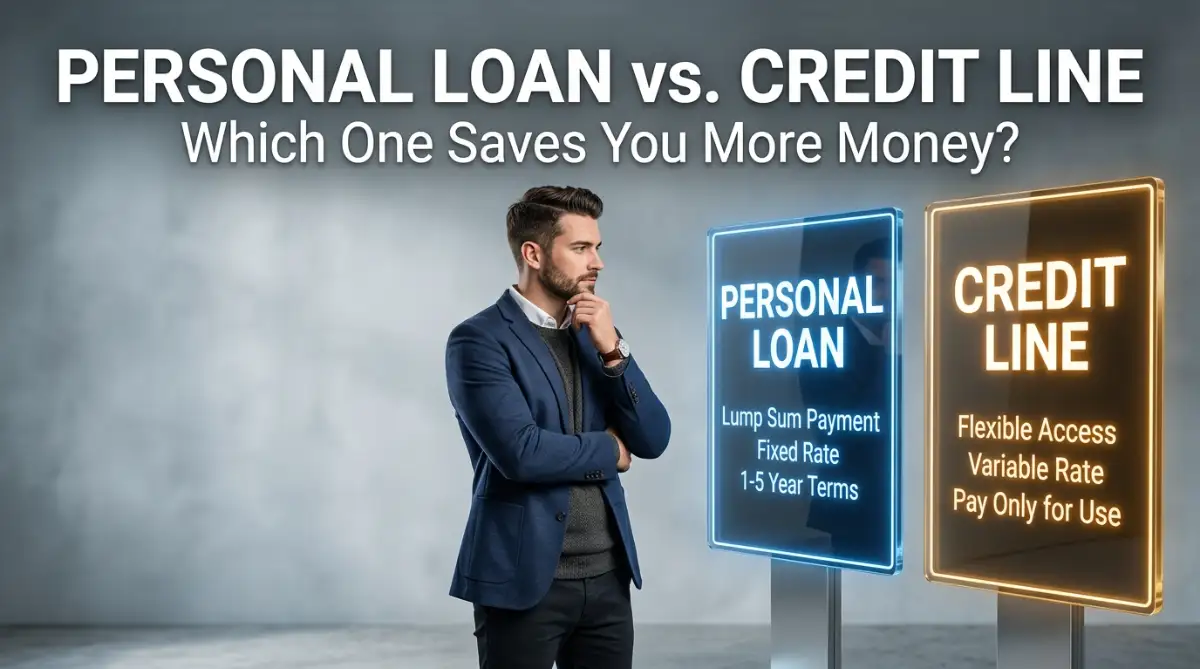
Before we talk about savings, we have to look at how these two things work. A personal loan is like a one-time delivery of cash. You ask for a certain amount, the bank gives it to you, and you pay it back in equal parts. It is very structured and predictable.
On the other hand, a credit line is more like a revolving door. You are given a limit, say $10,000, but you don't have to take it all at once. You only take what you need, when you need it. You only pay interest on the amount you actually use.
This difference is where the potential for savings starts to show up. If you need $5,000 today for a specific project, a personal loan might be great. But if you think you might need $2,000 now and maybe $3,000 later, a credit line could be different. I had to look at my own habits to see which one fit.
Myth vs. Fact Check**
- Myth: You pay interest on your total credit line limit.
- Fact[CTRL+F Search Line - Insert AFTER this text]: "You only pay interest on" You only pay interest on the exact dollar amount you withdraw. If you have a $10,000 limit but only
- Quick Cheat Sheet: Loan vs. Line of Credit
- The Structure: Personal Loan (Fixed lump sum) use $1,000, your interest is only calculated on that $1,000.
vs. Line of Credit (Flexible revolving pool).
- The Rates: Personal Loan (Usually fixed, safer[CTRL+F Search Line - Insert AFTER this text]: "But for ongoing needs, the credit line"
- ) vs. Line of Credit (Usually variable, market-dependent).
- Best Used For: Personal Loan ([New Content Block 2]:
- Let's Look at a Real-Life Math Example:
- Imagine you are fixing up your kitchen andDebt consolidation, one-time big purchases) vs. Line of Credit (Home renovations, freelance income gaps
Why a Personal Loan Might Be Your Best Friend
A personal loan offers something that many of us desperately need: discipline. When I took out my first loan, I knew exactly how much was leaving my bank account every month. There were no surprises. This helped me build a budget that actually worked.
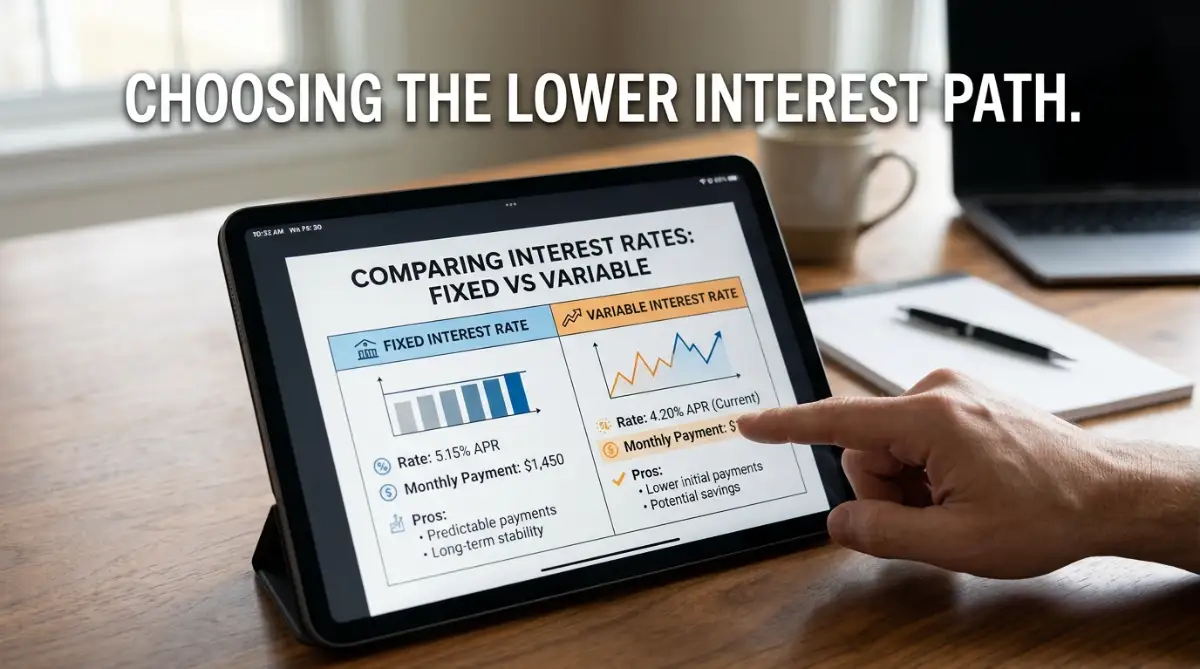
The interest rates on personal loans are usually fixed. This means even if the economy goes crazy, your rate stays the same. This predictability is a huge win for your mental health. You don't have to check the news to see if your loan payment went up.
Also, personal loans usually have a set end date. You know that in three years or five years, you will be 100% debt-free. There is a light at the end of the tunnel. For someone like me who loves to cross things off a list, this felt amazing.
The Hidden Power of a Credit Line for Smart Borrowing
Now, let's talk about the credit line. This is where things get interesting for people who want to be flexible. Imagine you are doing a home renovation. You don't know the final cost yet. Taking a big personal loan might mean you borrow too much and pay interest on money you don't need.
With a credit line, you only pay for what you spend. If your limit is $20,000 but you only spend $5,000, you only pay interest on that $5,000. This can save you a massive amount of money if your expenses are spread out over time. It gives you control.
However, credit lines often have variable interest rates. This means the cost can go up or down based on the market. It is a bit of a gamble. I realized that if I chose a credit line, I had to be okay with the risk of higher payments later on.
need $5,000 over three months.
- Option A (Personal Loan at 10%): You take $5,000 upfront. You start paying interest on the full amount from day one, even if the
- Real-World Math: Why Flexibility Pays Off
- Imagine your kitchen remodel budget is $10,000, but the project takes three months.
- With a Loan: You take $10,000 contractor hasn't asked for the money yet.
- Option B (Credit Line at 12%): You pull on day one and pay interest on the full amount immediately.
- With a Line of Credit: You pull out $2,000 in month one, and $3,000 in month three. Even with a slightly higher rate, $3,000 in month one, $4,000 in month two, and $3,000 in Option B often saves you money because you skipped paying interest on the unused $3,000 for two whole months
Comparing Interest Rates and Total Costs
To really see which one saves more, you have to look at the numbers. Usually, personal loans have slightly lower interest rates than credit lines for people with good credit. But this is not always the case. You have to shop around and compare the "Annual Percentage Rate" (APR).
The APR includes the interest and any fees the bank charges. Some personal loans have origination fees. This is a fee you pay just to get the loan. A credit line might have an annual fee instead. You have to add these fees into your math to see the true cost.
I found that for a large, one-time purchase, the personal loan was cheaper because of the lower rate. But for ongoing needs, the credit line saved me more because I wasn't paying for money I wasn't using. It all depends on your specific goal.
The Psychological Trap of Easy Money
We also have to talk about how our brains work. A credit line can be dangerous because the money is always there. It feels like "extra" money in your pocket. I noticed that when I had a credit line, I was tempted to spend on things I didn't really need.
A personal loan doesn't let you do that. Once the money is spent, it's gone. You can't just go back and grab more without applying all over again. This "friction" is actually a good thing for your savings. It keeps you from overspending.
Pro Tip: I once made the mistake of using a credit line for a vacation. I thought I would pay it back quickly. But because there was no fixed monthly payment, I kept paying the minimum. I ended up paying way more in interest than if I had just saved up or used a fixed loan. My realization was: only use credit lines for things that increase your value, like home repairs or a business.
How to Choose Based on Your Project Type
If you are looking at a specific project, like debt consolidation, a personal loan is usually the winner. You can move all your high-interest credit card debt into one lower-interest loan. It simplifies your life and saves you money immediately.
If you are a freelancer or have an irregular income, a credit line might be better. It acts as an emergency fund that you only use when your income is low. This prevents you from missing other bills and hitting expensive late fees.
Watching a real-world example can help you understand the math behind these two options much better.
Analyzing the Impact on Your Credit Score
Both options affect your credit score, but in different ways. A personal loan is seen as "installment debt." Having this can actually improve your credit mix. It shows lenders you can handle a long-term payment plan.
A credit line is "revolving debt," similar to a credit card. If you use too much of your limit, your credit score might drop. This is called credit utilization. To save money on future loans, you want to keep your score high, so this is a big factor to consider.
I tried to keep my credit line usage below 30%. This kept my score healthy. When I took out a personal loan, I saw a small dip at first, but then my score rose as I made on-time payments. Protecting your score is a way of saving money on every future financial move you make.
Flexibility vs. Stability: The Great Debate
When I talk to people about this, I ask them one question: "Do you value a lower monthly payment or the ability to borrow more later?" If you want stability, the personal loan is your best bet. You can set it and forget it.
If you want flexibility, the credit line is the king. But you need to have a lot of self-control. Without it, a credit line can become a bottomless pit of debt. I learned the hard way that my own habits were more important than the interest rate itself.
Choosing the right path requires being honest with yourself. Are you a person who sticks to a plan? Or do you like to have options open? Your personality should dictate your choice as much as the numbers do.
Evaluating Fees and Hidden Charges
Don't let the banks fool you with low "teaser" rates. I always read the fine print now. Some personal loans have prepayment penalties. This means if you try to pay the loan off early to save on interest, the bank charges you a fee! That felt like a trap to me.
Credit lines often don't have this penalty. You can pay it off as fast as you want. However, they might charge you a fee just for having the account open, even if you don't use it. You have to weigh these fees against each other.
I always ask the bank for a "Truth in Lending" statement. This shows the total cost of the loan in dollars, not just percentages. When you see the total cost in big bold letters, it makes the decision much easier to make.
The Role of Collateral in Your Decision
Some personal loans and credit lines are unsecured, meaning you don't need to put up your house or car as a guarantee. These usually have higher interest rates. If you have a house, you might get a "Home Equity Line of Credit" (HELOC).
A HELOC usually has the lowest rates possible. But there is a huge risk: if you can't pay, the bank can take your home. I decided to stay away from secured loans because I didn't want that extra stress. I preferred paying a slightly higher rate for the safety of an unsecured loan.
Saving money is great, but keeping your home is better. Always think about what you are risking when you try to save a few dollars on interest. For me, the peace of mind was worth the extra 1% or 2% in interest.
How Market Trends Affect Your Savings
Right now, interest rates are changing all the time. This makes personal loans very attractive because you can lock in a rate. If rates go up next month, you don't care. Your payment stays the same.
With a credit line, your rate will likely go up when the market rates go up. This can turn a "cheap" credit line into an expensive one very quickly. I watched a friend's credit line payment jump by $50 a month just because the central bank raised rates.
If you think the economy is going to be rocky, locking in a fixed personal loan is a smart way to protect your savings. It acts like an insurance policy against rising costs. I feel much safer knowing my bill won't change.
Using a Personal Loan to Boost Your Savings
It sounds strange, but borrowing money can sometimes help you save. If you use a personal loan to pay off a 24% interest credit card with a 10% interest loan, you are saving 14% every single month. That is a huge win.
I did this with my own credit card debt. The amount of money I saved on interest allowed me to start a small savings account for the first time in years. It was the "stepping stone" I needed to get my life back on track.
The key is to stop using the credit cards once you pay them off with the loan. If you use the loan to pay the card and then run up the card again, you have doubled your trouble. I had to cut up my cards to make sure I didn't fall back into that hole.
When a Credit Line is the Clear Winner
There are times when a credit line is clearly better. For example, if you are a small business owner waiting for a client to pay you. You might need $2,000 for just ten days. Taking a personal loan for that is overkill and expensive.
With a credit line, you take the $2,000, pay it back in ten days, and only pay interest for those ten days. The total cost might be just a few dollars. This is much cheaper than any loan or cash advance.
In this scenario, the flexibility of the credit line is what saves you money. It provides a "safety net" that costs nothing until you actually fall into it. This is how I use credit lines today—as a backup plan, not as a primary source of cash.
Final Thoughts on Making the Right Move
There is no "one size fits all" answer here. You have to look at why you need the money and how you plan to pay it back. If it's a one-time big cost, look at a personal loan. If it's an ongoing or uncertain cost, look at a credit line.
Always compare the total cost, check for hidden fees, and be honest about your spending habits. Your goal is to pay the least amount of interest possible while keeping your stress levels low. I found that once I had a plan, that knot in my chest finally went away.
Take your time to decide. Don't let a bank representative rush you into a choice. It's your money and your future. By doing this research today, you are already steps ahead of most people. You have the power to choose the path that leads to financial freedom.
Expert Strategies to Make Your Borrowing Cheaper
When I first started looking at my debt, I realized that just picking a loan wasn't enough. You have to know the "insider" moves that banks don't always advertise. One of the best things you can do is look into autopay discounts. Most lenders will lower your interest rate by about 0.25% if you let them take the payment automatically from your bank account. It sounds small, but over a few years, that is money that stays in your pocket instead of theirs.
Another big secret is understanding the power of shorter loan terms. I know it is tempting to pick a 5-year loan because the monthly payment is lower. But you end up paying so much more in total interest. If you can squeeze your budget and pick a 3-year term instead, you might save thousands. I always tell my friends to look at smart personal loan comparison data before signing anything. It helps you see the true cost over time.
If you decide a credit line is better for your needs, you have to be smart about interest-only periods. Some credit lines let you pay only the interest for a while. This feels good for your wallet today, but it’s a trap if you aren't careful. I suggest always paying at least a little bit of the "principal" or the main balance. This keeps your debt from growing like a weed in a garden.
You should also keep a close eye on your credit score while you have these accounts open. A higher score means you can often "refinance" or move your debt to a cheaper option later. I learned that improving personal loan approval odds is a skill you can learn. If your score goes up by 50 points, call your bank and ask for a better rate. You would be surprised how often they say yes just to keep you as a customer.
Using Debt to Actually Build Your Wealth
It sounds backwards, right? But the most successful people I know use debt as a tool, not a weight. For example, if you have a credit line, you can use it to buy supplies for a side business. If that business makes more money than the interest you pay, you are winning. This is called "positive leverage." I started my small home project this way, and it paid off much faster than I expected.
However, you must have a clear exit plan. Never borrow money without knowing exactly how you will pay it back. I like to use a simple spreadsheet to track my balance every single week. Seeing the number go down gives me a rush of excitement. It makes the "struggle" of saving feel like a game I am winning.
If you are struggling with high-interest cards, moving that balance to fixed-rate personal loans is a pro-level move. It stops the "compound interest" from eating your paycheck. Think of it like putting a fence around a fire so it doesn't burn your whole house down. You get one clear payment, one clear interest rate, and a clear path to freedom.
For those who are worried about their assets, there are ways to get help without risking your home. You can look at ways to secure personal loans without using your assets to keep your peace of mind. Keeping your personal property safe while you fix your finances is a top priority. I never want to lose sleep wondering if my car or house is at risk because of a small loan.
Managing the Long-Term Health of Your Finances
Once you have your loan or credit line, the work isn't done. You need to stay alert. Banks change their terms sometimes, especially with credit lines. I check my statements every month for any new "maintenance fees." If I see something I don't like, I call them immediately. Being a "squeaky wheel" can save you fifty or a hundred dollars a year in silly fees.
I also recommend setting up a "debt cushion." This is a small amount of cash, maybe just $500, that you keep in a separate account. If you have a bad month and can't make your loan payment, you use this cushion. This prevents you from missing a payment and ruining your credit score. According to the Consumer Financial Protection Bureau, even one late payment can stay on your record for years and cost you a lot of money in future interest.
Remember, the goal is to get to a point where you don't need to borrow at all. Every dollar you save on interest today is a dollar you can invest tomorrow. I started by saving just $10 a week from my interest savings. It didn't feel like much, but now that money is helping me create multiple income streams for my family. It all starts with making the right choice between these two borrowing tools.

The Dangerous Traps That Can Break Your Budget
I have seen people make some really painful mistakes when they get a new credit line. The biggest one is thinking of it as "backup income." It is not income; it is a very expensive tool. I knew someone who used their credit line to go out to fancy dinners when they were short on cash. By the end of the year, they owed $5,000 and had nothing to show for it but some old receipts.
Another trap is the "low monthly payment" illusion. Banks love to show you a tiny payment amount. But if you only pay that minimum, you might be paying for ten or twenty years! It is heartbreaking to see someone pay $10,000 for a $2,000 purchase because they fell for the minimum payment trap. You have to look at the total cost, not just what is due this month.
Then there are the hidden fees. Some loans have "exit fees" if you try to pay them off early. Imagine you work hard, save money, and try to do the right thing by paying off your debt. Then the bank hits you with a $200 fine for being responsible! Always ask about this before you sign. You can read more about hidden personal loan fees so you know exactly what to watch out for.
Why Your "Why" Matters More Than the Rate
I realized that my biggest enemy wasn't the bank; it was my own emotions. When I felt stressed, I wanted to spend money. When I had a credit line, that stress led me to use it for things that didn't matter. You have to be honest about why you are borrowing. If it's to fix a real problem, that's fine. If it's to make yourself feel better, it will backfire.
If you don't address the reason you are in debt, no loan in the world will save you. It’s like trying to bail water out of a boat with a huge hole in the bottom. You have to fix the hole first. For me, that meant learning to track every penny. It was boring at first, but it gave me a sense of power I never had before.
I also see people rush into a loan because they are in a "panic mode." When you are panicking, you don't read the fine print. You just want the money in your account. Scammers know this, and they target people who are in a hurry. Always take twenty-four hours to think about it. If a deal is good today, it will still be good tomorrow.
The Cost of Not Doing Your Homework
If you ignore these warnings, the damage can be huge. You could end up with a "default" on your record. This makes it almost impossible to buy a house or get a car for a long time. I have talked to people who couldn't get a job because the employer checked their credit and saw a mess of unpaid loans. It affects every part of your life, not just your wallet.
According to research on consumer credit trends, millions of people are paying more than they should because they don't compare options. Don't be one of them. Take the time to look at the numbers. Use a calculator. Ask questions until you feel like an expert. Your future self will thank you so much for the extra hour of work you do today.
Taking Control of Your Financial Story
The most important thing I want you to know is that you can do this. Debt feels like a monster, but it's just math. Once you understand how it works, you can beat it. Whether you pick a personal loan for its stability or a credit line for its flexibility, you are making a choice to improve your life. That is a huge first step.
I used to think I was "bad with money." I told myself that lie for years. But I wasn't bad with money; I just didn't have the right information. Once I learned the difference between these tools, everything changed. I went from being a victim of debt to being the boss of my money. You can make that same transition starting right now.
The path to saving more money is paved with small, smart decisions. Choosing a lower interest rate, avoiding a silly fee, and paying a little extra each month adds up to a mountain of savings. You don't have to be a math genius. You just have to care enough about your future to pay attention today.
I know it feels hard right now, but I promise you that the feeling of being debt-free is worth every bit of effort. I want you to look at your bills today not with fear, but with a plan. You have the tools, you have the knowledge, and now you have the motivation to change your story for the better.
Common Questions About Loans and Credit Lines
Is it better to have a personal loan or a credit line for my credit score?
Generally, a personal loan can be better for your score because it shows you can handle a steady, long-term payment plan. A credit line acts more like a credit card, and if you use too much of it, your score might go down. I always suggest keeping your usage low to keep your score high.
Can I change my mind and switch from one to the other?
You can't exactly "switch," but you can use one to pay off the other. For example, if you have a credit line with a high rate, you can take out a personal loan to pay it off and lock in a lower, fixed rate. This is a smart move if market interest rates are starting to climb.
Which one is faster to get approved for?
In my experience, many online lenders can approve a personal loan in just a few hours. A credit line, especially if it is through your local bank, might take a few days because they want to check your history more closely. If you are in a rush, a personal loan is usually the quicker path to getting cash in your hand.
Are there any tax benefits for either option?
For most personal loans, the interest is not tax-deductible. However, if you use a "Home Equity Line of Credit" (HELOC) for home improvements, you might be able to deduct some of the interest. You should always check with a tax professional because the rules can be very tricky and change often.
What happens if I can't pay back my credit line?
If you miss payments, the bank can close the line and send the debt to a collection agency. This will hurt your credit score for a very long time. If you are struggling, the best thing to do is call the bank before you miss a payment and ask for a "hardship program" to help you get back on track.
Disclaimer: This article is for informational purposes only and does not constitute professional financial advice. Always consult with a qualified financial advisor or tax expert before making major financial decisions. Borrowing money involves risk, and it is important to understand the terms and conditions of any financial product you choose.