The Day My Best Client Stole My Hard Work
Have you ever found your own artwork casually chilling on a brand's social media page—without your name on it? Yep, it hurts. You spend hours pushing pixels, writing code, or drafting copy, only to watch a bad client walk away with your files and zero respect for your time. The good news? You do not need an expensive law degree to build a bulletproof wall around your digital creations. Let's fix this right now.
Have you ever experienced that sinking feeling when you find your hard work posted somewhere else without your permission? It happens to freelance creators every single day, and the emotional toll is incredibly heavy. You pour your heart, soul, and creative energy into a project, only to watch someone else profit from it.
This unfair reality completely destroys your peace of mind. Instead of focusing on your art or writing, you spend hours acting like an internet detective. You constantly search the web, terrified that your portfolio has been copied again.
But you do not have to stay trapped in this cycle of fear and frustration. Taking control of your creative rights is completely possible, and it does not require a law degree.
The Freelancer's Survival Kit: Quick Takeaways
- Lock down your drafts: Never send high-resolution source files before you see the final payment in your bank.
- Bake in your details: Always embed your name and copyright info into the metadata of your images before hitting export.
- Get it in writing: A simple email trail summarizing a phone call counts as a binding agreement.
- Fight back smart: Use DMCA takedowns to remove stolen work fast, without ever paying a lawyer.
How to Lock Down Your Creative Work Before It Gets Swiped
Many freelancers think that hiring a lawyer is the only way to protect their work. That is simply a myth. You can take immediate, practical steps right now to build a strong wall around your digital assets.
Let us break down the exact strategies you need to secure your creative property. These steps are easy to follow and will give you the peace of mind you deserve.
Recognize What Actually Belongs to You
Before you can defend your work, you have to understand what you actually own. In the eyes of the law, the moment you create an original piece of work and save it, you hold the copyright. You do not need to fill out government forms just to call it yours.
Whether you are writing a blog post, designing a logo, or coding a custom website, the rights belong to you automatically. This is a scientific fact of modern copyright law. Your brain created the idea, and your hands brought it into reality.
However, proving that you created it first is where things get tricky. If someone copies your logo and claims they drew it, you need a solid paper trail to prove them wrong.
To create this proof, always save your early drafts, raw files, and sketches. Keep detailed timestamps on your computer folders. When a dispute happens, showing the step-by-step evolution of your project easily proves that you are the original creator.
Use Contracts to Build Legal Fences
Think of a contract like the front door of your house. If you leave it wide open, you cannot be surprised when someone walks in and takes your TV. Working without a contract is exactly like leaving your digital front door completely unlocked.
Many creators are afraid that asking a client to sign a document will scare them away. The reality is quite the opposite. Professional clients respect freelancers who take their business seriously.
Your contract needs to clearly state who owns the final product. It should specify that the client only receives the rights to use the work after the final invoice is paid in full. This one simple sentence is your biggest shield against bad clients.
Freelance Contracts: Myth vs. Reality
- Myth: Sending a contract makes you look hard to work with and scares clients away.
- Reality: It filters out the bad clients instantly. A true professional respects your boundaries.
- Myth: You need a lawyer to write one.
- Reality: Simple, clear English outlining "Who owns what and when" holds up perfectly well. You do not need fancy legal jargon.
If a client cancels a project halfway through, the contract must state that all drafts and ideas remain your property. They cannot take your unfinished sketches to a cheaper freelancer. If they try, your signed agreement gives you the ultimate power to stop them.
Master the Art of the Non-Disclosure Agreement (NDA)
Sometimes the biggest threat is not a client stealing your work, but them stealing your unique process or idea. This is where a Non-Disclosure Agreement becomes your best friend.
An NDA is simply a legal promise to keep a secret. When you share a brilliant app concept or a unique design strategy, the NDA stops the client from sharing it with your competitors.
You should always ask a client to sign a basic NDA before you reveal your best ideas during a pitch. If they refuse to sign it, that is a massive red flag. Good clients will never hesitate to protect confidential information.
Here is a quick breakdown of what actually protects you versus what you might think protects you:
The Power of Invisible Metadata
For photographers, designers, and illustrators, metadata is an invisible bodyguard. Every time you create a digital file, your software can hide your personal information deep inside the code of the image.
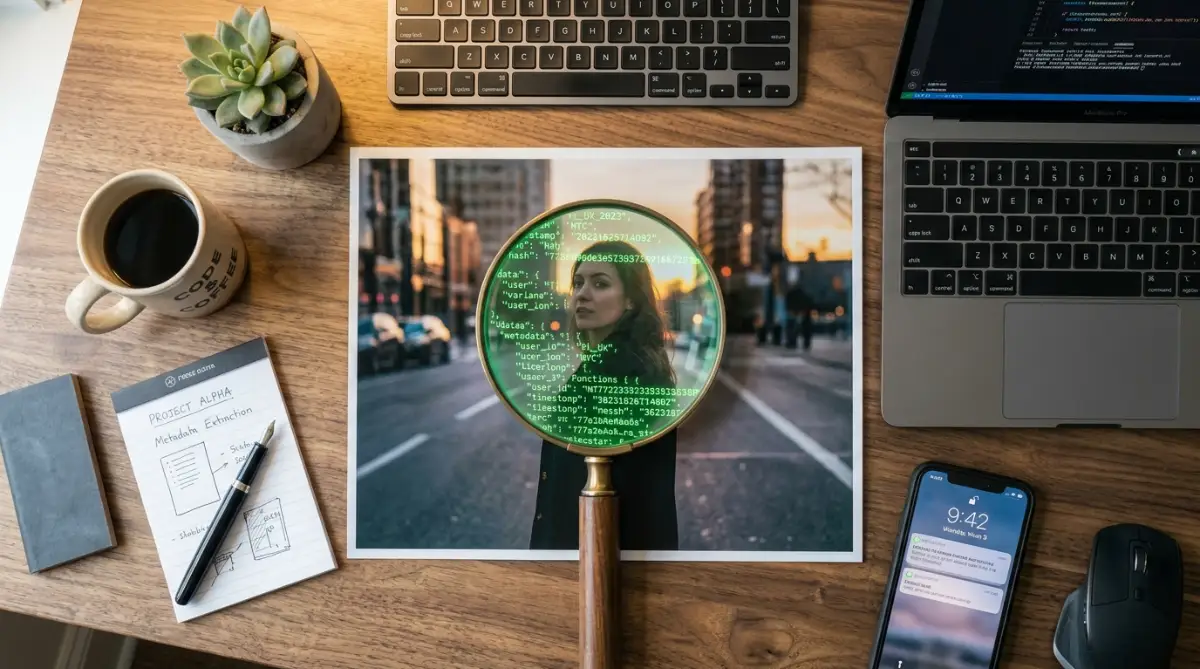
Even if someone crops out your watermark, your name and copyright details remain embedded in the file. You can easily set this up in programs like Adobe Photoshop or Lightroom. Simply go into your settings and add your name, website, and copyright notice to the core file preferences.
If you ever find your image on a random website, you can download it and check the properties. Finding your hidden metadata inside the stolen file gives you absolute proof of ownership. This makes getting the stolen content removed incredibly fast and easy.
Quick Guide: Tagging Your Metadata (Takes 30 Seconds)
- Photoshop: Go to File > File Info > Fill in your Name & Copyright Status.
- Lightroom: Set up a Metadata Preset so it applies automatically on Import.
- Word/PDFs: Go to File > Properties > Add your Author Name before saving
I actually learned this lesson the hard way a few years into my freelance journey. I used to just send raw, full-resolution files to clients through email without any embedded data. My big realization happened when I found my illustrations on a foreign e-commerce site, and I had absolutely no hidden data to prove they were mine. Now, I never let a single image leave my computer without my name hardcoded into the file properties.
Watch This Expert Explanation on Safeguarding Your Digital Art
If you want a visual breakdown of how digital theft happens and exactly how to stop it, this short guide is an absolute must-watch. It explains the exact steps to secure your portfolio before sharing it with the public.
Watermarking Without Ruining Your Art
We all hate how huge, ugly watermarks ruin the look of a beautiful design. But sending completely clean, high-resolution files to a new client is extremely risky. You need to find a healthy balance.
Instead of a massive logo across the center, use a subtle, semi-transparent pattern over the most detailed parts of the image. This makes it impossible for someone to just use an eraser tool to remove your name.
Always send your drafts in low resolution. A 72-dpi image is perfect for viewing on a computer screen but completely useless if someone tries to print it. When the client finally pays your invoice, you happily hand over the crisp, clean, high-resolution final files.
Sending the Cease and Desist Notice
Even with all these walls in place, someone might still steal your work. When this happens, you do not need to panic. Your first weapon is a formal Cease and Desist letter.
This sounds like a scary legal term, but it is just a formal email telling the person to take your work down immediately. You can find free templates online that sound highly professional and intimidating.
Most people who steal images online are lazy. The moment they receive a serious email mentioning copyright laws, they usually delete the stolen file immediately. They do not want the trouble of dealing with a potential lawsuit.
Keep your tone cold, professional, and strictly factual. Do not let your anger show in the email. Simply state that you own the work, provide a link to your original post, and give them 48 hours to remove it.
The Magic of the DMCA Takedown
If the person ignores your email, it is time to bypass them entirely. You can go straight to the company hosting their website. This is done through a Digital Millennium Copyright Act (DMCA) takedown notice.
Every legitimate web hosting company, like Bluehost or GoDaddy, has a strict policy against hosting stolen content. Social media platforms like Instagram and Facebook also have simple forms to report stolen work.
When you submit a DMCA notice, you are telling the hosting provider that their server is holding illegal, stolen property. By law, the hosting company must remove the content quickly to avoid getting sued themselves.
The thief does not even get a say in the matter. One day they wake up, and the stolen content is simply gone from their website. This is a highly effective way to protect your rights without spending a single penny on a lawyer.
Protect Your Brand with Trademarks
While copyright protects the actual things you make, trademarks protect your brand identity. This includes your unique business name, your custom logo, and your specific catchphrase.
If you plan on turning your freelance hustle into a massive agency, getting a registered trademark is a very smart move. It stops competitors from using a name that sounds suspiciously like yours to steal your clients.
Registering a trademark does cost some money and involves government paperwork. However, it gives you exclusive rights to use that name in your specific industry. If a copycat tries to open a similar business, your trademark gives you the legal right to shut them down instantly.
Start by searching online databases to ensure your chosen business name is completely unique. If the coast is clear, you can apply for protection. It adds a massive layer of professionalism to your freelance career.
Document Everything in Writing
One of the biggest mistakes freelancers make is agreeing to things over a quick phone call. A client might casually ask for "just a few extra design revisions" or "full ownership of the source files."
If you say yes on the phone, there is no record of the agreement. Always follow up every single phone call with a quick email summarizing what was discussed.
You can write something simple like, "Just confirming our chat today. I will provide the raw files for an additional fee of $200." If they reply and agree, you now have a legally binding written record.
This simple habit protects you from clients who suddenly develop amnesia when it is time to pay the bill. A clear paper trail is your absolute best defense in any business disagreement.
Never Stop Educating Yourself
The internet changes rapidly, and new ways to steal content pop up every day. Staying educated on basic legal rights gives you a massive advantage over other freelancers who ignore this topic.
You do not need to read heavy law books. Just follow reputable legal blogs designed specifically for creatives. Knowing your rights makes you feel powerful, confident, and secure.
When you know how to protect your intellectual property, you stop acting out of fear. You can proudly share your beautiful portfolio with the world, knowing exactly how to defend it if someone tries to cross the line.
Next-Level Strategies to Shield Your Creative Masterpieces
Once you have the basics down, it is time to build a fortress around your freelance business. You cannot spend every waking hour searching the internet for stolen artwork. That would completely destroy your creative energy and leave you feeling exhausted.
Instead, you need to set up smart, automated systems that do the heavy lifting for you. Think of these strategies as invisible security guards working quietly in the background. They monitor your assets while you focus entirely on your craft.
Automate Your Daily Digital Security
The smartest freelancers use technology to hunt down unauthorized copies of their work. You can use simple reverse image search tools to scan the web automatically. Tools like Google Images or Tin Eye allow you to upload your best portfolio pieces to see where they appear online.
Instead of doing this manually every single day, you can set up automated web alerts. When you keep your freelance business safe from cyber threats, you gain massive peace of mind. These tools send you a quick email the moment your image is indexed on a new website.
This automation is completely life-changing for busy creators. You wake up, check your email, and instantly know if someone is using your designs without permission.
Create a Clear Public "Terms of Use" Page
Lazy thieves usually look for the easiest target they can find. If your website has absolutely no legal warnings, they will assume your work is free for the taking. You can easily stop them by creating a dedicated "Terms of Use" page on your portfolio site.
This page does not need to be written in complicated legal jargon. Simply explain that all images are your property and cannot be downloaded, printed, or reused without paid permission. You should clearly state your rates for commercial licensing right there on the page.
When you outline these rules openly, you instantly look like a serious business owner. If you want to dive deeper into the legal definitions of ownership, reviewing the U.S. Copyright Office guidelines on digital registration offers incredibly detailed insights. Setting strict public boundaries scares off casual thieves before they even try to right-click your images.
Control How You Share Your Project Updates
We all love sharing our behind-the-scenes progress on social media. It feels amazing to show your followers how a messy sketch turns into a beautiful final painting. However, sharing too much high-quality raw material can easily backfire.
If you post high-resolution screenshots of your layered files, you are handing thieves the exact tools they need to copy your style. Instead, you must learn to share your progress smartly. Always take slightly angled photos of your computer screen with your phone.
These angled, slightly blurry photos are perfect for Instagram stories but completely useless to a thief. You get to share your creative journey while keeping your raw digital assets locked down tightly.
Separate Your Personal and Business Life
As your freelance career grows, the way you structure your business becomes incredibly important. Operating as a solo individual means your personal bank account and your business are legally the same thing. If a massive client dispute ever happens, your personal savings could be at risk.
Setting up a formal business entity, like a Limited Liability Company (LLC), creates a thick concrete wall between your personal life and your business. This simple step means your personal assets remain completely untouched if a project goes horribly wrong. It is a brilliant way to protect your future as you start building multiple income streams from your art.
Many freelancers skip this step because they think it requires an expensive lawyer. In reality, you can easily file this paperwork online in just a few hours.
Negotiate Like a Confident Professional
Protecting your work often comes down to exactly how you speak with your clients. When a client aggressively demands your raw source files for free, you must hold your ground. Giving in to pressure teaches them that your boundaries are weak.
Instead of getting defensive, offer a simple, professional compromise. You can say, "I am happy to transfer the full copyright and raw files to you for an additional buyout fee." This shifts the conversation from a demanding argument to a standard business transaction.
By handling the request calmly, you are actively establishing yourself as a credible professional. Good clients will happily pay the extra fee for the source files, while bad clients will quickly reveal their true intentions.
Master the Art of the Watermarked Preview
Sending a client a naked, high-resolution file before the final invoice is paid is incredibly dangerous. I have seen countless freelancers get burned because they trusted a new client way too quickly. The client takes the pristine file, stops replying to emails, and disappears forever.
Your absolute best defense is a massive, opaque watermark plastered directly across the center of the image. Yes, it looks slightly ugly, but it guarantees they cannot use the work without paying you. You can explain this to the client as a standard industry practice.
Once the money hits your bank account, you happily send over the flawless, high-resolution files. This simple habit will save you from thousands of dollars in lost income. If you want to understand more about international protection standards, the World Intellectual Property Organization (WIPO) basics is a fantastic resource for global creators.
Lock Down Your Digital Workspace
Sometimes, the threat does not come from the outside web, but from poor digital habits inside your own workspace. If you share passwords to your design software or portfolio hosting with too many people, you lose control of your assets.
If you hire virtual assistants or collaborate with other freelancers, you must restrict their access. You need to secure your daily communications by using role-based permissions on all your software platforms.
Only give people the exact tools they need to finish their specific task. The fewer people who have direct access to your master folders, the safer your intellectual property will be. Taking time to manage your shared access credentials securely ensures your hard work remains completely private.
The Most Heartbreaking Traps Freelancers Fall Into
Even with the best intentions, freelancers constantly fall into hidden traps that cost them their most valuable artwork. These are not just minor mistakes. These missteps can completely drain your bank account and ruin your passion for creating.
Let us walk through the most dangerous pitfalls you must actively avoid. Recognizing these traps before you step in them will save you an unbelievable amount of stress.
The "Exposure" Deception
We have all received that extremely polite email from a new brand offering to feature our work for "free exposure." They promise that thousands of people will see your art, leading to massive future opportunities. In exchange, they want full ownership of your latest design without paying a single dime.
This is an incredibly toxic trap. Exposure does not pay your rent, buy your groceries, or fund your creative tools. When you give away your full commercial rights for free, you devalue your entire industry.
The brand will use your free art to sell their products and make a massive profit. Meanwhile, you are left staring at an empty bank account hoping someone eventually hires you. You must train yourself to hit the delete button the second you see an email promising exposure instead of cash.
Skipping the Initial Deposit Phase
Starting a massive project without collecting a single penny upfront is a disaster waiting to happen. You are essentially working for free, hoping the client decides to honor their word weeks later. This leaves you entirely at the mercy of their changing moods and budgets.
When you do not take a deposit, clients feel no real attachment to the project. They can easily change their mind, cancel the project halfway through, and walk away with your initial sketches. This careless behavior forces you to constantly worry about upgrading your daily digital security against clients who ghost you.
Always demand a 50% non-refundable deposit before you even open your design software. This simple financial boundary proves the client is serious and protects your time if the project suddenly collapses.
Ignoring Platform Terms of Service
Many freelancers blindly upload their best work to massive freelance marketplaces and portfolio websites without reading the fine print. They assume these giant corporate platforms have the creator’s best interests in mind. This is a terrifying assumption that ruins careers daily.
Some user agreements state that by simply uploading your file, you are granting the platform a royalty-free license to use your art forever. They can legally use your illustrations in their global advertising campaigns without paying you a single cent.
You must take ten minutes to carefully read the ownership rules on any new platform. To understand the legal lines of what others can use, checking the Stanford University Fair Use guide will give you a brilliant perspective. If a website demands permanent rights to your uploads, you should immediately delete your account and find a safer platform.
Letting Honest Mistakes Turn Into Ugly Fights
Not everyone who uses your work without permission is a malicious thief. Sometimes, a small blogger truly does not understand copyright law and uses your photo by accident. Going immediately into a blind rage and threatening a massive lawsuit is a huge mistake.
If you attack an honest person aggressively, they might panic, hire a lawyer, and drag you into a stressful legal battle. Instead, assume good intentions first. Send a polite but firm email explaining that the image requires a commercial license.
Often, they will apologize profusely and offer to pay your standard licensing fee right away. By handling the situation calmly, you turn a potential enemy into a brand new paying customer. Knowing exactly how to handle these disputes requires understanding specific legal definitions clearly, which keeps you grounded in reality.
Believing the "30 Percent Rule" Myth
There is a wildly popular rumor on the internet that says if you change someone else's artwork by 30%, it legally becomes your own. This is complete and utter nonsense. There is absolutely no mathematical formula in copyright law that allows people to steal your core concepts.
Many amateur designers fall for this myth and try to trace your work, change the colors, and sell it. If you catch someone doing this, do not let them convince you it is legally protected. Unauthorized derivative work is still a direct violation of your rights.
You have every right to send a DMCA takedown notice for traced or heavily copied artwork. Stand your ground firmly and do not let amateur thieves manipulate you with fake internet laws.
Your Creative Defense Action Plan
Protecting your creative assets does not mean you have to become a paranoid, stressed-out person. It simply means stepping into your role as a confident and highly educated business owner. When you have the right contracts, watermarks, and knowledge in place, your anxiety instantly disappears.
You can finally stop worrying about internet thieves and go back to doing what you actually love. You will wake up every single morning with a clear head, ready to design, write, and create amazing things.
The internet can be a wild place, but you now have the exact tools to build an unbreakable wall around your portfolio. Take these steps one day at a time, and watch your freelance confidence skyrocket.
I remember how terrified I used to be every time I hit the "publish" button on a new design. My heart would race, wondering if someone was going to steal my ideas before morning. Today, because I use these exact legal boundaries, I share my artwork with the world feeling completely fearless and incredibly proud.
Common Questions About Safeguarding Your Creations
Do I need to register my artwork to get copyright protection?
No, you do not need formal registration to own your work. The moment your original creation is saved on your computer or written on paper, you automatically own the copyright. However, formal registration gives you much stronger power if you need to sue someone for money later.
Can someone legally steal my design if they change it slightly?
Absolutely not. There is no magic percentage or rule that allows someone to tweak your colors and claim it as their own. Changing a few small details on an original artwork is still considered illegal derivative work and can be taken down immediately.
What should I do if an overseas company steals my art for cheap products?
Fighting overseas companies in court is extremely difficult and expensive. Your best strategy is to attack their digital presence by filing DMCA takedown notices with their web host and the payment processors they use. If they cannot process credit cards or host their website, they cannot profit from your stolen art.
Should I always charge extra for giving up my source files?
Yes, your raw source files are extremely valuable and should never be given away for free. Giving up the source files means giving up your total control over how the project is edited in the future. Always add a clear "source file buyout fee" to your initial project proposals.
Does mailing my work to myself actually work in a courtroom?
The "Poor Man's Copyright" of mailing a sealed envelope to yourself is mostly a useless myth. Judges rarely accept a sealed envelope as concrete proof because mail can easily be tampered with. Digital timestamps, hidden metadata, and saved project drafts are much stronger forms of evidence.
Disclaimer: The information provided in this blog post is for educational and informational purposes only and does not constitute legal or financial advice. I am not an attorney, and copyright laws vary significantly by country and jurisdiction. Always consult with a qualified legal professional before making business decisions, signing contracts, or taking legal action regarding your intellectual property.