The Hidden Stigma: Why My Hard-Earned Certificate Felt Worthless at First
I still remember staring at my laptop screen, feeling a heavy knot in my stomach after hitting the "submit" button on my fiftieth job application. I had just spent months pouring my sweat, tears, and late nights into earning my online business degree. My grades were perfect, and my dedication was unmatched. Yet, every time an interviewer asked where I studied, a wave of awkward silence seemed to fill the room. I felt an overwhelming sense of imposter syndrome creeping in. I kept wondering if I had just made the biggest financial mistake of my life simply by choosing a non-traditional path.
This is the exact nightmare so many hardworking people face every single day. You invest your hard-earned money and sacrifice your family time to better your career. But instead of feeling proud, you are left dealing with a silent judgment from hiring managers who still live in the past.
This constant rejection destroys your mental peace. You start doubting your own intelligence and wondering if your resume is being thrown in the trash just because of the word "online." The anxiety keeps you awake at night, making you question your worth in the professional world.
It feels completely unfair that your late-night study sessions are valued less than someone who sat in a physical classroom doing half the work. Family members might even make passing comments, subtly asking if your certificate is from a "real" school. This lack of validation makes the job hunt feel like walking barefoot on broken glass.
Instead of celebrating a massive educational milestone, you are forced to constantly defend your choices. The stress of proving yourself over and over again leads to severe burnout before you even start the job. You are not alone in this heavy, frustrating journey.
Decoding the Hiring Manager's Mind: How to Flip the Script
Let us get straight to the real issue without sugarcoating anything. The corporate world is changing, but human bias is a stubborn thing to break. If we want to solve this problem, we have to understand exactly how the people reading your resume actually think.
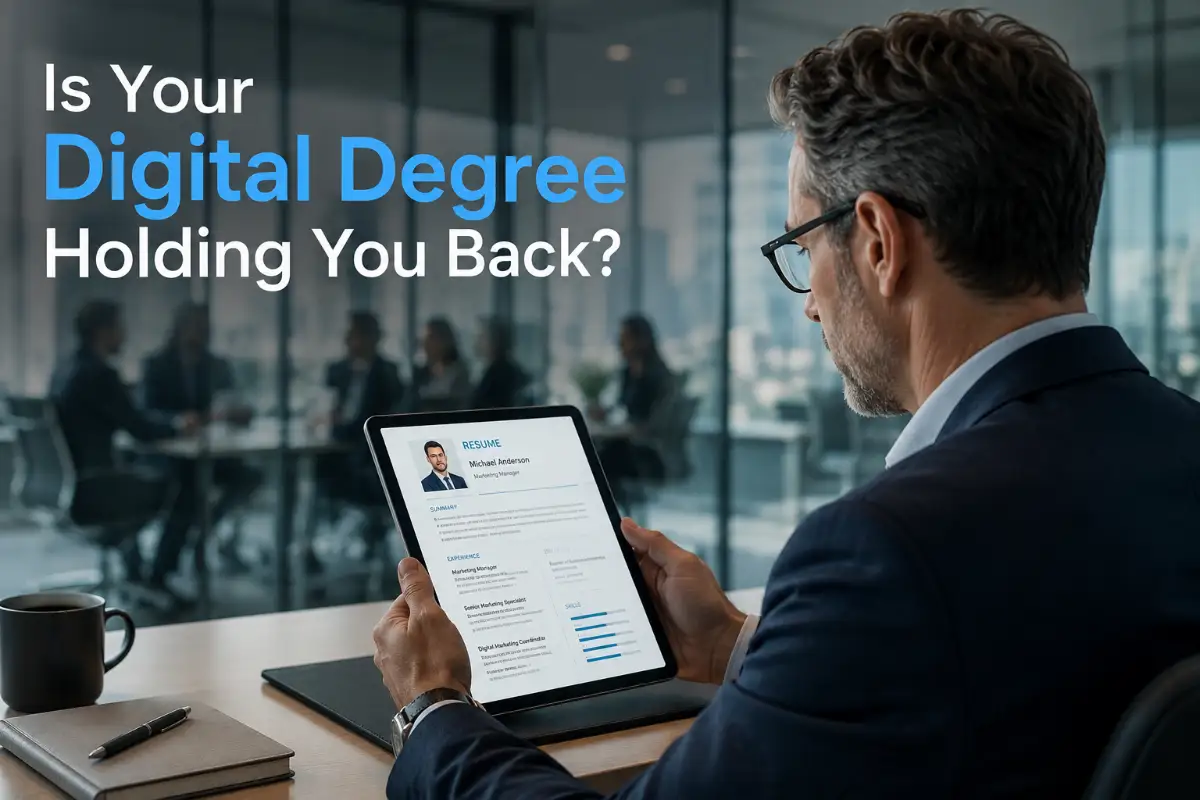
When an employer sees a digital education background, their brain often takes a shortcut. They might instantly worry about your ability to handle strict deadlines, work within a team, or communicate effectively. This is not your fault, but it is your reality to manage.
To overcome this unfair barrier, you need to completely change how you present your educational journey. You must stop acting like you need to apologize for studying remotely. Instead, you need to frame your virtual education as your absolute biggest strength.
Here is a quick lesson I learned the hard way after failing several interviews. I used to nervously over-explain why I chose an online program, almost sounding guilty about it. The moment I stopped treating my degree like a dirty secret and started owning it as proof of my exceptional time management skills, the job offers finally started coming in.
Shifting the Narrative on Your Resume
The very first place you need to make a change is on your actual resume. Most people make the mistake of bolding the word "Online" right next to their university name. You do not need to do this.
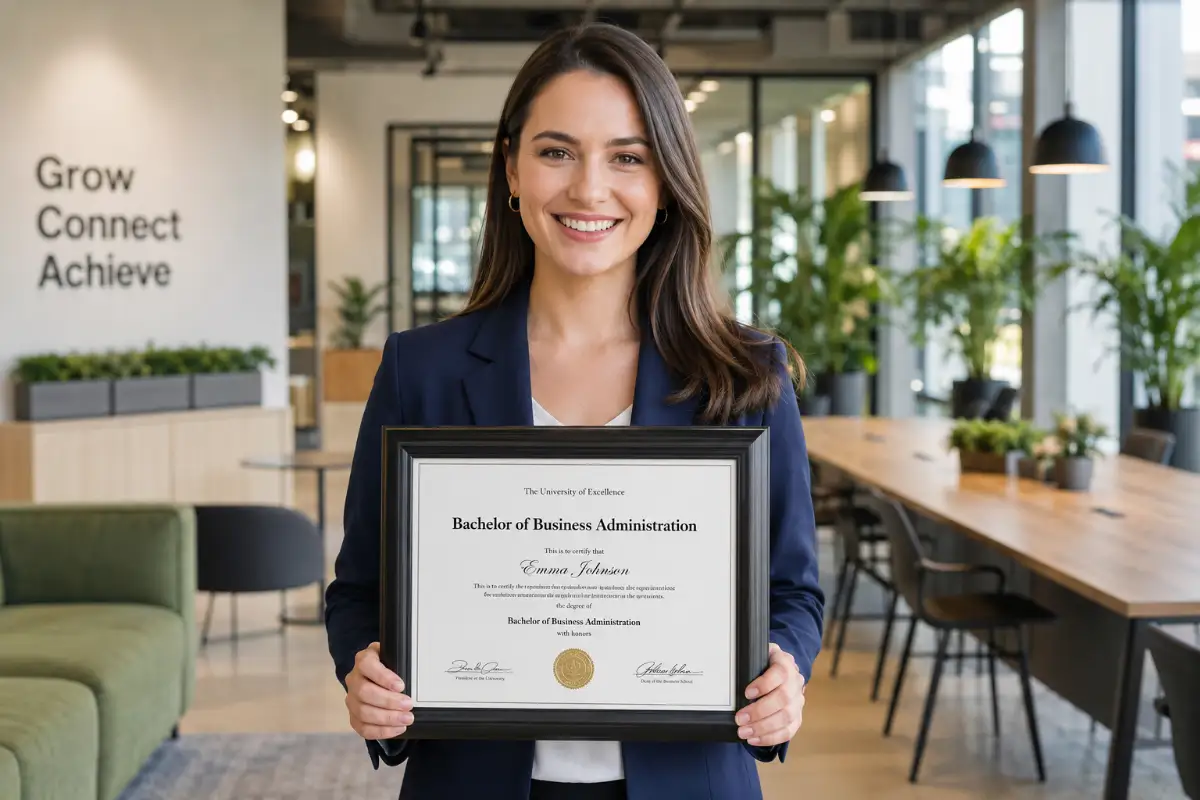
If your university is fully accredited, the delivery method of the classes is irrelevant to the actual qualification. You earned a Bachelor of Business Administration, not an "Online Bachelor of Business Administration." List the name of the school, the degree, and your graduation details just like any traditional student would.
If a hiring manager specifically asks about the campus during an interview, you can proudly tell them you completed the coursework remotely. By doing this, you control the conversation instead of letting a piece of paper dictate your worth. You force them to look at your skills first and your location second.
Want to know exactly how hiring managers filter resumes and look at virtual education? Check out this brilliant breakdown by an HR insider who exposes the exact things they look for in non-traditional degrees.
The ATS Trap and How to Escape It
Before a human even looks at your application, a computer software called an Applicant Tracking System (ATS) scans it. These systems are notoriously bad at reading complex formatting. If you list your education in a weird way to hide the fact that it was remote, the software might just reject you entirely.
Keep your formatting incredibly clean and standardized. Use simple headings like "Education" and "Professional Experience." Make sure the name of your degree matches the exact keywords the job description is asking for.
If the job asks for a "Business Management Degree," ensure those exact words appear in your education section. The ATS does not care if you sat in pajamas or a lecture hall. It only cares about keyword matching.
Pitching Your Digital Campus as a Superpower
Once you get past the computers and sit down for an interview, the real test begins. Employers want to know if you can survive in a modern, hybrid work environment. This is where you have a massive advantage over traditional students.
Think about the skills required to finish an online business degree. You had to teach yourself complicated concepts, manage your own schedule, and collaborate with classmates across different time zones. You had to master digital communication tools, troubleshoot your own tech issues, and stay motivated without a professor breathing down your neck.
These are the exact same skills required to be successful in a modern corporate job. Traditional students often struggle with self-starting because they are used to someone holding their hand. You, on the other hand, have already proven that you are a highly disciplined self-starter.
The "Soft Skills" Advantage Employers Quietly Crave
When you sit in front of an interviewer, bring up these soft skills organically. Do not wait for them to ask about your remote learning experience. Take the lead and connect your education directly to their daily business needs.
For example, you can say, "Because my degree was completely remote, I became highly proficient in written communication and virtual project management." Suddenly, your perceived weakness transforms into a highly desirable corporate asset. You are speaking their language.
Employers are terrified of hiring someone who needs constant micromanagement. By highlighting your ability to self-regulate, you instantly calm their biggest fears. You become the safe, reliable choice.
Traditional vs. Modern Perception: The Changing Tide
We must acknowledge that the market is slowly shifting in our favor. A few years ago, fully remote education was heavily frowned upon by elite corporations. Today, things are looking very different.
As you can see from this simple breakdown, the tide is turning. Your job is to remind the interviewer that you fit right into the modern view. You have to educate them quietly and respectfully during your conversation.
Addressing the "Diploma Mill" Fear Head-On
Let us talk about the elephant in the room. A lot of the stigma comes from the early days of the internet when fake universities sold certificates for cash. Older hiring managers might still have this outdated fear stuck in the back of their minds.
To destroy this doubt, you need to lean heavily on your university's accreditation. If you attended a reputable, regionally accredited institution, find a way to drop that fact into the conversation. Mention how rigorous the curriculum was.
Talk about a specific, challenging project you completed. Describe the strict grading rubrics your professors used. When you provide detailed evidence of hard work, the "diploma mill" myth shatters instantly.
Building a Portfolio That Makes Your Degree Irrelevant
While your education is important, it is ultimately just a checkbox for HR. If you really want to make an employer forget about how you earned your degree, show them what you can actually build. A strong professional portfolio is the ultimate equalizer in the business world.
Instead of just talking about the marketing class you took, show them a mock marketing campaign you built. If you studied finance, bring a printed copy of a financial model you created. People argue with opinions, but they cannot argue with visible results.
When a hiring manager sees high-quality, practical work sitting right in front of them, they stop caring about where you studied. They only care about what you can do for their company right now. Your portfolio becomes the absolute proof of your competence.
Networking Like a Traditional Student
One massive drawback of remote learning is the lack of physical networking. Traditional students get to shake hands at campus job fairs and attend alumni dinners. You have to work twice as hard to build those exact same connections.
You cannot rely on your school’s career center to hand you opportunities. You must become a master of digital networking. LinkedIn is your new campus quad, and you need to spend time there every single day.
Start connecting with alumni from your online university who are already working in your target industry. Send them a polite message asking for a 10-minute virtual coffee chat. People love giving advice, and this is how hidden job opportunities are found.
The Art of the Informational Interview
Do not ask these connections for a job right away. That comes off as desperate and unprofessional. Instead, ask them about their own experience navigating the job market with a virtual degree.
Ask them what specific skills helped them land their current role. Take detailed notes and apply their advice to your own job hunt. Over time, these casual conversations turn into solid professional referrals.
When a current employee recommends you to the hiring manager, your resume bypasses the ATS entirely. A strong personal recommendation completely erases any stigma attached to your educational background. You instantly become a trusted candidate.
Leveraging Freelance Work for Instant Credibility
If you are struggling to get your foot in the door for a full-time role, consider doing freelance or consulting work first. Businesses are much more willing to take a chance on a freelancer than a full-time W-2 employee. This is your backdoor entry into the corporate world.
Offer your business administration skills to local small businesses or startups. Help them balance their books, optimize their social media, or write their business plans. Treat these small gigs with the exact same professionalism as a corporate job.
After a few months, you will have legitimate, real-world experience to put at the very top of your resume. Real experience always pushes your education further down the page. By the time the employer even reads about your digital degree, they are already sold on your practical skills.
Preparing for the "Group Work" Question
One of the most common questions you will face in an interview is about your ability to work in a team. Hiring managers often assume online students are isolated hermits who do not know how to interact with others. You must prepare a bulletproof answer for this exact scenario.
Think back to a group project where things went terribly wrong. Maybe a classmate ghosted the group, or the time zones were completely out of sync. Explain exactly how you stepped up as a leader to fix the communication breakdown.
Talk about the specific tools you used, like Slack, Zoom, or Trello, to keep everyone organized. This proves that you are not just a team player, but a modern digital leader. You show them that you thrive in complicated, remote environments.
Why Empathy is Your Secret Weapon
Business is not just about numbers and spreadsheets; it is about managing people. Because you have experienced the frustration of being misunderstood, you carry a unique sense of empathy. You understand what it takes to communicate clearly when you cannot see someone face-to-face.
This emotional intelligence is something you cannot easily learn in a physical classroom. Highlight your ability to listen actively and resolve conflicts through text and video calls. These are highly sought-after traits for management positions.
When you frame your entire educational experience around resilience, adaptability, and emotional intelligence, you become undeniable. You stop being the candidate with an online degree and become the candidate with exceptional modern business survival skills.
The reality of the job market is tough, but it is entirely navigable if you know how to play the game. You must stop waiting for employers to understand your value automatically. It is entirely up to you to paint the picture, control the narrative, and prove that your virtual education makes you the smartest hire they will make all year.
Advanced Tactics to Outshine Traditional Candidates
Now that we understand how hiring managers think, we need to completely upgrade your job-hunting strategy. Earning your certificate was only the first half of the battle. The second half is learning how to sell your unique experience like a master.
Most traditional students walk into an interview relying purely on their university's brand name to get them the job. You cannot afford to do that. You have to build a personal brand so strong that your educational background becomes just a minor detail in your amazing story.
Let us talk about turning your remote education into a massive competitive advantage. You already have the exact skills modern businesses are begging for right now. You just need to know how to package them correctly.
Mastering the Art of the Digital Portfolio
A simple paper resume is no longer enough to impress modern employers. You need to show them visible proof of your hard work. This means building a digital portfolio that highlights exactly what you learned during your online business degree.
Think about the biggest projects, case studies, or business plans you completed during your courses. Do not just let them sit on your hard drive gathering dust. Format them beautifully and put them on a personal website or a professional LinkedIn page.
When a hiring manager asks about your qualifications, you can literally send them a link to your work. People might doubt a digital degree, but they cannot doubt a high-quality business plan they can read with their own eyes. This simple strategy completely shifts the focus from where you studied to what you can actually do.
Leveraging Your Remote Collaboration Skills
One of the biggest fears employers have is hiring someone who cannot communicate properly in a remote or hybrid work environment. Traditional office setups are slowly disappearing. Companies need people who can manage projects across different time zones without getting confused.
You spent years mastering this exact environment. You know how to collaborate on cloud documents, manage virtual meetings, and troubleshoot your own technical issues. This is a massive selling point that you must mention in every single interview.
For example, talk about a time you had to organize a group presentation with classmates living in different states. Explain how you used specific digital tools to keep everyone on track. If you want to impress them even more, you can discuss how you safely managed shared files, much like choosing the most reliable file-sharing tools for remote teams in a real business setting.
Continuous Skill Stacking for Unbeatable Credibility
An online business degree is an amazing foundation, but the smartest professionals never stop learning. You should always be adding new, highly relevant skills to your resume. We call this strategy "skill stacking," and it makes you incredibly attractive to employers.
If you have a business administration degree, consider picking up a quick certification in data analytics, digital marketing, or project management. These short add-ons show employers that you are highly motivated and completely obsessed with personal growth. It proves you take your career seriously.
You do not need to go back to a traditional university and spend thousands of dollars to get these extra skills. You definitely want to avoid getting into unnecessary bad debt for useless extra diplomas. In fact, learning how to manage your educational expenses is just like doing a smart personal loan comparison to save money. Be strategic about what you learn next and make sure it directly serves your career goals.
Speaking the Language of High-Level HR
Human resources professionals have their own specific language. If you want them to respect your non-traditional education, you need to use their favorite buzzwords naturally in your conversations. Words like "self-motivated," "adaptable," and "agile" are music to their ears.
According to research from the Society for Human Resource Management (SHRM), modern recruiters place a massive premium on behavioral traits like self-discipline. They actively look for candidates who can solve problems without needing constant supervision.
When they ask you a behavioral question, frame your answer around the independence you developed while studying from home. Tell them a story about a time a professor gave a vague assignment and you had to figure out the solution entirely on your own. This proves you are an independent thinker who will not drain management's time.
The Fatal Errors Destroying Your Job Prospects
Even with the best intentions, many digital graduates accidentally sabotage their own success. I have seen incredibly smart people lose out on amazing job offers simply because they panicked during the interview process. If you want to secure a high-paying role, you must avoid these destructive traps at all costs.
Let us walk through the most common mistakes people make when explaining their educational background. These are the silent traps that trigger red flags in an employer's mind. Avoiding them will save you from months of unnecessary rejection and heartbreak.
The Defensive Apology Trap
This is arguably the most common and damaging mistake you can make. When an interviewer asks about your university, your tone of voice changes. You suddenly get defensive, look away, and start explaining why you could not attend a "normal" physical campus.
The moment you act ashamed of your education, the interviewer will instantly lose respect for it. They will assume your degree is low quality simply because you are treating it like a dark secret. Confidence is contagious, but insecurity is even more obvious.
If you act like your certificate is a golden ticket, they will treat it like one. You earned that degree through late nights, heavy stress, and massive financial investment. Hold your head high, smile, and speak about your university with immense pride.
Failing the Basic Technology Test
You claim to be a master of digital learning, but what happens when your tech fails during an online job interview? I have seen candidates brag about their remote education, only to have their microphone stop working or their webcam look completely blurry.
If you are selling yourself as a modern, tech-savvy professional, your personal setup must be flawless. A messy digital presentation instantly contradicts everything you just told them about your remote skills. They will think you are lying about your abilities.
Make sure your computer is running smoothly and is completely free of malware before any important video call. If your computer is lagging during a Microsoft Teams interview, you will look incredibly unprofessional. Taking time to choose the right antivirus for your computer ensures your system never freezes when you need it the most.
Applying to "Dinosaur" Corporations
Not every company is ready to accept non-traditional education, and that is perfectly fine. You will exhaust yourself trying to convince an old-school, rigid corporate law firm that your digital degree is valid. Trying to change their mind is like talking to a brick wall.
Instead, focus your energy on modern, forward-thinking companies. Look for tech startups, marketing agencies, and remote-first organizations. These companies care about what you can build today, not where you sat in a classroom four years ago.
Stop wasting your emotional energy on employers who refuse to adapt to the modern world. Direct your applications toward businesses that celebrate flexibility and innovation. Your environment determines your success, so choose an employer who actually values your unique journey.
Poor Digital Security Habits
If you are applying for remote jobs, employers will test your understanding of digital boundaries. Many online students develop very casual habits when sharing files or communicating with classmates. In the corporate world, this casual behavior can lead to massive data breaches.
During your interview, mention how seriously you take digital privacy. Explain that while you studied remotely, you always used secure networks and protected your data. A recent study by the National Institute of Standards and Technology (NIST) highlighted that human error is the biggest cybersecurity threat in remote work.
Show the employer that you are not a liability. Mention how you understand the importance of keeping company data safe. You can even casually bring up how you always make sure to stop sharing passwords on Slack because you know the risks of poor internal security. This makes you look incredibly mature.
Waiting for Permission to Succeed
Many graduates sit around waiting for a company to finally give them a chance. They submit endless applications and get angry when no one calls back. They blame their online degree for their lack of success.
This passive mindset will completely destroy your career momentum. You do not need an employer's permission to start working in your field. You can start creating your own opportunities right now from the comfort of your living room.
Start offering small consulting services, write industry blogs, or take on freelance projects. Building alternative ways to make money is exactly like creating multiple income streams for your own peace of mind. By the time a traditional employer finally calls you, you will already have real-world clients to talk about.
Your Action Plan for Tomorrow Morning
We have covered a massive amount of ground today, and I know this journey can feel completely overwhelming. But I want you to take a deep breath and realize how much power you actually hold. You are no longer a helpless job seeker hoping someone will overlook your digital degree.
You are a highly adaptable, self-motivated professional equipped with the exact skills the modern world desperately needs. The traditional office is changing rapidly, and you are already two steps ahead of everyone else. Your non-traditional background is not a weakness; it is your ultimate superpower.
Starting tomorrow, I want you to completely change how you view yourself. Stop apologizing for your educational choices and start aggressively highlighting your remote collaboration skills. Clean up your resume, build a visual portfolio, and practice answering interview questions with absolute, unbreakable confidence.
According to insights from the American Psychological Association (APA), professionals who exhibit high self-efficacy are significantly more likely to overcome hiring biases. This means that believing in your own worth actually changes how employers perceive you.
I know exactly how scary it feels to face those silent judgments in an interview room. I used to let those awkward pauses break my confidence, but the moment I started owning my journey, everything shifted. You have worked way too hard to let outdated opinions hold you back, so go out there and show them exactly what a modern professional looks like.
Common Questions About Virtual Degrees and Hiring
Do employers actually check if my degree was earned online?
Most employers simply run a background check to verify that you graduated and that the university is real. The background check report usually only shows the name of the institution, your major, and your graduation date. They rarely dig into whether you sat in a physical classroom or studied from your living room.
Should I put the word "online" on my official resume?
No, you absolutely should not include that word on your resume. Your degree is the exact same qualification as the one given to campus students. Simply write out the name of the university and your specific degree program just like anyone else would.
Are digital degrees taken seriously by big tech companies?
Yes, massive tech companies actually prefer candidates who are comfortable with digital environments. Since these companies often operate with fully remote or hybrid teams, your background proves you can thrive in their ecosystem. They care much more about your technical skills and portfolio than your classroom location.
What is the best way to explain my remote education during an interview?
If they ask about your campus experience, keep your answer incredibly positive and brief. You can say, "I chose this program because it allowed me to develop strong time-management skills while managing my other professional responsibilities." Then, immediately pivot the conversation back to how those skills will help their company grow.
Will my degree be considered a fake "diploma mill" certificate?
As long as you attended a regionally or nationally accredited university, your degree is 100% legitimate. If an employer seems suspicious, calmly mention your school's strict accreditation and describe a difficult project you completed. Providing specific details about your hard work easily destroys the diploma mill myth.
Disclaimer: The information provided in this article is for educational and informational purposes only and does not constitute professional career coaching, financial, or legal advice. Job market conditions and employer perceptions vary widely by industry and location. Always do your own research and consult with a certified career counselor before making major educational or professional decisions. We are not responsible for any outcomes related to your job search or educational investments.