The Hidden Burden of Sudden Financial Stress: A Guide to Unsecured Loans
Getting hit with an instant loan rejection is the worst. You need cash fast, but the bank's automated system just sees you as a cold, hard number instead of a real person. I know exactly how that feels. But here is the good news: getting approved isn't about luck. It is simply about knowing how to beat their algorithm at its own game. Let me show you how to set up your profile so lenders actually want to give you their money
I always believed I had a decent, steady income, but the automated system simply did not care about my personal situation. It was a terrible, sinking feeling of pure helplessness. I realized right then that I knew absolutely nothing about how banks actually made their money decisions.
The Frustration Behind Denied Loan Applications
Quick Action Plan: Get Approved Faster
- Keep your credit card balances below 30% before you apply.
- Make sure your fixed monthly debts eat up less than 36% of your paycheck.
- Switch to direct deposit so banks can verify your income automatically.
- Always use pre-qualification (soft checks) to shop for rates safely.
The Reality of Unsecured Lending
We often assume that banks want to lend us money because that is how they make their profit. But the reality of unsecured lending is very different and strictly numbers-driven. Since you are not offering a physical house or a car as security, lenders view you as a walking risk.
Cracking the Secret Code of Underwriting Algorithms
Before a human being ever looks at your loan application, a computer algorithm has already scanned your entire financial history. You need to understand exactly what these machines are searching for behind the scenes. When you want to qualify for an unsecured loan quickly, just crossing your fingers and hoping for the best is simply not enough. You have to think like a bank underwriter and present your financial life as a completely risk-free package. Let us look at the highly practical, everyday steps you can take right now to make your application undeniable.
Myth vs. Fact: What Actually Matters to Banks
- Myth: You need to make a massive income to get a personal loan.
- Fact: Banks care way more about your consistency than your high salary. A person making a steady $4,000 a month with low debt will get approved much faster than someone making $10,000 a month who misses credit card payments.
- Myth: Applying everywhere increases your odds.
- Fact: Every time you apply, it hurts your score. Pick one good lender and stick to it.
Cleaning Up Your Financial Footprint Before Applying

Your credit score is the absolute most important factor when applying for funding without collateral. It is essentially your financial report card for the adult world. When you ask a bank for money, they instantly pull this report to see how you have handled other people's money in the past.
If you have a history of late payments or maxed-out credit cards, the bank will automatically view you as a high-risk borrower. They use your past behavior to strictly predict your future actions. You do not need a perfect score, but you absolutely need a clean recent history. Start by pulling your free credit report online and hunting for any strange errors. Sometimes, a simple mistake by a reporting agency can drag your score down by fifty points. Disputing these errors online takes about ten minutes, and it can dramatically improve your approval odds within a few weeks.
The Silent Power of Credit Utilization

One of the biggest secrets to a fast approval is something called credit utilization. This simply means how much of your available credit you are currently using.
If you have a credit card with a large limit but it is completely maxed out, banks see you as desperate for cash. They get scared that you are living way beyond your means and might not be able to handle another payment. To look highly attractive to lenders, you should always try to keep your credit card balances below 30% of your total limit.
If you can pay down some existing card debt right before applying for your new loan, your approval odds will skyrocket. A lower balance proves to the bank that you are highly responsible and completely in control of your daily spending. This one simple move can boost your score fast and force the algorithm to trust you. It shows financial maturity, which is exactly what unsecured lenders want to see.
Balancing Your Debt Against Your Income
Lenders use a very specific math formula called the Debt-to-Income (DTI) ratio to judge your application. They want to know exactly how much of your monthly paycheck goes toward paying off existing debts.
If too much of your money is already spoken for, they will not give you another monthly payment to worry about. Calculating this number yourself is actually very easy and incredibly helpful:
- Add up all your minimum monthly fixed debt payments (do not include groceries or streaming services, just actual debts and housing costs).
- Divide that total number by your gross monthly income (before taxes).
For example, if you earn $5,000 a month and your fixed debts equal $2,000, your DTI is exactly 40%. Most traditional banks want to see this number safely below 36%.
Key Financial Metrics Banks Look For
Pro Tip: I used to completely ignore my DTI, thinking my good salary was enough to get me approved for anything I wanted. I quickly realized that paying off just one small, annoying credit card balance before applying dropped my monthly debt obligations significantly. This one simple move instantly made me look much safer to the bank's automated lending system.
Providing Undeniable Proof of Steady Income
When you ask for a loan without collateral, the lender's only security is your future paycheck. They need absolute proof that your income is stable, reliable, and consistent. A simple letter from your boss will not work anymore.
Lenders want to see a highly consistent pattern of money entering your bank account.
- If you have a traditional job: Provide clear, recent pay stubs that match the deposits on your bank statements.
- If you are a freelancer or a business owner: You will need to show tax returns and profit statements to prove your income is not just a temporary lucky streak. Avoid making large, unexplained cash deposits right before you apply for financing.
The Magic of Automated Direct Deposits
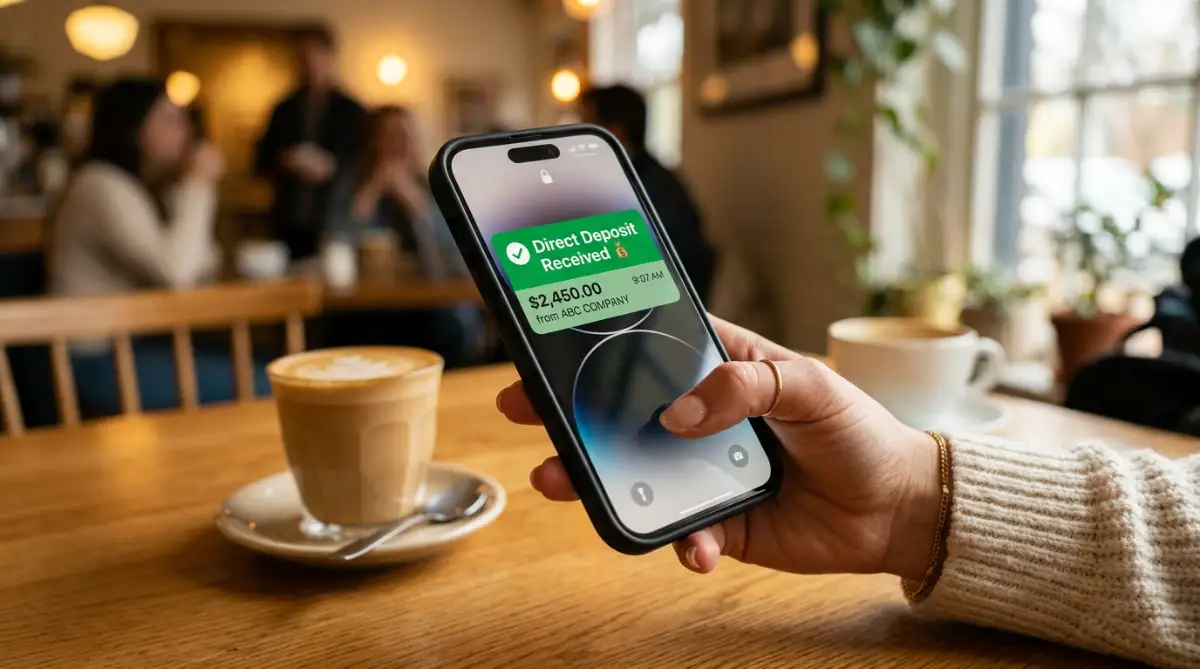
Paper pay stubs are great, but direct deposits are the ultimate proof of stable income. When your paycheck automatically hits your account on the same day every week, the bank's algorithm notices this positive pattern. It proves that you have a reliable employer and highly predictable cash flow.
If you currently get paid by paper check, I highly recommend asking your boss to switch you to direct deposit immediately. It speeds up the entire review process because the computer sees the direct deposit code and instantly verifies your income without making manual phone calls.
Building an Invisible Trust Bridge with Your Local Bank
Where you choose to apply for your loan matters just as much as your credit score. If you apply at a bank where you already have a long, positive history, you have a massive advantage. Banks naturally trust their existing customers much more than random strangers off the internet.
They can look directly at your checking account and see your responsible daily habits. Make sure your primary account never goes into the negative. Overdraft fees are massive red flags that scream financial instability to a lender. Keeping a clean, active checking account is a silent but powerful way to guarantee a fast yes. Sometimes, simply walking into your local branch and speaking to a human banker can bypass the strict online algorithms.
Organizing Your Paperwork to Avoid Automated Rejections
The absolute biggest reason loans get delayed for weeks is missing or sloppy paperwork. When a bank has to pause your application to ask for an additional document, your file goes straight to the bottom of the pile. You need to gather all your potential paperwork right now, before you even start filling out forms:
- Digital Folder: Create a secure digital folder on your computer.
- Identification: An unexpired, clear photo of your government ID (driver's license or passport) without any glare.
- Bank Statements: Download the last two months of complete bank statements in official PDF format directly from your banking portal. (Do not just take blurry mobile screenshots).
- Pay Stubs: Gather your most recent pay stubs covering at least thirty days of continuous work.
When the bank asks for a document and you provide it within five minutes, you look incredibly responsible. This speed directly influences how fast the loan officer processes your file.
Beyond the Basics: Next-Level Approval Strategies
Getting your basic paperwork together is just the start. If you want to force the bank's algorithm to say yes almost instantly, you need to use some advanced financial tactics.
- Timing Your Application Perfectly: Never apply for money on a Friday evening or during a long holiday weekend. Automated systems queue these weekend applications for human review on Monday morning, burying your file. Instead, submit your digital paperwork early on a Tuesday or Wednesday morning when processing queues are usually much lighter.
- Soft Checks vs Hard Checks: Pre-qualification uses something called a soft credit check. A soft check lets the bank peek at your financial history without leaving a permanent mark or lowering your overall score. You can get pre-qualified at ten different places in one day without losing a single point. Only agree to a hard credit check when you are one hundred percent sure you want that specific loan.
- Layering Your Income Proof: Do not just send the single document they ask for; send a complete, clear financial package. If you have a side hustle, include those tax returns along with your main job's paperwork to build an undeniable wall of trust.
- Why the Purpose of Your Loan Matters: If you say you want the money to consolidate high-interest credit card debt, banks absolutely love this answer. It means your overall monthly debt payments will likely decrease. Conversely, stating you want to start a risky new business or go on an expensive vacation will trigger their warning systems.
Quick Look: Soft Check vs. Hard Check
- Soft Check: Just a background peek. You can do this 50 times a day and your credit score will not drop a single point. (Always start here!)
- Hard Check: The real deal. The bank pulls your full report. This drops your score by a few points and stays on your record for up to two years. Treat hard checks like cash—only spend them when you have to
Dangerous Application Traps That Ruin Your Chances

Even the most financially prepared person can accidentally ruin their chances by making rushed decisions in a panic.
- The Panic Application Cycle: Applying to ten different lenders at once is the absolute worst thing you can do. Every single hard inquiry drops your score, and the computer systems literally see you running from bank to bank begging for money. Pick one highly targeted lender.
- Hiding the Truth About Your Expenses: Banks know absolutely everything about your existing debts because their software connects to national credit databases. When they catch you lying about a debt, they instantly label your application as highly fraudulent.
- Ignoring the Fine Print: Rushing to sign the digital contract without reading it is a terrible mistake. Watch out for high origination fees that eat right into your cash and prepayment penalties that punish you for paying the debt off early.
- The Co-Signer Guilt Trip: Adding a co-signer drops the lender's risk significantly, but it is a massive legal burden. If you miss a payment, the bank will aggressively attack your family member's credit. Treat this as an absolute last resort.
Your Game Plan for Financial Peace: The 24-Hour Checklist
The days of sitting in your car, feeling helpless after an automated rejection, are officially over. You are now fully equipped to take charge of your financial narrative. Spend the next twenty-four hours doing the following:
- Gather your digital documents into one highly secure folder (Bank statements, Pay stubs, ID).
- Run a completely free credit report and thoroughly check it for incorrect marks.
- Calculate your monthly expenses (DTI) so you know exactly how much you can truly afford.
- Pay down small credit card balances to lower your Credit Utilization below 30%.
Once you have your entire financial life beautifully arranged, you can confidently start your smart personal loan comparison.
Top Questions People Ask About Quick Unsecured Funding
How fast can I actually get the money in my account?
If you apply online with a highly organized document package early in the morning, many modern lenders can approve you instantly. The actual cash is typically deposited directly into your checking account within one to two business days.
Will checking my own credit hurt my approval odds?
Absolutely not. Checking your own financial report is considered a soft inquiry and does not drop your score at all.
What is the absolute minimum credit score required?
While every single institution has completely different rules, most traditional banks look for a score around 660 or higher. However, specialized online lenders will work with scores in the lower 600s (though this usually means a slightly higher interest rate).
Can I use this type of financing to pay off credit cards?
Yes! Consolidating high-interest credit cards is one of the smartest financial moves you can make. Banks absolutely love this reason because it shows you are actively taking control of your daily debts.
Do I need to explain exactly what the money is for?
Yes, lenders will always ask for a general reason. You do not need to provide a detailed, itemized receipt, but you do need to give a highly logical explanation (e.g., home repairs, medical bills, or debt consolidation).
Disclaimer: The information provided in this article is for highly educational and informational purposes only and does not constitute professional financial advice. Lending criteria, interest rates, and banking terms change constantly based on market conditions and individual creditworthiness. I am not a licensed financial advisor. Always consult with a certified financial professional and carefully read all terms and conditions before signing any loan agreements or making major financial decisions.