
Electric Vehicle Ownership Challenges and Smart Solutions
Let's be honest—shopping for your first electric car feels a bit like trying to read a menu in a foreign language. You walk into a dealership just looking for a solid, everyday ride, and suddenly the salesperson hits you with terms like "kilowatt-hours" and "DC fast charging." I felt completely lost the first time I went through it. If you are worried about getting stranded or breaking your new battery, you are not alone. Today, I am going to translate all that technical noise into plain English so you can actually enjoy your new ride.
I had always enjoyed driving and weekend road trips, but choosing an electric vehicle suddenly felt like taking a physics exam I had never studied for. I simply wanted a safe and reliable vehicle for everyday travel without spending heavily on fuel.
That experience made me realize how confusing electric vehicle ownership can seem for everyday drivers. News about cleaner transportation is everywhere, but researching an EV can quickly introduce unfamiliar engineering terms and technical specifications.
The good news is that you do not need an engineering degree to understand an electric vehicle. Once the basic concepts are translated into everyday language, the technology becomes much easier to understa

Quick Check: What You Need to Know Before Buying
-
Batteries act like gas tanks: A bigger battery (measured in kWh) simply means you can drive further before needing a plug.
-
Charging is mostly done at home: You will do 90% of your "refueling" overnight while you sleep using a Level 1 or Level 2 charger.
-
Braking is different: Lifting your foot off the pedal actually slows the car down and sends free power back into your battery.
-
Maintenance is super easy: Say goodbye to oil changes, spark plugs, and messy engine repairs. Just keep an eye on your tires and wiper fluid!
Leaving the Gas Station Behind: Your Plain English Translation Guide
When you start researching battery-powered cars, the terminology can make the process feel complicated. You may hear about kWh, kW, regenerative braking, DC fast charging, and several other technical terms.
Fortunately, most of these concepts are easier than they sound.
Think about your smartphone. You do not need to understand every component inside your phone to use it every day. You simply know how to charge it, how long the battery lasts, and when it needs more power.
Electric vehicles work in a similar way. Understanding a few basic concepts is enough for most everyday drivers.
The Smartphone Analogy: Decoding Battery Sizes
One of the most common terms is kWh, or kilowatt-hour. In simple terms, it describes the amount of energy a battery can store.
You can think of the battery as an EV’s version of a fuel tank. A larger battery generally provides more potential driving range, although real-world range also depends on factors such as vehicle efficiency, speed, weather, terrain, and driving habits.
For example, a 60 kWh battery can be thought of as a smaller energy tank, while an 80 or 100 kWh battery provides more stored energy.
You do not need to calculate battery consumption manually while driving. The vehicle normally displays the remaining battery percentage and estimated range on the dashboard.
Understanding Motor Power Without the Headache
Another term you will encounter is kW, which can describe the power output of an electric motor.
Traditional vehicles commonly use horsepower to describe engine power, while EV specifications often use kilowatts.
For everyday driving, you do not necessarily need to focus heavily on the number. What matters more is whether the vehicle provides the acceleration, comfort, and performance you actually need.
The Real Deal About Keeping Your Ride Charged Up
One of the biggest adjustments for new EV owners is changing the way they think about refueling.
For decades, drivers have been accustomed to visiting a gas station, filling the tank, and leaving within a few minutes. EV charging works differently because the vehicle can often be charged while parked at home.
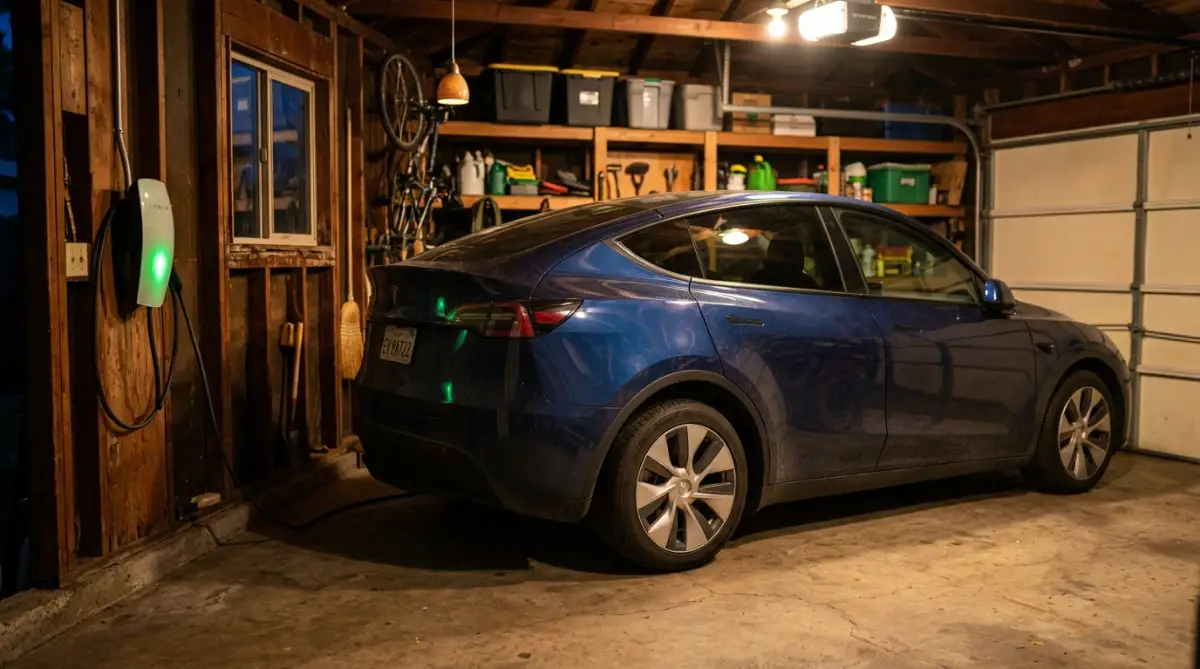
There are three common charging levels worth understanding.
Level 1: The Slow and Steady Drip
Level 1 charging uses a standard household electrical outlet.
It is the simplest option because it does not necessarily require a dedicated charging installation. However, it is also relatively slow.
Depending on the vehicle and electrical conditions, Level 1 charging may add only a few miles of range per hour.
This can work well for someone who drives a short distance each day. You can plug the vehicle in after work and allow it to charge overnight.
However, drivers with longer daily commutes may find that Level 1 charging cannot replace the energy they use quickly enough.
Level 2: The Sweet Spot for Daily Drivers
Level 2 charging is considerably faster and is commonly used for home charging.
It requires appropriate electrical equipment and, depending on the setup, professional installation. A properly installed Level 2 charger can add significantly more range per hour than a standard household outlet.
For many daily drivers, this becomes the most convenient home-charging solution.
Instead of waiting a very long time to recover a large amount of range, you can plug the vehicle in when you arrive home and allow it to charge while you sleep.
Fast Charging: The Road Trip Lifesaver
DC fast charging, sometimes called Level 3 charging, is designed primarily for situations where you need to add substantial range relatively quickly.
These chargers are commonly located along major roads, highways, shopping areas, and other public locations.
Charging speed varies significantly depending on the vehicle, charger, battery temperature, and current battery level. Some vehicles can charge from around 10% to 80% in roughly 20–30 minutes under suitable conditions, while others take longer.
For long-distance travel, fast charging can make EV road trips much more practical.
If you are still struggling to picture how these different charging speeds work in real life, this simple breakdown can make the concept easier to understand.
A Quick Cheat Sheet for Charging
Level 1: Uses a standard household outlet. Very slow, but useful for light daily driving or backup charging.
Level 2: Faster home or destination charging. Often the most practical option for regular overnight charging.
DC Fast Charging: High-speed public charging. Primarily useful during longer journeys when you need to add range quickly.
Quick Look: The Charging Speed Cheat Sheet
Myth vs Reality: Understanding Range Anxiety
“Range anxiety” describes the concern that an EV might run out of energy before reaching a charging location.
This is one of the most common concerns among people who are unfamiliar with electric vehicles.
The best way to reduce this anxiety is to understand your actual driving routine.
Many people drive relatively short distances each day, while modern EVs can offer substantially more range than a typical daily commute requires. However, actual range varies by vehicle and driving conditions.
Myth: The Car Will Suddenly Stop Without Warning
Some new drivers imagine that an EV will suddenly lose all power without warning.
In practice, the vehicle provides battery-level information and typically gives increasingly clear warnings as the remaining charge becomes low.
Reality: The Vehicle Helps You Manage Range
Modern EVs can display remaining range and, in many cases, help drivers locate nearby charging stations.
Navigation systems may also incorporate charging stops into longer routes.
This means drivers do not necessarily need to wait until the battery is almost empty before thinking about charging.
How the Driving Experience Actually Changes
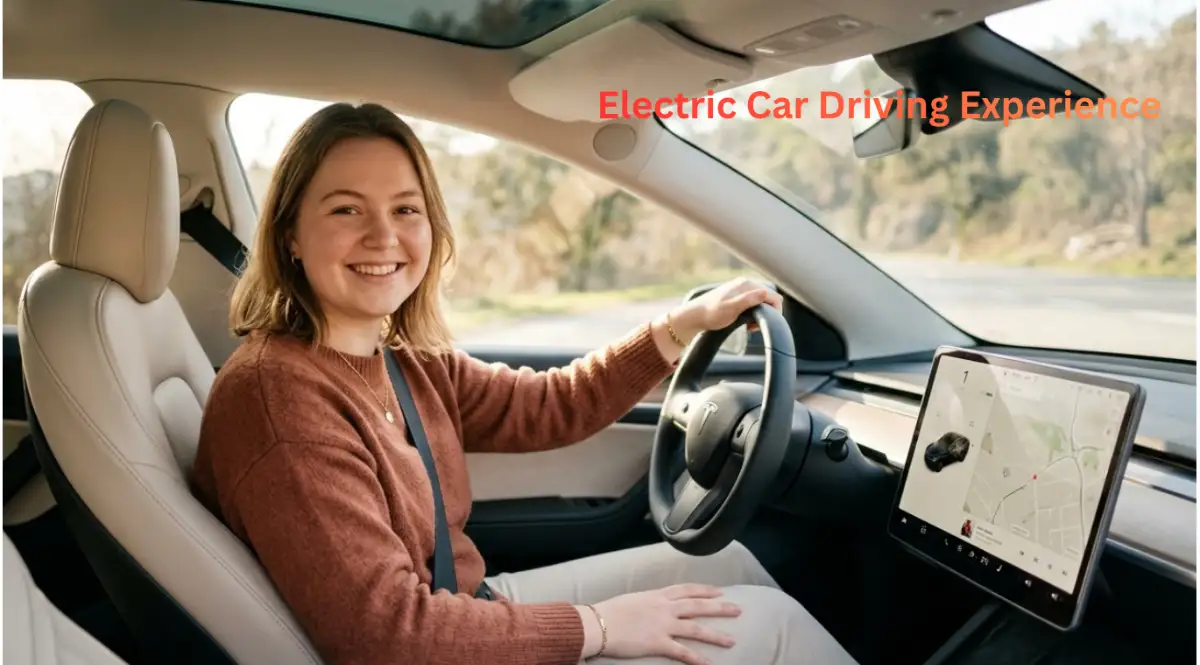
Switching from a gasoline vehicle to an EV changes more than the way you refuel. The driving experience can also feel noticeably different.
The Convenience of One-Pedal Driving
Many EVs offer regenerative braking, which can slow the vehicle when the driver lifts off the accelerator.

During this process, some of the vehicle’s kinetic energy can be converted back into electrical energy and returned to the battery.
Some vehicles allow strong regenerative braking that makes one-pedal driving possible in many situations.
It may feel unusual during the first few days, but drivers can gradually learn how much accelerator input is needed to slow down smoothly.
Instant Power Without the Loud Engine Noise
Electric motors can deliver power very quickly.
Instead of waiting for a traditional engine and transmission to build power through multiple mechanical processes, an electric motor can respond rapidly when the accelerator is pressed.
The result can be smooth and quiet acceleration, particularly during city driving.
Saying Goodbye to Routine Maintenance Headaches
Another important difference is maintenance.
Traditional internal-combustion engines contain many moving components and require services such as engine-oil changes and other engine-related maintenance.
EVs generally have fewer moving drivetrain components.
That does not mean an EV requires no maintenance. Tires, brakes, windshield-washer fluid, cabin filters, suspension components, and other parts still need attention.
The Parts You Actually Need to Watch
Tire maintenance remains important because vehicle weight and driving style can influence tire wear.
Brake maintenance is also necessary, although regenerative braking can reduce the use of conventional friction brakes in some driving conditions.
Cabin air filters and windshield-washer fluid are other simple maintenance items.
Always follow the maintenance schedule provided by the vehicle manufacturer because requirements vary by model.
Surviving Extreme Weather Conditions
Temperature can affect EV performance.
Very cold weather can temporarily reduce driving range because the battery operates differently in low temperatures and the vehicle may need additional energy for cabin heating.
Hot conditions can also affect battery temperature and vehicle energy use.
One useful feature found on many modern EVs is pre-conditioning.
When the vehicle is still connected to a charger, pre-conditioning can allow the cabin and battery to reach a suitable temperature before you begin driving.
This can improve comfort and may reduce the amount of battery energy needed after you leave home.
Navigating Public Chargers Like a Pro
Eventually, many EV owners will need to use public charging stations.
The first experience can feel unfamiliar, but modern navigation systems and charging apps can make the process easier.
Instead of memorizing the location of every charging station, you can plan your destination and identify suitable charging stops along the route.
Some navigation systems can also estimate when you need to stop and how long you may need to charge.
Before starting a long journey, it is still sensible to check the availability and compatibility of charging stations along your route.
Making the Final Mental Shift
The biggest change involved in EV ownership is often psychological.
Real-Life Mental Shift: The "ABC" Rule
When I first switched to an EV, I kept worrying about when I should charge it. Then a fellow owner taught me the ABC rule: Always Be Charging. If you park at home, plug it in. If your office has a charger, plug it in. You stop thinking about it like a gas tank that must hit "Empty" before a refill, and start treating it exactly like your cell phone.
Drivers who have spent years visiting gas stations may initially feel uncomfortable with charging at home and planning longer journeys around charging locations.
However, once you understand the basic concepts, the process becomes much more familiar.
Your battery is your energy storage system. Your charger replaces the traditional fuel pump. Your dashboard tells you how much energy remains, and your navigation system can help you locate charging options.
The technology may look complicated from the outside, but everyday operation can be surprisingly simple.
Taking Your Driving Experience to the Next Level
Once you understand basic charging and driving, a few simple habits can make EV ownership more convenient.
The 80/20 Battery Golden Rule
Battery chemistry varies between vehicles, so always follow the manufacturer's charging recommendations.
However, many EV owners use a daily charging limit below 100% and reserve a full charge for situations where maximum range is needed.
A common example is setting a daily charging target around 80%.
You can learn more about how battery chemistry safely operates from energy experts.
For long trips, the manufacturer may recommend charging to a higher level.
The key is to follow the specific guidance for your vehicle rather than assuming every EV uses exactly the same charging strategy.
Mastering the Regenerative Braking Dance
Regenerative braking can take some time to get used to.
Instead of immediately removing your foot from the accelerator, practice gradually reducing pressure. This allows you to learn how the vehicle responds.
Over time, you may become comfortable using regenerative braking for normal slowing and keeping the conventional brake pedal primarily for situations that require additional braking.
Managing Your Home Electric Bill
Home charging can become an important part of your monthly electricity usage.
Some electricity providers offer time-based rates that make certain hours cheaper than others. If such a program is available in your area, scheduling vehicle charging during lower-cost periods may reduce charging expenses.
Many EVs and charging systems allow you to schedule charging automatically.
Before choosing a charging schedule, check the electricity rates and programs available from your local utility provider.
You can also find useful information about handling electric vehicle ownership challenges.
Traps That Can Ruin Your New Ride
Switching to an EV is easier when you avoid applying every old gasoline-car habit to electric driving.
A few common mistakes can create unnecessary stress.
Trusting Your Old Road Trip Habits
With a gasoline vehicle, many drivers wait until the fuel gauge is close to empty before stopping at a station.
That strategy is less suitable for an EV road trip.
Public fast chargers are not located everywhere, and a station that looks close on a map may not be available or compatible with your vehicle.
For longer journeys, plan your charging stops in advance and use the vehicle's navigation system when appropriate.
These smart solutions for everyday driving can make long-distance travel easier to manage.
Ignoring the Power of Pre-Conditioning
Heating or cooling the cabin can consume additional battery energy.
If your vehicle supports pre-conditioning, using it while connected to home charging can reduce the amount of energy needed for climate control after you begin driving.
Heated seats and steering wheels can also provide personal comfort without necessarily requiring the same level of cabin heating.
Understanding Phantom Drain
An EV can use a small amount of energy even while parked.
The vehicle may continue running security systems, connectivity features, monitoring functions, and battery-management systems.
This gradual energy loss is sometimes called “phantom drain.”
The amount varies by vehicle and settings.
If your vehicle will remain parked for an extended period, check the manufacturer's recommendations for storage and energy-saving settings.
You can also learn more about managing battery expectations.
Relying Solely on the Emergency Wall Cable
A standard Level 1 cable can be useful, but it may not provide enough charging speed for drivers with long daily commutes.
If you regularly use significant amounts of battery energy, a properly installed Level 2 home charger may provide a more convenient charging routine.
You can compare officially measured efficiency standards to better understand how different EVs use energy.
Stepping Into Your Quiet New Ride
Moving from a gasoline vehicle to an EV can feel like a major change, but understanding the basics removes much of the uncertainty.
You do not need to memorize every technical specification.
Start with the fundamentals: understand your expected daily driving distance, learn how your vehicle charges, choose an appropriate home charging solution, and plan longer journeys around available charging infrastructure.
The initial learning curve may take a little time, but the basic routine can become simple once you understand how the vehicle fits into your lifestyle.
You can also explore information about evaluating long-term reliability.
If you encounter challenges during ownership, resolving common driving obstacles can help you understand common situations.
Common Questions About Making the Switch
Can I safely wash my car or drive through heavy rain?
EVs are designed with electrical systems that are protected from normal environmental exposure, including rain and ordinary car-washing conditions.
However, drivers should always follow the manufacturer's instructions regarding water exposure, charging equipment, and damaged components.
You can also review vehicle safety information for additional information.
Will my battery die completely in a heavy traffic jam?
Stop-and-go traffic does consume energy, especially when climate control and other systems are operating.
However, EVs do not use energy in exactly the same way as gasoline vehicles when stationary. The motor is not continuously running simply because the vehicle is switched on.
Your actual energy use depends on factors such as temperature, heating or cooling, accessories, and how long you remain stationary.
Do I really need to buy a brand-new charger for my home?
Not necessarily.
A standard Level 1 charger may be sufficient for some drivers with short daily commutes.
For drivers who regularly use more range, a properly installed Level 2 charger can provide significantly faster and more convenient home charging.
Your daily mileage and home electrical setup should guide the decision.
How long do large battery packs actually last?
Battery lifespan depends on battery chemistry, temperature, charging habits, mileage, usage, and vehicle design.
Many manufacturers provide specific battery warranties, often covering a defined period and mileage limit. The exact terms vary by manufacturer and model.
Always check the warranty information for the specific vehicle you are considering.
For additional new driver troubleshooting, use the manufacturer's documentation and owner's manual as your primary reference.
Disclaimer: This article is for informational and educational purposes only. Driving laws, electrical safety regulations, charging infrastructure, battery technology, and vehicle features vary by region and manufacturer. Always consult your vehicle's official owner's manual and hire a certified electrician for any home charging installation.
