How to Write a Resume With No Experience: A Complete Beginner’s Guide
The Frustrating Reality of the Experience Paradox
Have you ever stared at a blank screen, wondering what to include on your first resume? You are not alone. Many students, recent graduates, and first-time job seekers face the same frustrating problem: employers want experience, but getting experience often requires getting a job first.
You may find an entry-level position that sounds perfect, only to discover that it requires one or two years of previous experience. After facing rejection repeatedly, it is easy to lose confidence and question your abilities.
However, having no formal work history does not mean you have nothing valuable to offer. Your education, personal projects, volunteer activities, extracurricular involvement, and everyday responsibilities can all demonstrate skills employers appreciate.
The real challenge is learning how to present these experiences professionally. Instead of focusing on what you lack, build your resume around what you can do, what you have learned, and how you can contribute to an organization.
With the right structure and strategy, you can create a professional resume that highlights your potential and helps you compete for entry-level opportunities.
1. Understand What Employers Actually Want
One of the biggest misconceptions among beginners is that employers only hire candidates with impressive company names on their resumes. Although previous employment can be helpful, many entry-level employers also value reliability, communication, adaptability, and willingness to learn.
The myth: You need professional experience or a prestigious internship to get noticed.
The reality: Employers hiring beginners often look for evidence that candidates can learn quickly, follow instructions, solve problems, and work effectively with others.
You can demonstrate these qualities through school assignments, group presentations, community involvement, personal projects, and other meaningful activities.
For example, completing a group assignment demonstrates collaboration and time management. Organizing a school event can show planning and leadership. Helping someone troubleshoot a technical problem may demonstrate patience and problem-solving.
Your objective is not to pretend that you have years of professional experience. It is to show employers that you already possess useful abilities and are ready to develop them further.
2. Choose the Right Resume Format
A traditional chronological resume emphasizes employment history, usually listing positions from the most recent to the oldest. This format works well for experienced professionals but may not be ideal when you have never held a formal job.
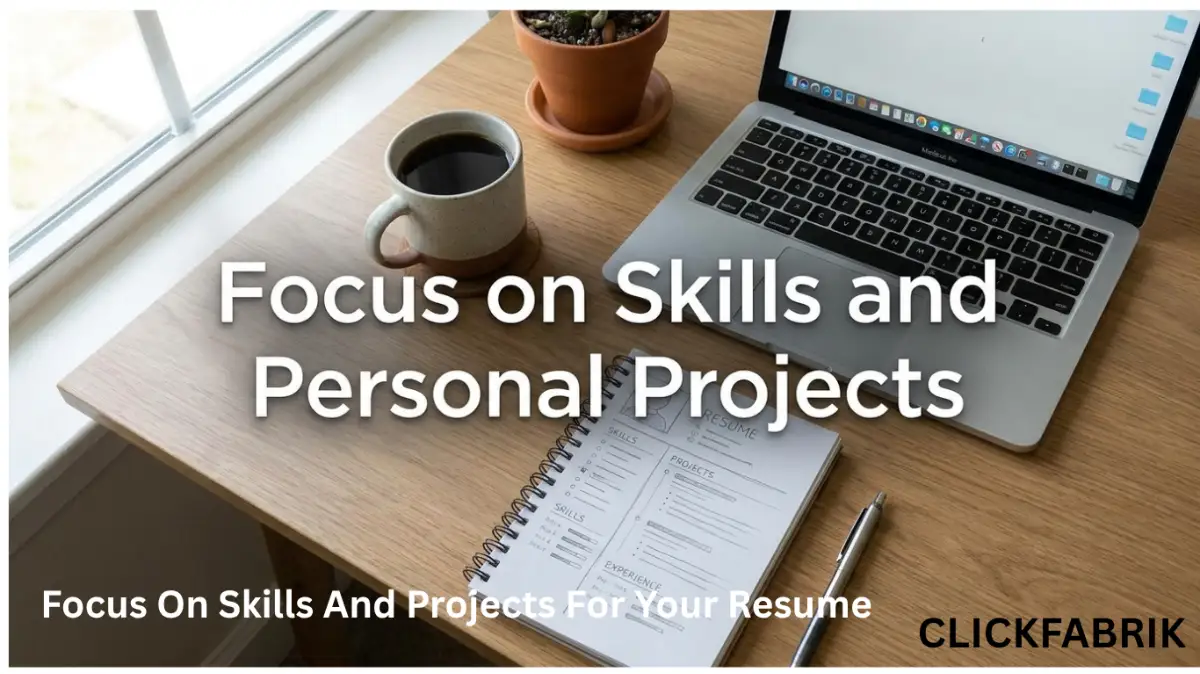
A skills-focused format can help beginners highlight relevant abilities before discussing their limited employment history. You can organize the document around projects, education, skills, and volunteer activities.
Consider the differences:
| Feature | Traditional Resume | Skills-Focused Resume |
|---|---|---|
| Main focus | Employment history | Relevant abilities |
| Best suited for | Experienced professionals | Students and beginners |
| Organization | Work timeline | Skills and achievements |
| Main advantage | Demonstrates career progression | Highlights potential |
A hybrid format is another useful option. It combines a prominent skills section with education, projects, and any relevant experience.
For most beginners, a simple, clearly organized, one-page resume is a practical starting point. Choose the format that best communicates your qualifications without exaggerating your background.
3. Turn Academic Achievements Into Professional Experience
Your education can provide valuable evidence of your abilities, especially if you are a student or recent graduate.
Instead of listing only your institution, qualification, and graduation date, consider including relevant coursework, academic projects, research assignments, and achievements.
For example, writing “Completed a marketing assignment” does not communicate much about your contribution.
A stronger bullet point would be:
- Collaborated with four classmates to develop a digital marketing strategy, research target audiences, and present promotional recommendations.
This example demonstrates teamwork, research, communication, and analytical thinking.
When describing academic projects, focus on three things: what you did, which skills you used, and what you accomplished.
You might include a research paper that required data analysis, a presentation that involved public speaking, or a group assignment that required coordinating deadlines.
Only include projects relevant to your target position. If you are applying for an administrative role, highlight organization, documentation, and spreadsheet skills. For a marketing position, emphasize content creation, audience research, and communication.
Your academic experience becomes more persuasive when you explain your actual contribution rather than simply naming the assignment.
4. Highlight Personal Projects and Hobbies
Personal projects can demonstrate initiative, creativity, and practical knowledge. They are particularly useful when you lack paid employment experience.
For example, someone interested in social media marketing could create a sample campaign for a fictional business. They might design promotional posts, write captions, research competitors, and prepare a basic content calendar.
Similarly, an aspiring programmer could build a small application, publish code on GitHub, or create a personal website. Someone interested in graphic design could develop sample posters or branding concepts for a portfolio.
Even hobbies can provide useful evidence when they are relevant to the job.
Managing an online community may involve moderation, communication, and conflict resolution. Maintaining a blog can demonstrate writing, research, and content planning. Participating in team sports may provide examples of collaboration and discipline.
Create a section called “Personal Projects” or “Relevant Projects.” Explain your role, the tools you used, and the results you achieved.
Be honest about whether a project was personal, academic, voluntary, or completed for a real client. You do not need to describe an unpaid activity as formal employment to make it valuable.
5. Include Volunteer Work and Extracurricular Activities
Volunteer work is another effective way to demonstrate transferable skills. Employers may appreciate candidates who have taken responsibility, supported a community, or contributed to a shared goal.
For example, helping organize a charity event could demonstrate logistics, coordination, and teamwork. Collecting donations may involve communication and outreach. Serving as a student club treasurer could provide evidence of budgeting, recordkeeping, and accountability.
Treat relevant volunteer roles seriously when writing your resume. Include the organization, your role, the dates, and two or three bullet points describing your responsibilities or achievements.
Extracurricular activities can also be useful. Leadership positions, student organizations, competitions, and community initiatives may reveal qualities that are difficult to demonstrate through academic grades alone.
However, avoid listing every activity you have ever participated in. Prioritize experiences that support the requirements of the job you want.
6. Write a Strong Professional Summary
Your professional summary appears near the top of your resume, making it an important opportunity to introduce your strengths.
Avoid generic statements such as:
“Looking for an entry-level job where I can gain experience and grow my career.”
Although understandable, this statement focuses primarily on what you want rather than what you can contribute.
Instead, write a short summary that highlights relevant skills, education, and professional interests.
For example:
“Organized and detail-oriented graduate with strong research, communication, and teamwork skills developed through academic projects. Comfortable learning new digital tools and managing competing deadlines. Eager to contribute a positive attitude, reliability, and a willingness to learn to an entry-level customer service position.”
Customize this paragraph for each application. A customer service candidate might emphasize communication and problem-solving, while an aspiring data entry assistant could highlight accuracy, organization, and spreadsheet knowledge.
Keep the summary concise, specific, and truthful. Avoid unsupported claims such as “industry expert” or “proven professional” when you have no relevant employment history.
7. Balance Hard Skills and Soft Skills
Hard skills are practical abilities that can often be demonstrated or measured. Examples include spreadsheet management, data entry, graphic design, basic coding, writing, and foreign-language proficiency.
Soft skills relate to how you communicate, organize your work, and interact with others. Examples include adaptability, teamwork, problem-solving, time management, and attention to detail.
Both categories can strengthen a beginner's resume.
However, simply listing “excellent communication” or “strong leadership” is not enough. Whenever possible, support these claims with evidence elsewhere in your document.
For instance, a group project can demonstrate collaboration, while managing a student event may provide evidence of planning and leadership.
Review the job description and identify the skills most relevant to the position. Select approximately six to eight skills you genuinely possess rather than listing every ability you can think of.
Never claim expertise in software or technical tasks that you cannot confidently demonstrate. Honest descriptions of your current ability are more valuable than exaggerated claims that may create problems during an interview.
8. Keep Your Resume Clean and Professional
Good formatting makes your qualifications easier to understand. Recruiters often review applications quickly, so your resume should communicate important information without unnecessary distractions.
Follow these practical guidelines:
- Use a readable font such as Arial, Calibri, or Helvetica.
- Choose a consistent font size, generally around 10–12 points for body text.
- Use bold headings to separate sections clearly.
- Keep margins and spacing consistent.
- Avoid unnecessary graphics, decorative elements, and complicated layouts.
- Use a professional email address based on your name where possible.
- Save and submit your resume in PDF format when the employer accepts it.
For most beginners, one page is sufficient. Focus on relevance rather than trying to make the document look longer.
A two-page resume is not automatically wrong, but unnecessary repetition and oversized text can make an inexperienced candidate's application appear poorly edited.
White space is equally important. Leaving enough room between sections helps readers locate information quickly.
9. Customize Your Resume for Every Application
Sending the same resume to dozens of employers may seem efficient, but it can make your applications less relevant.
Read each job description carefully. Identify the required responsibilities, technical skills, qualifications, and keywords. Then adjust your summary, skills, and project descriptions to reflect the requirements you genuinely meet.
For example, if an administrative assistant vacancy emphasizes spreadsheet management, highlight a relevant academic project involving Excel or Google Sheets.
If a customer service position emphasizes communication and problem-solving, showcase experiences where you explained information, resolved a disagreement, or supported a group.
Use the employer's terminology naturally when it accurately describes your abilities. Never insert keywords that misrepresent your experience.
This approach can help recruiters understand your suitability and may improve compatibility with applicant tracking systems (ATS), which some employers use to organize and screen applications.
For better readability, use standard headings such as “Education,” “Skills,” “Projects,” and “Experience.” Avoid placing essential information inside complicated graphics, unusual text boxes, or elaborate layouts that may be difficult for software to interpret.
10. Strengthen Your Resume With Courses and Certifications
Relevant online courses can help you develop practical knowledge and demonstrate a commitment to learning.
Depending on your target role, consider courses in spreadsheets, digital marketing, customer service, project management, programming, or graphic design.
You can explore free and paid learning resources, but prioritize courses that teach skills employers actually request.
After completing a course, create a “Certifications and Training” section. Include the course name, provider, and completion date when appropriate.
Only list courses you have genuinely completed. If you are still studying, describe them as “In Progress” rather than presenting them as finished qualifications.
Remember that certificates are not substitutes for practical ability. Whenever possible, combine a course with a small project that demonstrates what you learned.
For example, after completing a spreadsheet course, create a sample budget tracker or organize a dataset. After studying digital marketing, develop a sample campaign and include it in your portfolio.
This combination provides stronger evidence of your abilities than a certificate alone.
11. Build a Small Portfolio to Demonstrate Your Skills
A portfolio gives employers something concrete to review when your employment history is limited.
You do not need an expensive website to get started. Depending on your field, you can organize your work using a simple online document, a personal website, GitHub, or a design portfolio platform.
Consider a candidate named Sarah who wants to become a social media assistant. Instead of simply claiming that she understands social media, she creates a sample campaign for a fictional coffee shop.
Her portfolio includes sample posts, captions, a content calendar, and a short explanation of her target audience. She adds the portfolio link to her resume.
This approach allows employers to evaluate her creativity and organization directly.
Choose portfolio examples that reflect the work you want to do. Clearly label practice projects as samples, and obtain permission before sharing confidential or client-owned material.
12. Write a Personalized Cover Letter
A cover letter gives you an opportunity to explain why you are interested in a particular role and how your existing experience relates to its responsibilities.
Start with a professional greeting. If the hiring manager's name is publicly available, use it; otherwise, a greeting such as “Dear Hiring Manager” is appropriate.
In the opening paragraph, identify the position and briefly explain your interest. In the next paragraph, connect one or two relevant projects, academic experiences, or transferable skills to the job requirements.
Finish by expressing appreciation for the employer's consideration and your interest in discussing the opportunity.
Avoid apologizing for your lack of experience. Instead, explain what you can contribute and demonstrate your willingness to learn.
A personalized, concise letter is generally more useful than a generic template sent unchanged to every employer.
13. Avoid Common Resume Mistakes
Small mistakes can weaken an otherwise strong application. Before submitting your resume, check for these common problems.
An unprofessional email address: Create a simple email account suitable for job applications.
Spelling and grammar errors: Proofread carefully, read the document aloud, and ask a trusted person to review it if possible.
Exaggerated qualifications: Describe your skills honestly and be prepared to explain or demonstrate them during an interview.
Irrelevant information: Remove hobbies, coursework, and personal details that do not strengthen your application.
Missing contact information: Make sure your phone number, email address, and relevant portfolio link are accurate.
Poor organization: Use clear section headings and consistent formatting.
A generic resume: Tailor the most relevant sections to the position instead of relying on one unchanged version.
Check the employer's instructions as well. Some organizations request a particular file format, specific documents, or additional application questions.
14. Your Action Plan for Creating a Resume
You do not need to complete everything perfectly in one sitting. Begin with the information you already have, then improve the document step by step.
Use this checklist:
- Write down your education, relevant coursework, and academic achievements.
- Identify personal projects, volunteer activities, and extracurricular responsibilities.
- List your strongest relevant hard and soft skills.
- Draft a short professional summary tailored to your target role.
- Organize the information into clear, easy-to-read sections.
- Add relevant courses, certifications, and portfolio links.
- Review the job description and customize your resume.
- Proofread the final document and check your contact details.
- Save the resume in the requested file format.
- Keep a master version so you can prepare tailored applications more efficiently.
Remember that your first resume is a starting point, not a final judgment of your abilities. As you complete projects, learn new tools, and gain experience, update it regularly.

Frequently Asked Questions
Should I include my high school on my resume?
If you are currently attending college or have completed a college degree, high school information is generally unnecessary unless it is specifically relevant. If your high school diploma is your highest qualification, include it in your education section.
Do employers actually read cover letters?
Some employers consider cover letters an important part of the application, while others make them optional. Follow the application instructions and write one when it is requested or when it can meaningfully explain your suitability.
How long should a beginner's resume be?
One page is usually sufficient for students, recent graduates, and first-time job seekers. Focus on relevant qualifications rather than adding unnecessary information to fill space.
Can I include hobbies on my resume?
Yes, when they demonstrate relevant skills or meaningful involvement. A personal blog, coding project, team sport, or volunteer activity may provide useful evidence of your abilities.
What if I have a low GPA?
You generally do not need to include your GPA unless the employer requests it or it strengthens your application. Emphasize relevant coursework, projects, practical skills, and achievements instead. Always provide accurate information when academic results are required.
Final Thoughts
Writing a resume without experience can feel overwhelming, but it does not mean you are unqualified to begin your career.
Your academic projects, personal interests, volunteer work, and independent learning can demonstrate valuable skills when you present them clearly and honestly. A professional layout, relevant keywords, a focused summary, and a tailored cover letter can help employers understand your potential.
Start by gathering your existing experiences and identifying the abilities they demonstrate. Then build a simple resume, improve it gradually, and apply for positions that match your current skills and interests.
You cannot control every hiring decision, and no resume can guarantee an interview. However, you can control how clearly you communicate your strengths and how consistently you improve your application.
Your lack of formal employment history does not define your future. Focus on what you can demonstrate today, keep learning, and take the first step toward the career you want.
Disclaimer: This article is intended for informational and educational purposes only. Hiring practices and job requirements vary by employer, industry, and location. Following these recommendations does not guarantee interviews, employment, or career success. Review each employer's requirements and consider seeking guidance from a qualified career adviser when needed.