
The Heavy Weight of a Bad Financial Choice
Imagine waking up at three in the morning with a heavy feeling in your chest. You remember that loan you signed for last week. At first, it seemed like a lifesaver for your home repairs or medical bills. But now, you realize the monthly payment is much higher than you expected.
Many people fall into this trap because they rush the process. They see a "Yes" from a lender and grab it immediately. This happens because financial stress makes us feel desperate. We want the money now, so we ignore the fine print.
I have seen families struggle for years because they chose a loan with a hidden fee. They thought they were saving money, but the interest grew like a weed. It is not just about the money; it is about your peace of mind.
When you have a bad loan, every paycheck feels smaller. You start to worry about groceries or rent because the bank takes too much. It feels like you are running on a treadmill that never stops. This is the harsh reality for those who do not know how to compare offers correctly.
You deserve a fair deal. You deserve to know exactly where every cent is going. Comparing loans is not just a math task; it is a way to protect your future self. Let’s change the way you look at money today.
Why the Interest Rate is Only Half the Story
Most people only look at the interest rate when they see a loan offer. This is a big mistake that can cost you thousands. Lenders often hide the true cost of borrowing in other places.
You need to look for the APR (Annual Percentage Rate). The APR includes both the interest rate and the fees the lender charges. Think of it like buying a plane ticket. The ticket might be cheap, but the "baggage fees" make it expensive.
The APR gives you a clear picture of the total cost. If Loan A has a 5% interest rate but high fees, and Loan B has a 6% rate with no fees, Loan B might actually be cheaper. Always ask for the APR before you sign anything.
Decoding the Mystery of Loan Fees
Lenders are businesses, and they want to make money. They do this through various hidden charges. You must be like a detective to find them.
One common fee is the origination fee. This is a charge for processing your application. It is usually a percentage of the total loan amount. If you borrow $10,000 and the fee is 3%, you only get $9,700, but you still owe $10,000.
Another sneaky charge is the prepayment penalty. Some banks punish you for paying your debt off early. They want you to keep paying interest for the full term. If you plan to pay back the loan quickly, make sure there is no penalty for doing so.
The Impact of Loan Terms on Your Wallet
The loan term is how long you have to pay the money back. It might be three years, five years, or even seven. Choosing the right term is a balancing act.
A short-term loan usually has higher monthly payments. However, you pay much less in total interest over time. You get out of debt faster and save money in the long run.
A long-term loan makes your monthly payment look very small and attractive. But wait! You will be paying interest for a much longer time. By the end, you might pay back double what you borrowed.
Pro Tip: If you can afford it, always go for the shortest term possible. It keeps your financial health strong.
Your Credit Score: The Key to the Best Deals
Your credit score is like a grade on a report card. It tells lenders how much they can trust you. A high score opens doors to the lowest rates.
Before you apply, check your credit report for errors. Sometimes, a simple mistake can lower your score. Fixing these errors can save you a lot of money on your interest rate.
If your score is low, try to improve it before applying. Pay off small debts or make sure all your bills are on time. Even a small jump in your score can move you from a "high-interest" category to a "prime" category.
Comparing Fixed vs. Variable Interest Rates
Not all interest rates stay the same. You need to know which type you are getting. This choice affects your budgeting for years.
A fixed-rate loan means your interest rate never changes. Your payment is the same every month. This is great for people who like to plan their budget carefully. You never have to worry about the market going up.
A variable-rate loan can change based on the economy. It might start lower than a fixed rate. But if interest rates in the world go up, your monthly payment will go up too. This is risky if you are on a tight budget.
The Secret Power of Pre-Qualification
Did you know you can check your rates without hurting your credit score? This is called pre-qualification.
Most modern lenders use a "soft credit pull" for this. It gives you an estimate of what you can borrow and at what rate. You can do this with five different lenders in one afternoon.
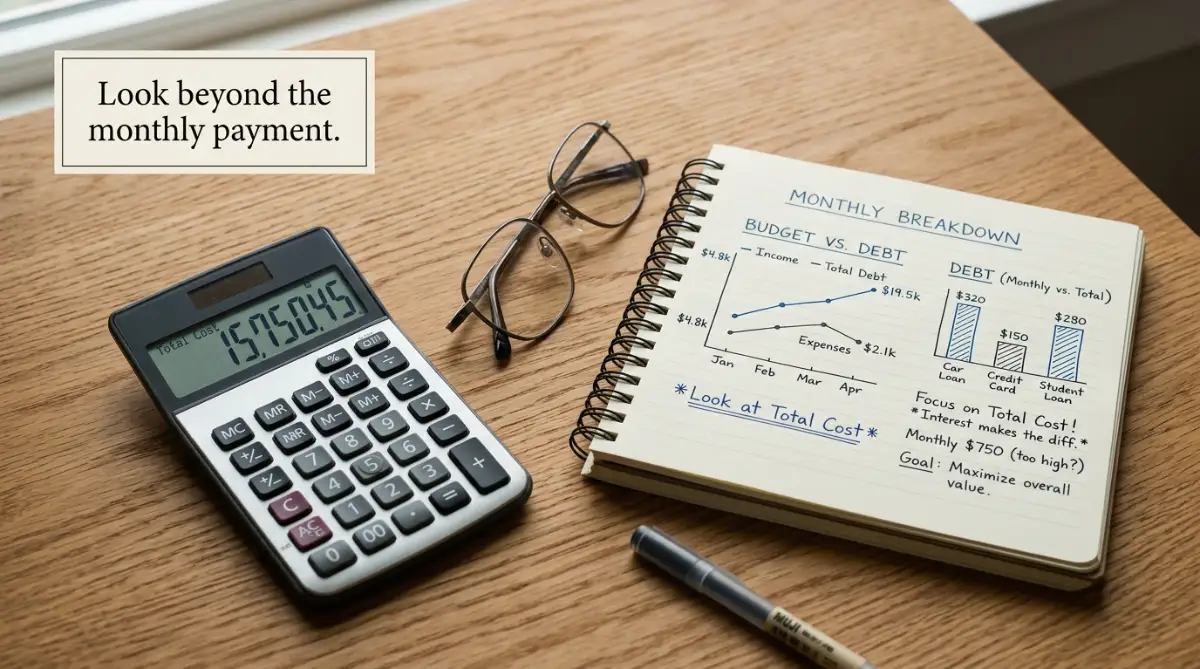
Once you have these offers, put them side by side. Do not just look at the monthly payment. Look at the total interest you will pay over the life of the loan. This is the only way to see who is giving you the best deal.
Understanding the "Total Cost of Borrowing"
Let’s look at a real-life example. Suppose you need $5,000 for a car repair.
- Option A: $150 per month for 48 months.
- Option B: $190 per month for 36 months.
Option A looks better because $150 is easier to pay than
190.Butlet’sdothemath.OptionAcostsyou∗∗
190.Butlet’sdothemath.OptionAcostsyou∗∗
7,200** in total. Option B costs you $6,840 in total.By choosing Option B, you save $360 and get out of debt a year sooner. This is why you must always calculate the total cost. Never focus only on the monthly amount.
The Role of Customer Service and Reviews
A loan is a long-term relationship with a company. You want to make sure they treat you well. Researching lender reputation is a key step.
Read reviews from other customers. Do they complain about hidden fees? Is their customer service hard to reach? If a lender has a bad reputation, stay away even if the rate is low.
A good lender will be transparent. They will answer your questions clearly and won't pressure you to sign quickly. If you feel rushed or confused, that is a red flag.
Myth vs. Reality in Personal Loans
Myth: The bank you use for your checking account will always give you the best loan rate.
Reality: Your local bank might actually be more expensive than an online lender. Online lenders have less "overhead" and can pass those savings to you.
Myth: You should only apply to one lender to protect your credit.
Reality: Applying to multiple lenders within a short window (usually 14-45 days) counts as a single inquiry for your credit score. This allows you to shop around freely.
How to Read the Truth in the "Fine Print"
When you get a loan contract, it is usually many pages long. Most people just sign the last page. Please, do not do that.
Look for the Truth in Lending Act (TILA) disclosure. This is a box that summarizes the most important parts of the loan. It lists the APR, the finance charge, the amount financed, and the total of payments.
If the numbers in this box are different from what the loan officer told you, stop immediately. Ask for an explanation. A trustworthy lender will have nothing to hide.
Using Technology to Your Advantage
Today, there are many loan comparison tools online. These websites allow you to see offers from dozens of lenders at once. They make the process much faster.
However, be careful. Some tools might show you lenders who pay them the most commission. Use these tools as a starting point, but always do your own independent research.
Check the lender’s official website directly. Sometimes, you can find a better deal there than on a comparison site. Taking an extra 20 minutes to check can save you hundreds of dollars.
Preparing Your Documents for a Smooth Process
When you finally find the perfect offer, you need to be ready to move. Having your documents ready will make the process stress-free.
Lenders usually want to see:
- Proof of income (like pay stubs or tax returns).
- Identification (a driver's license or passport).
- Proof of address (a utility bill).
- Bank statements from the last two months.
If you have these ready in a folder, you won't be scrambling at the last minute. This shows the lender that you are a responsible borrower.
Final Thoughts for This Stage
Finding the right personal loan is about being patient and smart. You now know that the APR is the most important number. You know to watch out for hidden fees and to choose a shorter term if possible.
In the next part of this guide, we will look at even deeper strategies. We will talk about how to negotiate with lenders and what to do if your application is denied. Remember, you are in control of your money. Don't let the lenders control you.
By following these steps, you are not just getting a loan; you are making a smart financial move. You are protecting your family and your future. Keep these tips in mind as you start your journey to find the best loan offer.
Advanced Tactics for the Savvy Borrower
Now that you know the basics of interest rates and terms, it is time to look at the hidden strategies that pros use. Most people think they just have to accept whatever the bank offers. This is not true. You have more power than you think, especially if you have a good financial history.
One of the best secrets is the power of negotiation. Many online lenders and credit unions have a small amount of "wiggle room" in their rates. If you have two different offers, call the lender you prefer. Tell them, "Bank B offered me a 6% rate, but I like your service more. Can you match or beat that?" You would be surprised how often they say yes just to win your business.
Another pro tip is to look for loyalty discounts. If you already have a checking or savings account with a bank, they might give you a 0.25% or 0.50% discount on your loan. This sounds small, but over five years, it saves a lot of money. Always check with your current bank first to see if they offer these relationship perks.
You should also consider the timing of your application. Lenders often have monthly or quarterly targets to meet. Sometimes, applying near the end of a month might give you a slight edge if the lender is trying to hit their sales goals. This isn't a guaranteed rule, but it is a pattern many financial experts notice.
If your credit score is not perfect, don't lose hope. You can use the co-signer strategy to get a much better deal. A co-signer is someone with great credit who agrees to share the responsibility for the loan. This reduces the risk for the lender, which leads to a lower interest rate for you. Just remember, if you miss a payment, your co-signer's credit will also be hurt.
When you are looking for ways to improve your financial standing, you might also think about securing personal loans without using your assets. This approach helps you get the cash you need without putting your home or car at risk. It is a great way to maintain your financial security while moving forward with your plans.
To truly understand how these systems work, it is helpful to look at official data. Organizations like the Consumer Financial Protection Bureau provide excellent resources on how lending laws protect you from unfair practices. Knowing your rights makes you a much more confident borrower.
Expert borrowers also look at the disbursement speed. If you are in a hurry, a lender that takes two weeks to give you money is no good, even if the rate is low. Some modern lenders can deposit the money into your account within 24 hours. Always check the "time to fund" before you make your final choice.
Finally, think about automatic payments. Almost every lender offers a small interest rate discount if you set up "Auto-Pay." This ensures you never miss a payment and saves you money at the same time. It is a simple win-win for everyone involved.

Mistakes That Can Ruin Your Financial Future
Even smart people make big mistakes when they are stressed about money. One of the biggest traps is borrowing more than you need. A lender might tell you that you "qualify" for $20,000, even if you only need $10,000. It is very tempting to take the extra cash for a vacation or new clothes.
Stop and think before you do this. That "extra" money is not a gift. You have to pay it back with interest. Taking more than you need keeps you in debt for a longer time. It creates a debt cycle that is very hard to break. Only borrow the exact amount required to solve your problem.
Another common error is ignoring your digital security during the application process. You will be sharing very sensitive information like your social security number and bank details. If you use a shady website or a public Wi-Fi connection, hackers could steal your identity. Always ensure you are practicing good digital security before entering your financial data online.
Many people also forget to check the lender's physical address. In the world of online banking, some "lenders" are actually just scammers. If a company does not have a clear physical office or a working customer service number, stay away. A real business will always be easy to find and contact.
I have seen people get excited about a "low monthly payment" without looking at the total repayment amount. This is a trick lenders use to make expensive loans look cheap. They stretch the loan over many years. You might pay $100 a month, but you do it for so long that you pay back three times what you borrowed. Always look at the big picture, not just the monthly bill.
Lying on your application is another dangerous path. You might think that inflating your income will help you get a better rate. However, lenders often verify this information with tax documents. If they catch you in a lie, they will deny your application immediately. Even worse, it could be seen as fraud, which has serious legal consequences.
We also see many borrowers who don't have a repayment plan. They get the money, spend it, and then wonder how they will pay it back next month. Before the money even hits your account, you should know exactly which part of your budget will cover the loan payment. Without a plan, you are setting yourself up for a lot of stress.
If you are a business owner, these mistakes can be even more costly. Protecting your income stream is as important as managing your debt. You should always find ways to keep your business safe from unexpected threats. This ensures that you always have the funds available to meet your loan obligations.
According to a study by Harvard University, consumers who compare at least three different offers save an average of over $400 in interest costs. This proves that being "lazy" during the comparison phase is one of the most expensive mistakes you can make. Take the time to do the work. Your future self will thank you for it.
Your Path to a Better Financial Life
You have now learned the "pro" way to handle personal loans. It is not about luck; it is about preparation and research. You know how to look past the flashy ads and find the real numbers. This knowledge is a powerful tool that helps you keep more of your hard-earned money.
Start by checking your credit score today. Look for any mistakes and fix them. Then, start gathering your documents so you are ready when the right offer comes along. Use the pre-qualification tools we discussed to see what is available to you without any risk.
Remember, a loan should be a bridge to a better place, not a weight that pulls you down. Whether you are consolidating debt, fixing your home, or handling an emergency, you have the skills to choose the best path. You are now a pro borrower, and you don't have to settle for a bad deal.
We believe in your ability to manage your finances with confidence. Take a deep breath and start the process slowly. Don't let anyone rush you. Ask the hard questions, read every line of the contract, and always do the math yourself.
Your journey to financial freedom starts with a single smart decision. By comparing your options carefully, you are taking a huge step toward a stress-free life. Go out there and find the deal that fits your life perfectly. You’ve got this!
Disclaimer: The information provided in this blog post is for educational purposes only and does not constitute professional financial advice. Loans involve financial risk, and interest rates can change based on your individual credit profile and market conditions. Always consult with a qualified financial advisor or legal professional before making significant financial decisions.