The Hidden Anxiety of Owning Digital Assets
Do you remember the first time you bought a small amount of Bitcoin or Ethereum.I used to wake up at 3 AM just to check if my exchange app still showed my balance. I lived in constant fear that a company I didn’t even know could swallow my savings overnight. That heavy stress is what finally pushed me to learn how to truly own my money and stop being a guest in my own financial life.
You likely felt a mix of excitement and a tiny bit of fear. You probably used a popular exchange app because it felt easy, almost like a banking app. But then, you started hearing stories.
You heard about big exchanges suddenly locking their doors. You read headlines about billions of dollars vanishing because a company went bankrupt. It feels like holding your life savings in someone else’s pocket. That constant worry is a heavy weight to carry.
I have talked to many people who stay awake at night wondering if their "digital gold" is actually theirs. They see their balance on a screen, but they don't feel like they own it. They feel like guests in a house they paid for. This lack of control is the main reason why many people eventually walk away from the world of crypto.
It is heartbreaking to see someone lose their hard-earned money because they trusted a middleman. You deserve to feel safe. You deserve to know that no matter what happens to a company or a website, your money stays with you. This is where the magic of self-custody comes into play.
Learning about wallets might seem scary at first. You might think it is only for "tech geniuses" or "coders." I am here to tell you that it is much simpler than you think. Self-custody is about taking back your power. It is about moving from "renting" your space in the crypto world to "owning" your own vault.
Why Your Crypto Isn't Actually "In" Your Wallet
The biggest mistake people make is thinking that a crypto wallet works like a leather wallet in your pocket. In a leather wallet, you put physical dollar bills inside it. If you lose the wallet, the bills are gone.
Crypto wallets do not store your coins. This is a huge concept to grasp. Your Bitcoin or Ethereum lives on the blockchain, which is a giant digital record book. Your wallet is actually just a tool that holds the keys to your portion of that record book.
Think of it like a high-tech mailbox. Anyone can see the mailbox and even drop a letter inside through the slot. However, only the person with the unique physical key can open the box and take the letters out. In this story, the "letters" are your crypto.

The Two Keys You Must Know About
To understand your wallet, you only need to know about two things: Public Keys and Private Keys.
Your Public Key is like your email address or your bank account number. You can share this with anyone. If a friend wants to send you some crypto, you give them your public address. It is safe for the world to see.
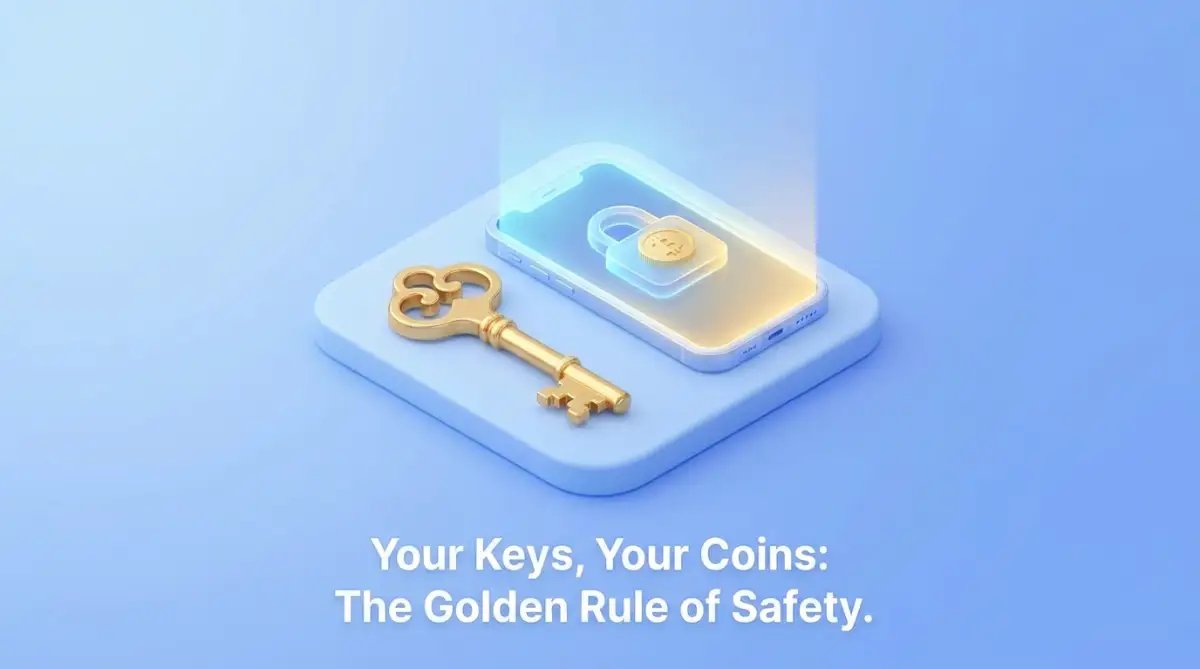
Your Private Key is like the secret password to your entire life. It is the only thing that allows you to move or spend your money. If someone gets your private key, they effectively own your coins. This is why keeping this key safe is the most important part of your journey.
The Seed Phrase: Your Ultimate Safety Net
When you set up a self-custody wallet, you are given a list of 12 or 24 random words. This is called a Seed Phrase or a Recovery Phrase. This is the "Master Key" to your digital vault.
Imagine you lose your phone or your computer breaks. If you have your seed phrase written down on a piece of paper, you can buy a new device and get all your money back in minutes. The seed phrase is your lifeline.
Pro Tip: Never, ever type your seed phrase into a computer or take a photo of it. I once made the big mistake of keeping a screenshot of my seed phrase in my hidden photo folder, thinking it was safe. I later realized that if my phone ever synced to the cloud, a hacker could have emptied my wallet in seconds. My advice is to keep your keys strictly on paper and away from any screen—it is the only way to be 100% sure.If a hacker gets into your cloud storage, they get your money. Write it down on a piece of paper and hide it in a safe place.
Why You Should Move Away from Exchanges
When you keep your money on a big exchange, you are using a Custodial Wallet. This means the exchange holds the private keys, not you. You are basically asking them for permission to use your own money.
If the exchange gets hacked, your money could disappear. If the exchange decides to freeze your account for "maintenance," you can't touch your funds. By moving to a Self-Custody Wallet, you become your own bank.
No one can freeze your account. No one can tell you when you can or cannot send money. You have total freedom, but that also means you have total responsibility.
Feature Exchange Wallet (Custodial)Self-Custody Wallet (Non-Custodial)
Who holds the keys? The Company
You Control Limited
Full Security Risk Company hack or bankruptcy Losing your seed phrase Privacy Low (Identity required)
Choosing Your Digital Fortress: Hot vs. Cold
Not all wallets are created equal. Depending on how much crypto you have and how often you use it, you will choose between a "Hot" wallet or a "Cold" wallet.
The "Hot" Wallet: For Daily Convenience
A Hot Wallet is an app on your phone or a browser extension on your computer. It is always connected to the internet. Think of this like the physical wallet you carry in your jeans.
It is great for small amounts of money that you might want to spend or trade quickly. Because it is connected to the internet, it is slightly more vulnerable to phone malware. However, for most beginners, it is the perfect first step away from an exchange.
The "Cold" Wallet: The Ultimate Vault
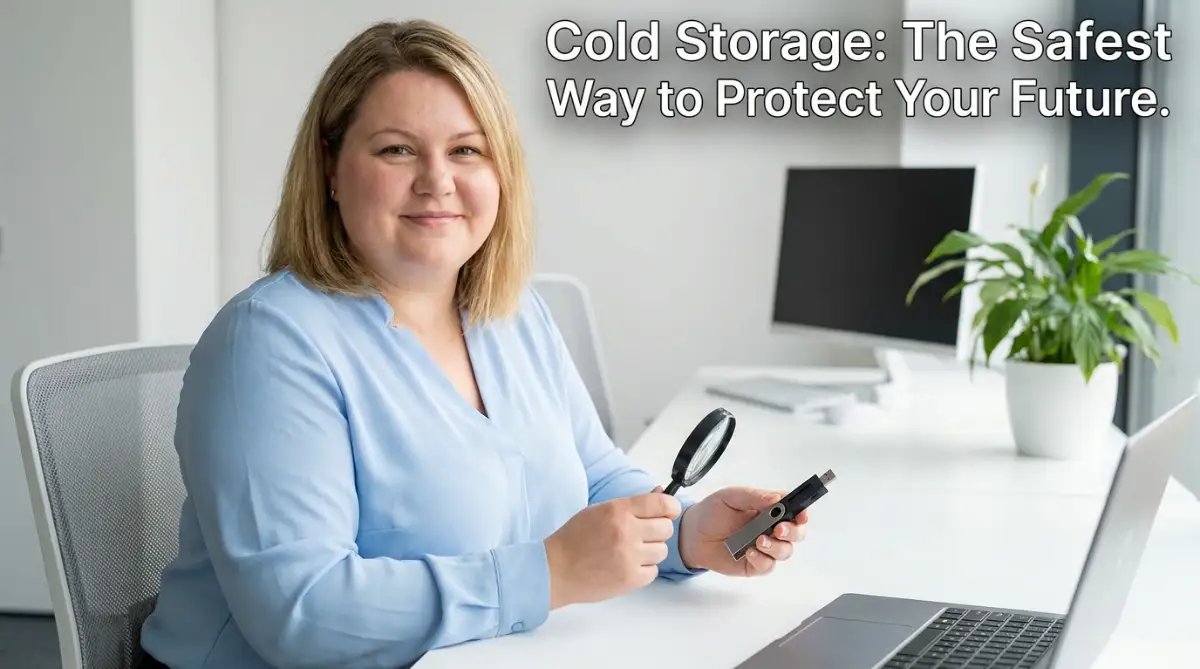
A Cold Wallet (also called a Hardware Wallet) is a small physical device that looks like a USB drive. It stays disconnected from the internet. This is the gold standard for security.
Even if your computer has a virus, a cold wallet keeps your private keys safe inside the physical device. You have to press a physical button on the device to confirm a transaction. This means a hacker in another country cannot touch your funds.
If you have more money in crypto than you would feel comfortable carrying in cash, you should probably use a cold wallet. It gives you a level of peace that a phone app simply cannot match.
How to Set Up Your First Wallet Safely
Let’s walk through the basic process of getting started. It is easier than setting up a new social media account.
- Pick a Trusted Wallet: Start with a well-known, open-source wallet. Open-source means experts have checked the code to make sure it is safe.
- Download from the Source: Only download wallet apps from official websites. Never click on a link in an email or an ad.
- The Backup Phase: The app will show you your 12 or 24 words. Grab a pen and paper. Write them down clearly. Double-check every single letter.
- Secure Storage: Store that paper where it won't get wet, burnt, or thrown away. Some people use a small metal plate to engrave their words for extra protection.
- Small Test Run: Before you move your whole life savings, send a very small amount (like $5) to the new wallet. Once you see it arrive, delete the app and try to "recover" it using your words. If it works, you now know you are safe.
- Common Myths About Crypto Wallets :There is a lot of bad information out there. Let’s clear up some of the most common things people get wrong.
Myth: If I lose my phone, I lose my money.
Reality: No. Your money is on the blockchain. Your phone is just a window. As long as you have your Seed Phrase, you can access your money from any device in the world.
Myth: Someone can "guess" my private key.
Reality: The number of possible combinations for a 24-word seed phrase is so huge that even all the computers on Earth working together for millions of years couldn't guess it. Your only real danger is someone physically stealing your paper or you giving it away to a scammer.
Myth: Wallets charge high fees.
Reality: Wallets themselves usually don't charge you to hold your money. The fees you pay are "Network Fees" that go to the people who keep the blockchain running. Your wallet just helps you calculate the best fee to pay.
The Mental Shift to True Ownership
Moving to self-custody is more than just a technical step. It is a mental shift. We are used to a world where banks take care of everything. If we lose a password, we click "Forgot Password."
In the world of self-custody, there is no "Forgot Password" button for your seed phrase. This might sound scary, but it is actually a beautiful thing. It means you are the only person on the planet with the power to move your wealth.
I want you to imagine a world where you don't have to ask for permission. You don't have to worry about a bank branch closing. You don't have to fear a company going out of business. That is the world that a simple crypto wallet opens up for you.
Protecting Your Privacy
Another great benefit of using your own wallet is privacy. When you use an exchange, they know everything about you. They know your name, where you live, and your spending habits.
self-custody wallet doesn't ask for your name. It doesn't ask for your ID. It is a tool for everyone, regardless of who they are or where they live. This privacy is a basic human right that digital wallets help protect.
Avoiding the "Scammer's Trap"
As you start your journey, you will meet people who try to trick you. The most common trick is someone pretending to be "Technical Support." They will tell you that your wallet is "broken" and you need to "validate" it by giving them your seed phrase.
Never give your seed phrase to anyone. No legitimate company, wallet creator, or support agent will ever ask for those words. Those words are for your eyes only. If you remember this one rule, you are already safer than 90% of people in the crypto world.
Summary of Your First Steps
We have covered a lot, so let's recap what you can do right now to sleep better at night:
- Understand that your coins live on the blockchain, not the app.
- Get a trusted non-custodial wallet app.
- Write down your recovery words on physical paper.
- Move a small amount of crypto from the exchange to your new wallet.
- Feel the relief of knowing you are truly in control.
In the next part of this guide, we will look deeper into how to manage multiple types of coins and how to use your wallet to interact with the new world of decentralized finance. For now, take a deep breath. You are no longer just a spectator. You are now a true owner of your digital future.
Self-custody is the heart of what makes this technology special. It is about more than just money; it is about sovereignty. By taking these small steps, you are building a more secure and private financial life for yourself. You have the tools. You have the knowledge. Now, it is time to take action.
Moving Beyond the Basics: Professional Tactics for Long-Term Security
Now that you understand how a wallet works and have your seed phrase written down, you are already ahead of most people. But owning your assets is a journey, not a single event. To truly feel at peace, you need to think like a professional. Professionals don't just "hope" their money is safe. They build systems to ensure it.
One of the most powerful tools for high-level security is the concept of a Multi-Signature (Multi-Sig) Wallet. Think of this like a high-security bank vault that requires three different keys held by three different people to open. Even if a thief steals one key, they still can't get inside.
For a regular person, you can set this up so that you need two out of three keys to move your money. You might keep one key on your laptop, one on your hardware wallet, and a third backup key in a separate physical location. This setup removes a single point of failure. If you lose one device, you are still in control.
Another advanced method is using an Air-Gapped System. This sounds like science fiction, but it is actually quite simple. An air-gapped wallet is a device that never, ever touches the internet or even another computer. Some hardware wallets use QR codes to talk to your phone.
Because there is no physical or wireless connection, a hacker sitting across the world has zero chance of "climbing" into your device. It is like keeping your money in a different dimension. If you are planning to hold your crypto for many years, an air-gapped hardware wallet is one of the best investments you can make for your mental health.
Planning for the Unthinkable
We don't like to talk about it, but we must consider what happens to our digital assets if we are no longer around. Because there is no "bank manager" to call, your family could lose everything if you don't have a plan. This is where Digital Inheritance comes in.
You should never put your seed phrase in a traditional will that becomes public record. Instead, consider a "Dead Man’s Switch" or a simple physical instruction set stored in a safe deposit box. Tell your loved ones where the "keys to the kingdom" are kept and provide a simple guide on how to use them.
Keeping Your Software Clean and Safe
Your wallet is only as secure as the environment around it. Many people make the mistake of using their "crypto computer" for everything—downloading movies, clicking random email links, or playing pirated games. This is a recipe for disaster.
If possible, keep a separate, clean device just for your financial transactions. If you can't afford a second laptop, at least use a dedicated browser with no extra "extensions" or "plug-ins" installed. Every extra piece of software is a potential doorway for a bad actor to enter your life.
When you are making big moves with your money, it is easy to let your emotions take over. People often panic when the market goes up or down. If you want to understand why we make these quick, often bad decisions, it helps to realize why your brain is your biggest enemy in crypto investing and how to stay calm.
The Invisible Traps: Mistakes That Could Cost You Everything
The path to financial freedom is paved with good intentions but also with dangerous pitfalls. Most people who lose their crypto don't lose it to a "genius hacker." They lose it because of a simple, human mistake. Understanding these traps is the only way to avoid them.
The most common mistake is Digital Laziness. We are so used to taking screenshots of everything. You might think, "I'll just take a photo of my seed phrase and delete it later." The problem is that many phones automatically upload photos to the cloud.
If your cloud account is ever compromised, your money is gone in seconds. There are automated "bots" that scan cloud storages specifically looking for 12-word sequences. Never, under any circumstances, let your seed phrase touch a screen or a digital sensor.
The "Copy-Paste" Nightmare
Another silent killer is the Clipboard Hijacker. This is a type of malware that sits quietly on your computer. When you copy a long crypto address to send money, the malware detects the address and replaces it with the hacker's address.
Because crypto addresses are long and hard to read, many people don't notice the change. They click "send," and their money goes to a stranger, never to be seen again. You should always manually verify the first five and last five characters of any address before you hit that button.
Social Engineering and the "Friendly" Stranger
Scammers are great actors. They don't always look like "villains." Sometimes they look like helpful community members on Telegram or Discord. They might send you a direct message offering to help you "sync" or "upgrade" your wallet.
They will direct you to a website that looks exactly like your wallet’s official site. The site will ask for your recovery phrase to "fix" the issue. The moment you type those words, your wallet will be emptied. A legitimate wallet provider will never ask for your words.
The stress of nearly losing your savings or falling for a scam can take a physical toll on your body. If you find that the anxiety of managing your finances is causing physical tension or pain, you might want to experience the double action relief of oxys today to help you get back on your feet.
The Danger of "Test" Transactions
Some people get overconfident and stop doing test runs. They see a new "De Fi" platform and immediately send a large amount of money. Always remember that the blockchain is a "one-way street." There are no refunds and no "undo" buttons.
Always send a tiny amount first. Wait for it to confirm. Check your balance. Only then should you send the rest. This extra two minutes of work can save you years of regret.
Your Personal Action Plan for Success
Taking control of your crypto is one of the most empowering things you can do in the modern age. It is the ultimate form of self-reliance. You are now the captain of your own ship, and while the sea can be rough, you have the map and the compass.
I want you to start small. Don't feel pressured to become a security expert overnight. Use the tools available to you. Start with a simple mobile wallet, then move to a hardware wallet as your portfolio grows.
Here is your "Day One" Checklist:
- Audit your current storage: Are your coins still on an exchange? If yes, make a plan to move them this week.
- Check your backup: Do you have your seed phrase written on paper? Is it in a safe place where you won't lose it?
- Update your software: Ensure your wallet apps and your phone’s operating system are up to date.
- Stay Private: Don't brag about your crypto holdings on social media. Being a "quiet owner" is the best security.
Remember, the goal isn't just to "make money." The goal is to keep it and use it to build the life you want. Staying healthy and keeping your energy high is part of that long-term plan. For those looking to maintain their physical edge while navigating these digital challenges, learning how defenox restores your masculine vitality can be a great way to stay sharp and focused.
A Final Word of Encouragement
The world of crypto can feel like a "wild west," but you don't have to be a victim. By following the simple rules of self-custody, you are building a wall around your future. You are choosing freedom over convenience.
You have the power to protect what is yours. No bank, no government, and no exchange can take that away from you if you hold your own keys. Be patient with yourself as you learn. Every step you take makes you more secure.
Take that first step today. Move a small amount of crypto to your own wallet. Feel the sense of pride that comes with truly owning your assets. You've got this!Taking control of my own keys felt like a huge weight was lifted off my shoulders. You have worked hard for your money, so do not let a middleman hold the remote control to your future. Take that first small step today, and I promise you will finally feel the peace of mind that comes with true ownership.
Disclaimer: The information provided in this guide is for educational purposes only. It does not constitute financial, legal, or investment advice. Cryptocurrency investments carry significant risks, and self-custody requires a high level of personal responsibility. Always perform your own research before making any financial decisions.